
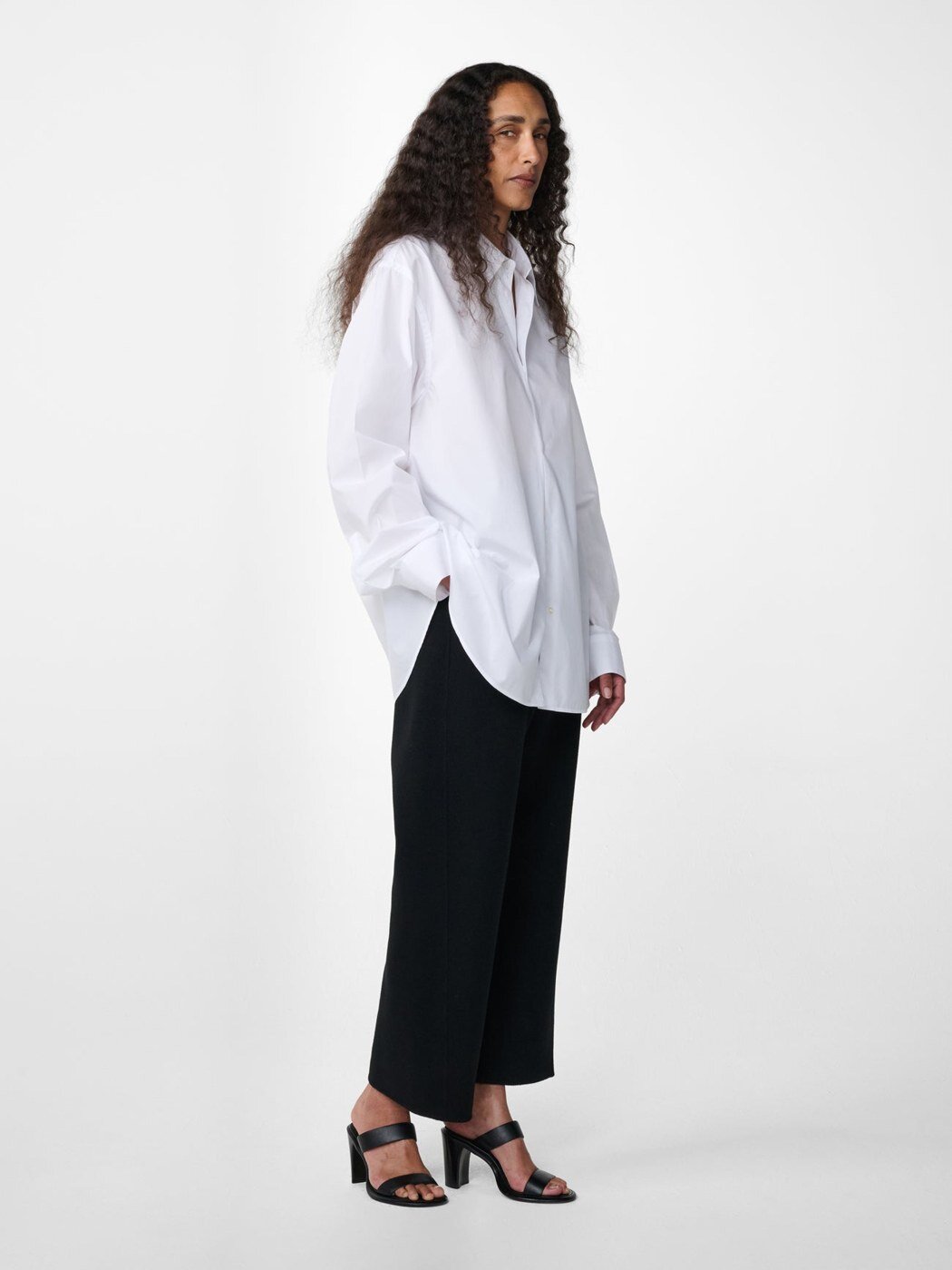
The minimalist wardrobe is easy to admire and hard to build. Most attempts end as a drawer of plain clothes that somehow still don't go together, because "minimal" was treated as a look instead of a system. Studio Nicholson is one of the few labels designed around the system itself — modular, tonal, built to combine — which makes it a useful anchor for doing this properly. Here's a practical guide. Links below use our affiliate tracking and open Studio Nicholson.
First, understand what a capsule actually is
A capsule wardrobe isn't just fewer clothes — it's a small set of pieces where almost everything works with almost everything else. That interoperability is the whole point, and it's what turns getting dressed from a decision into a reflex. Studio Nicholson's design philosophy is built around exactly this: a considered, modular wardrobe in a coherent palette. So the goal isn't to buy a pile of items; it's to assemble a system where each new piece multiplies your outfits instead of just adding one.
Lock your palette first
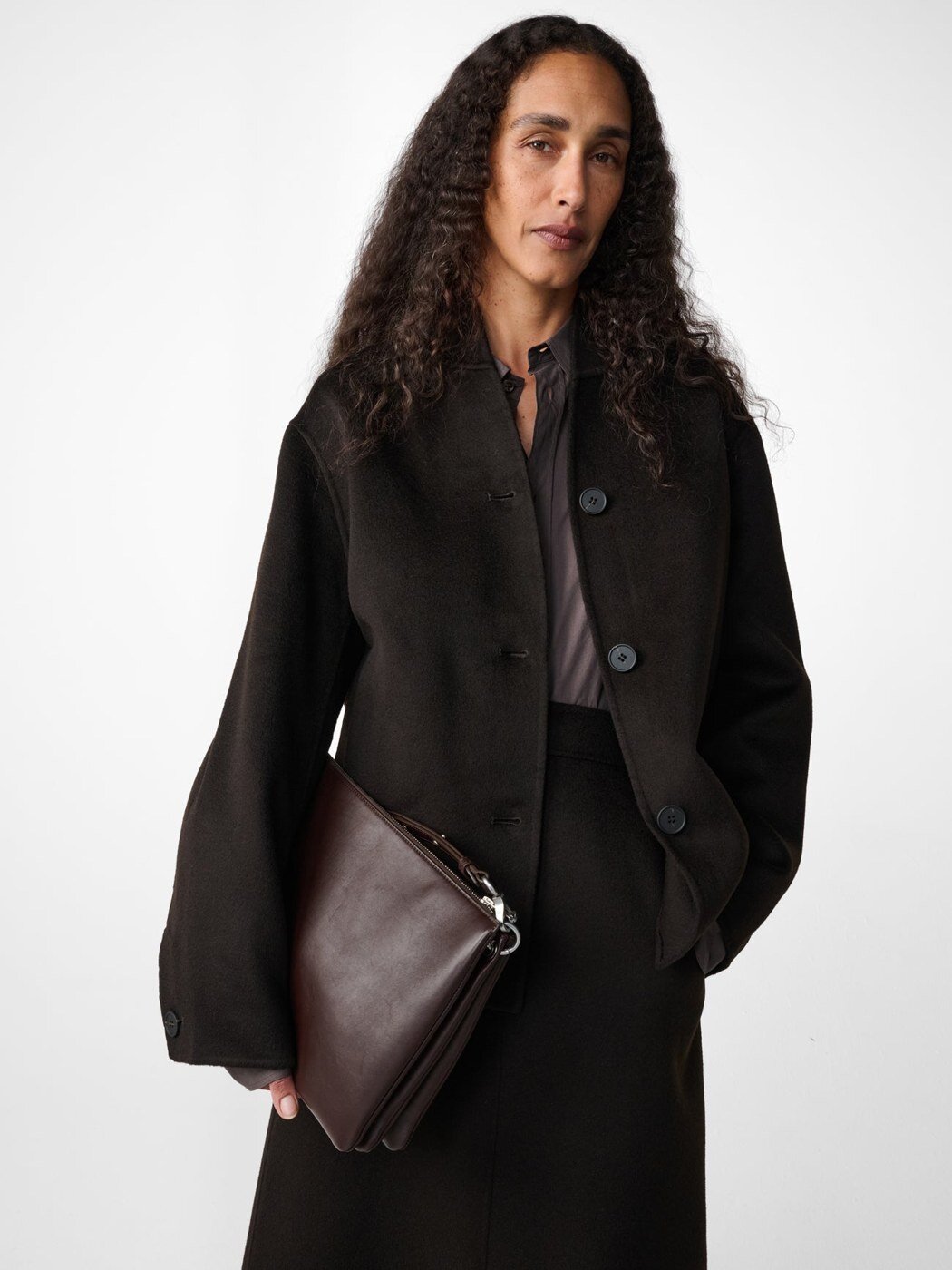
The mistake that kills most capsules is colour. Before you buy anything, choose a tight palette — typically a base of two or three neutrals (navy, stone, black, grey, ecru) plus maybe one accent. Every piece you add should live inside that palette, because that's what makes things combine without thought. Studio Nicholson's muted, tonal range suits this perfectly; lean into it rather than fighting it with a stray bright colour that only works with one other thing.
Build from the anchors outward
Buy in order of usefulness, not excitement. The anchors come first — the pieces you'll wear constantly and build outfits around.
Trousers. A well-cut trouser is the backbone of the wardrobe and one of the label's signatures. Get the proportion right and it dresses up or down.
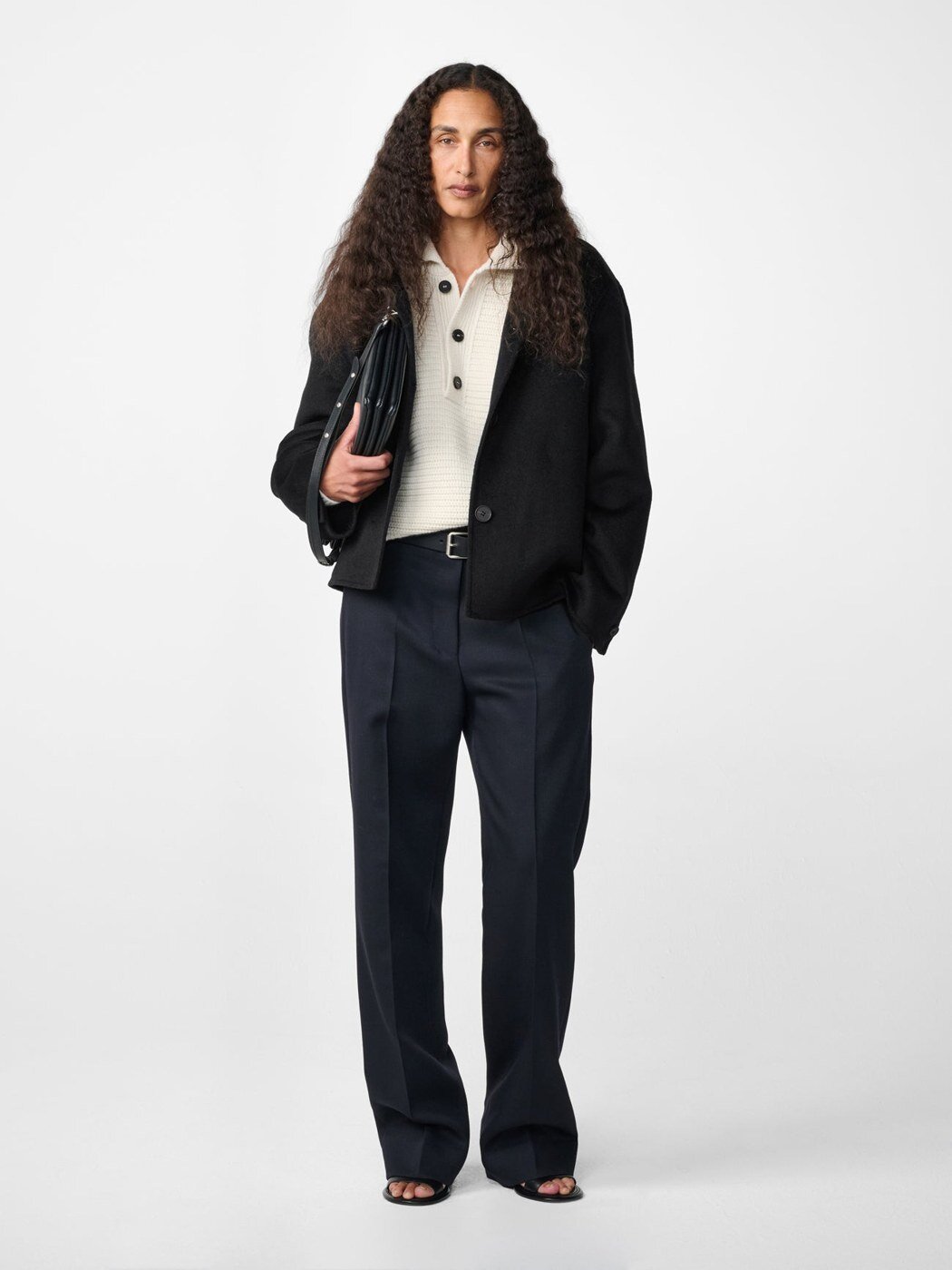
Outerwear and overshirts. A clean jacket or overshirt is the layer that pulls an outfit together and does the most visible work.
Knitwear and tops. Quality knits and simple tops in your neutrals fill in the system and layer with everything.
Only once those anchors are in place should you consider anything more specific. A capsule grows from its core, not from its edges.
A useful mental test before adding anything: count the outfits it unlocks. A new neutral trouser that works with every top and jacket you own might create a dozen combinations; a bold patterned piece that pairs with only one thing creates one. The best capsule additions are quiet multipliers, not loud standalones. If a piece earns its place only as a single fixed outfit, it is a wardrobe item, not a capsule one, and the whole point of the system is that each piece should multiply, not just add.
Respect the cut
Studio Nicholson's proportions are deliberate — often relaxed and architectural — so the fit is part of the design, not an accident to correct. Read the size guidance for each piece rather than assuming your default size behaves the same across styles. Once you've dialled in your size in one garment, use it as a reference for the rest. Buying for the intended silhouette, rather than forcing a slimmer or looser fit, is how the pieces look the way they're meant to.
And if a piece is right in every way but the length, a quick alteration is worth it on clothes you will wear for years. Hemming a trouser or shortening a sleeve on a quality garment is cheap relative to the piece, and it makes the difference between nearly right and looks made for you. On a capsule where each item works this hard, that small investment pays back on every wear.
Buy slowly, wear constantly
The economics of a capsule only work if you buy deliberately. A few considered pieces worn hundreds of times cost less per wear than a closet of impulse buys worn twice. Add to the system gradually, choosing each piece for how many outfits it unlocks rather than how it looks alone on the hanger. The wardrobe that results is smaller, more expensive per item, and cheaper per wear — and it always looks composed.
Two mistakes derail most capsules, and both are worth naming. The first is buying the fun pieces first and leaving gaps in the basics, so you own three statement jackets and no trouser that works with them; build the boring backbone before the highlights. The second is treating a capsule as a one-time purchase rather than a slow, deliberate build. A good capsule is assembled over months as you learn what you actually reach for, not bought in a single weekend haul. Patience is a feature of the method, not a failure of it.
A starter capsule
| Role | Piece | Why it earns its place |
|---|---|---|
| Anchor | Well-cut trousers in a neutral | The backbone; dresses up or down |
| Layer | Clean overshirt or jacket | Pulls outfits together |
| Core | Quality knit in your palette | Layers with everything |
| Base | Simple tops in neutrals | The connective tissue |
| Optional | One considered statement piece | Add only once the core is set |
Care for the pieces so they last
A capsule's economics only work if the clothes survive the heavy wear you're deliberately subjecting them to, so care is part of the strategy, not an afterthought. Follow the garment's care instructions rather than defaulting to a hot wash — quality natural fabrics and knitwear usually prefer gentler, less frequent cleaning, which also preserves shape and colour. Air pieces between wears instead of washing after every outing, fold knitwear rather than hanging it so it keeps its form, and store things with a little room so they're not crushed. Minor repairs — a reattached button, a small re-stitch — are worth doing promptly rather than retiring a piece. Because you own fewer things and wear each one more, this maintenance has an outsized payoff: it's what keeps a small wardrobe looking composed years in, instead of tired.
FAQ
What makes a capsule wardrobe work? Interoperability — a tight palette and considered pieces so almost everything combines. It's a system, not just a smaller closet.
Which colours should I choose? Two or three neutrals as a base, plus at most one accent. A disciplined palette is what makes pieces mix effortlessly.
What should I buy first? Anchors — a well-cut trouser, a clean jacket or overshirt, then quality knits and simple tops. Build outward from the core.
How does the fit run? Deliberately relaxed and architectural on many pieces. Check the per-garment guidance and buy for the intended silhouette.
Ready to build a wardrobe that actually goes together? Start with the core pieces at Studio Nicholson and grow the system from there.
Disclosure: This post contains affiliate links. We may earn a commission from purchases made through these links at no extra cost to you. Pieces, availability, and pricing were accurate at the time of writing.
Affiliate link — we may earn a commission at no extra cost to you.
Want gear like this on your content calendar?
Join AffluencerHub, get AI-matched to brand programs that fit your audience, and track every click to commission in one place.
Apply as a Creator