
A tested-tone, pros-and-cons look at the two biggest names in boiled-wool clogs — with Birkenstock and Glerups in the frame for context.
TL;DR: Both make excellent boiled-wool clogs, and you would be happy in either. Stegmann leans into Austrian heritage, a supportive cork footbed, and wide-width availability; Haflinger is the German rival with the same cult devotion and a slightly firmer, sportier feel. If footbed support and fit range top your list, Stegmann is the one I keep reaching for. Read on for the head-to-head.
Why this comparison?
If you start researching wool clogs, two names surface almost immediately: Stegmann and Haflinger. They are the closest of rivals — both build dense boiled-wool clogs, both trade on European craft heritage, and both have earned a loyal, almost evangelical following among comfort-footwear buyers. Choosing between them is genuinely hard, which is exactly why it is worth doing carefully rather than flipping a coin.
For context, two other names come up a lot. Birkenstock is the cork-footbed benchmark — broader, more mainstream, and more sandal-led, with far less wool in the mix. Glerups is the Danish felted-wool maker whose clogs and slippers skew cozier and more slipper-like. Neither is a direct wool-clog competitor the way Haflinger is, but both are useful reference points, so I have folded them in where they matter.
At a glance
| Dimension | Stegmann | Haflinger |
|---|---|---|
| Origin | Austrian heritage (brand states since 1888) | German boiled-wool specialist |
| Signature feel | Soft wool over a supportive cork footbed | Slightly firmer, sportier underfoot |
| Footbed | Contoured cork / cork-blend, arch support cited by wearers | Cork-latex footbed, also well regarded |
| Fit range | Wide widths available, vegan/"Renew" options | Standard fit, broad style range |
| Indoor-outdoor | Real outsole on core clogs | Real outsole on core clogs |
| Vibe | Heritage-cozy, all-day | Heritage-cozy, active-leaning |
Bands and traits are qualitative; both brands run promotions, so pricing shifts with season.
Head-to-head
1. Comfort and footbed
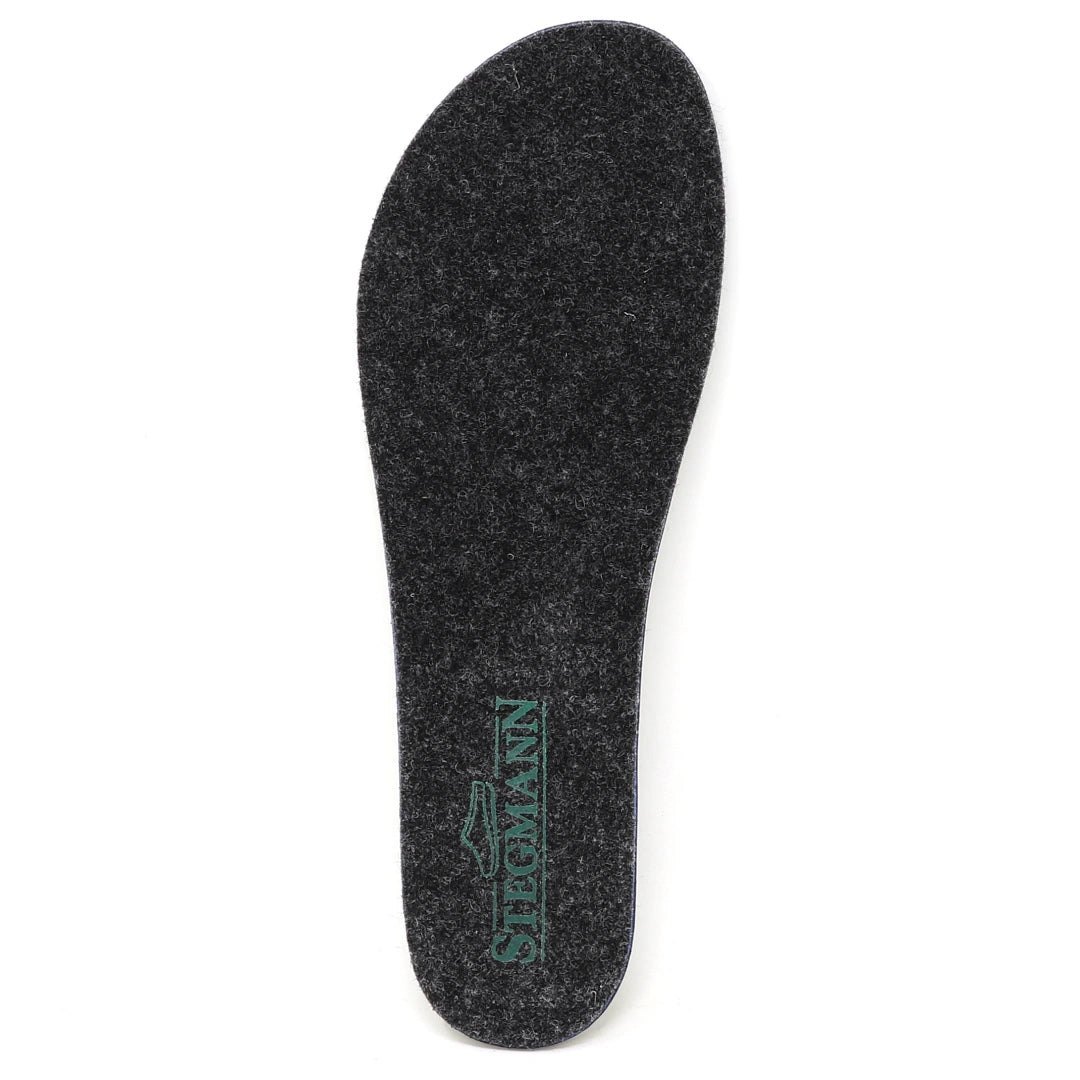
This is the heart of the decision. Stegmann's calling card is a contoured cork or cork-blend footbed with a defined arch, which wearers and comfort blogs repeatedly single out as the reason the clogs feel good over a long day. Haflinger's cork-latex footbed is also excellent and tends to feel a touch firmer and more athletic underfoot. Neither is "medical" — treat both as everyday comfort — but the character differs: Stegmann reads as cushioned-with-support, Haflinger as supportive-with-spring.
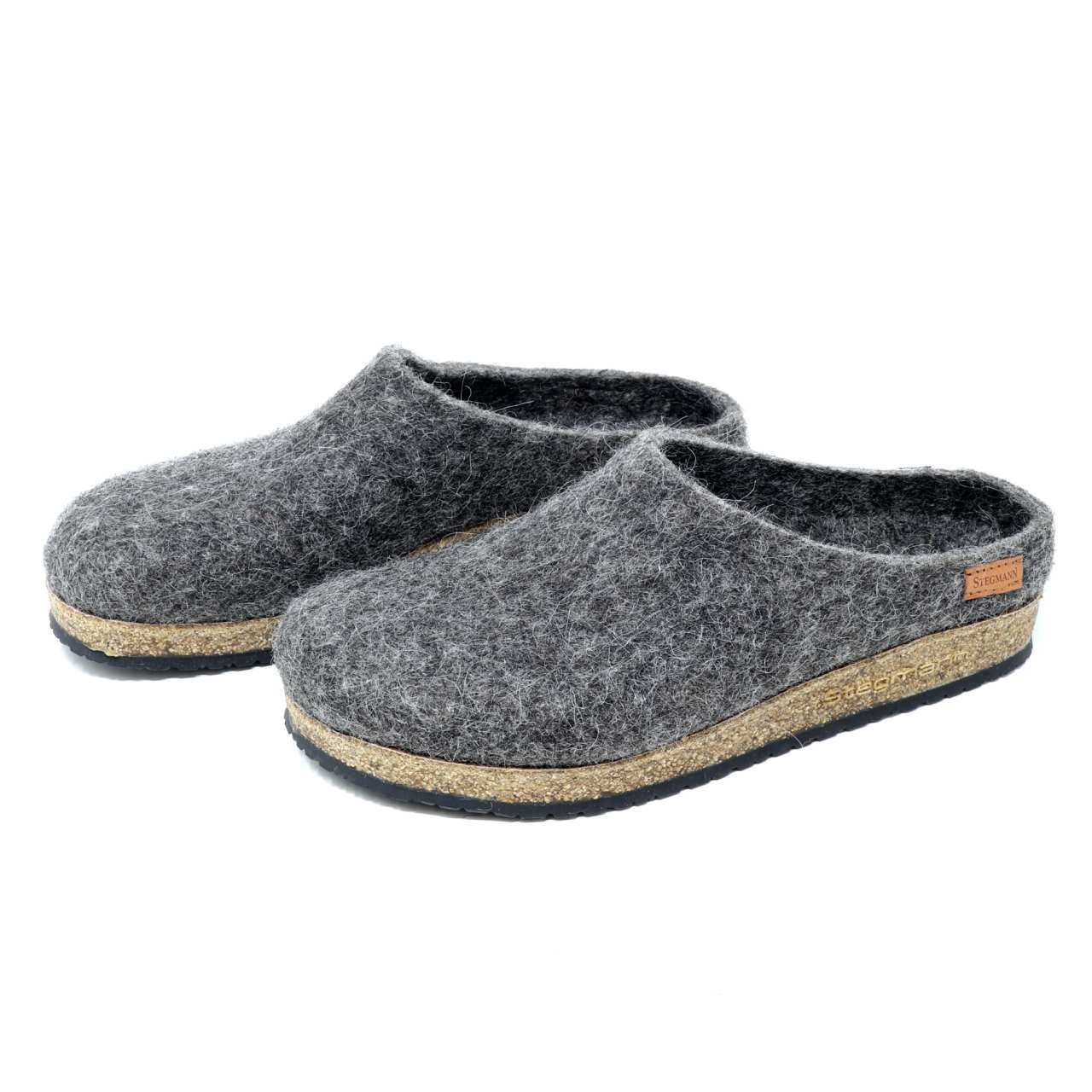
Winner: Stegmann, narrowly, if you prioritize a plush-but-supported feel; Haflinger if you like firmer.
2. Materials and warmth
Both use dense boiled wool, and both deliver the natural temperature regulation the material is famous for — warm on cold floors, breathable when the house heats up. Stegmann emphasizes natural boiled wool, leather and cork across its range, plus vegan-leaning "Renew" options for buyers who want them. Haflinger matches the wool quality closely. In wear, I could not honestly call one meaningfully warmer than the other; this is a wash driven by fiber, not brand.
Winner: Tie. Both nail wool warmth and breathability.
3. Fit, sizing and width
Here Stegmann pulls ahead for a practical reason: wide-width availability. If standard clogs pinch you across the ball of the foot, that option is worth a lot. Both brands use European-influenced sizing, so neither maps perfectly onto a US sneaker number — check the chart either way. But when it comes to accommodating a wider foot, Stegmann gives you more to work with, and the vegan and variant lines add flexibility.
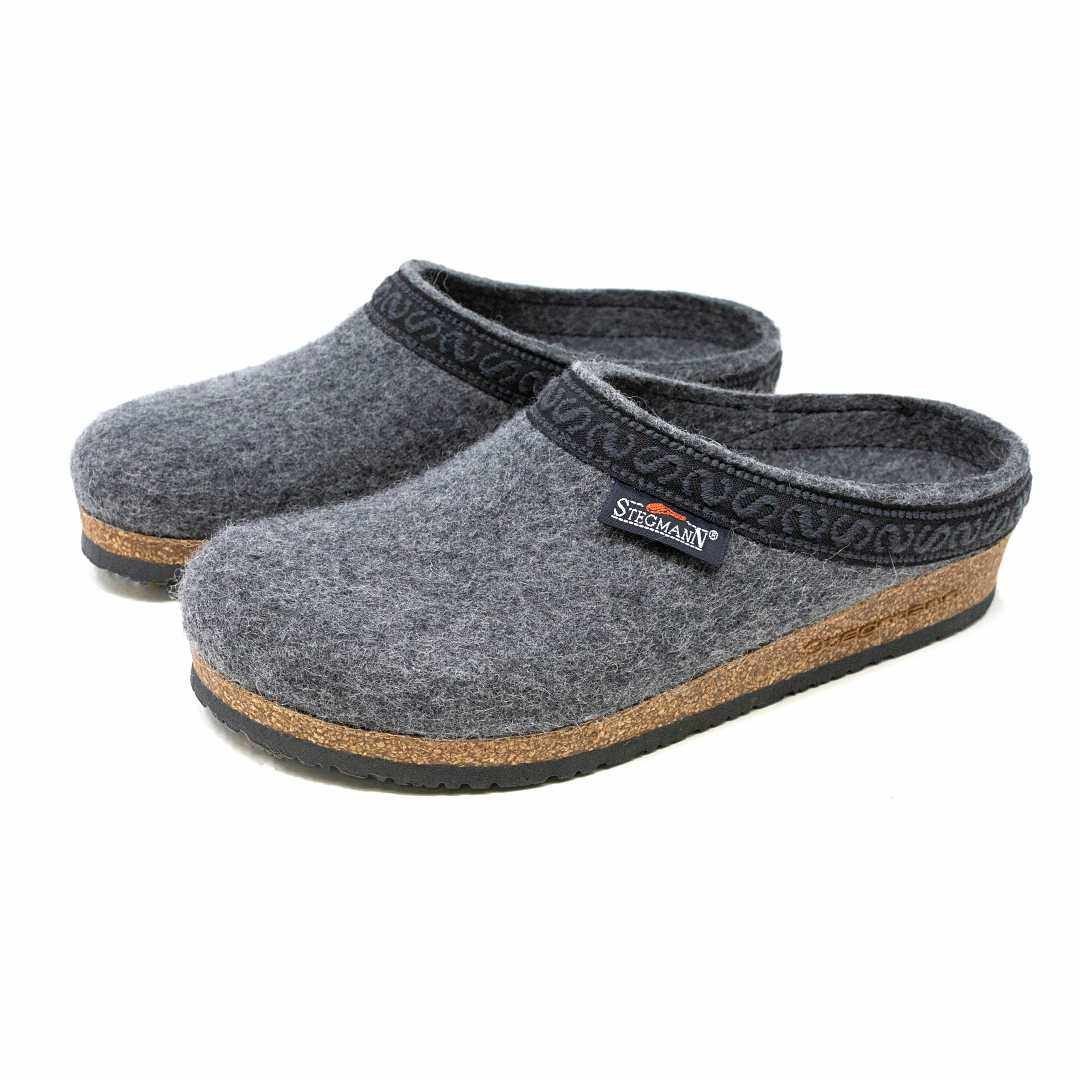
Winner: Stegmann, for wide-width buyers especially.
4. Versatility and style range
Both cover the classic clog beautifully. Stegmann extends the idea across wool and leather clogs, slippers, and seasonal boots, mules and sandals, plus updated Eco, WoolFlex and Essenz wool-clog variants — a genuinely deep bench if you get hooked on the material. Haflinger counters with its own broad catalog and a strong reputation across styles. This one comes down to which specific silhouettes speak to you.
Winner: Tie, with a slight Stegmann edge for the sheer variety of wool-clog variants.
5. Heritage and value
Both sell heritage credibly. Stegmann states an Austrian lineage back to 1888 — brand-stated and worth taking as marketing rather than verified fact — while Haflinger carries comparable German credentials. On price, both sit in similar territory: wool slippers at the lower-to-mid band in USD, the core wool clogs in the mid band, leather higher, and seasonal boots at the upper end. For a shoe you may wear daily for years, most buyers find either brand's mid band reasonable. Neither is a budget play, and neither pretends to be.
Winner: Tie on value; pick the heritage story that resonates.
Where Birkenstock and Glerups fit
If your priority is a cork footbed in a more mainstream, sandal-forward shoe, Birkenstock is the benchmark — but it is not really a wool-clog rival, and you lose the boiled-wool warmth. If you want maximum coziness and mostly plan to pad around the house, Glerups felted-wool clogs and slippers are wonderful and slipper-leaning, but they are less of an all-day indoor-outdoor shoe than either Stegmann or Haflinger. In other words: Birkenstock for cork-sandal fans, Glerups for pure home coziness, and Stegmann or Haflinger for the true wool-clog experience.
Scenarios: which should you buy?
- On your feet all day at home (WFH, teaching, healthcare): Stegmann, for the cushioned-but-supported footbed and wide-width option.
- You want a firmer, sportier ride: Haflinger.
- You have a wider foot: Stegmann, clearly.
- You mostly want indoor coziness and rarely step outside: Glerups is worth a look, or a Stegmann wool slipper.
- You are a cork-footbed sandal loyalist: Birkenstock, though you will miss the wool.
- Gifting a comfort lover: Either Stegmann or Haflinger; Stegmann's variety of wool-clog styles makes it easy to match a taste.
Verdict
There is no loser here — this is a comparison of two very good things. Haflinger earns its cult status and is the pick if you want a firmer, more athletic feel. But across a full day, for the plush-yet-supported footbed, the wide-width availability, and the depth of wool-clog options, Stegmann is the pair I would steer most first-time buyers toward. Choose Haflinger for firmness, Stegmann for cushioned support and fit range, and you will not go wrong either way.
FAQ
Is Stegmann or Haflinger more comfortable? Subjective. Wearers credit Stegmann's cork footbed and arch for all-day comfort and describe Haflinger as firmer. Both are everyday-comfort shoes, not medical devices.
Do they run true to size? Both use European-influenced sizing, so check each brand's chart rather than assuming your US number. Measure your foot to be safe.
Which is better for wide feet? Stegmann, thanks to wide-width availability.
Are Birkenstock or Glerups better alternatives? Different tools. Birkenstock for cork sandals, Glerups for slipper-level coziness, Stegmann or Haflinger for the real wool-clog experience.
Disclosure: This post contains affiliate links. We may earn a commission from purchases made through these links at no extra cost to you. Prices and availability accurate at time of writing.
Disclosure: affiliate link — we may earn a commission at no extra cost to you.
Want gear like this on your content calendar?
Join AffluencerHub, get AI-matched to brand programs that fit your audience, and track every click to commission in one place.
Apply as a Creator