
One streams your whole library and pipes in a coach's voice live; the other loads files and plays them back. Here's how they actually differ in the water.
TL;DR: Shokz OpenSwim is a proven, no-fuss bone-conduction MP3 player — load files, dive in. ZYGO does something OpenSwim cannot: it streams live from your phone and carries a coach's voice to you mid-lap. If you only want a playlist you loaded last night, Shokz is the simpler, cheaper answer. If you want streaming, podcasts on demand, or real coaching, ZYGO is the one built for it.
Why this comparison matters
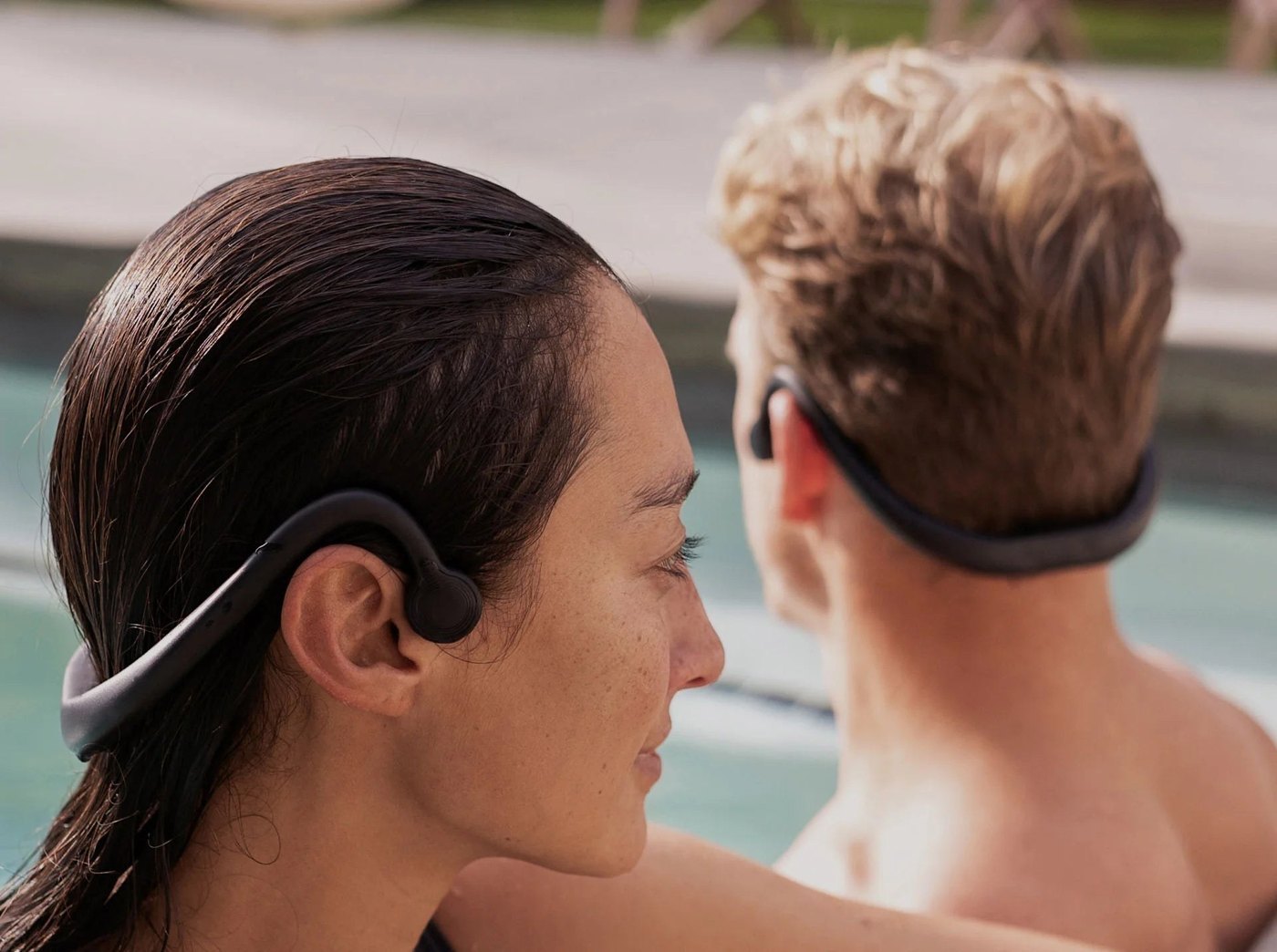
On paper these look like rivals: both are bone-conduction headsets you wear under a cap, both leave your ears open, both survive being submerged for a full workout. Spend a few sessions with each, though, and the resemblance ends. They answer two different questions. Shokz OpenSwim answers "how do I hear music while I swim?" ZYGO answers "how do I hear anything from my phone, or my coach, right now, while I swim?" That gap defines everything below. I've framed this the way I'd assess them on the pool deck — where each shines, where each frustrates, and who should buy which.
At a glance
| ZYGO (Z2) | Shokz OpenSwim | |
|---|---|---|
| Audio source | Live stream from phone via poolside FM transmitter | Onboard storage — load MP3s in advance |
| Streaming apps (Spotify, podcasts, Audible) | Yes, live | No |
| Coach-to-swimmer voice | Yes, one-way live speech | No |
| Bone conduction / ears open | Yes | Yes |
| Prep before a swim | Open app on phone | Transfer files to device |
| Category | Streaming + communication system | Waterproof MP3 player |
| Price band | Premium / investment | Lower / entry |
Head to head
1. Getting audio in your ears
This is the whole ballgame. OpenSwim is an onboard player: you connect it to a computer, drag over MP3 files, and whatever you loaded is what you get. It is dependable and completely offline — no signal to drop. But it is also a walled garden of your own making. Forget to load the new podcast episode and you swim to yesterday's playlist.
ZYGO takes the harder path and streams live. Its transmitter — which also serves as the charging case — sits at the pool edge, takes a Bluetooth stream from your phone, and rebroadcasts it over FM so it reaches the headset underwater. That means Spotify, Audible, a podcast queue, or an in-app coached workout, all live, with zero pre-loading. According to TechRadar and ZDNET coverage of the category, this transmitter-bridge approach is what makes true underwater streaming possible where plain Bluetooth fails.
Winner: ZYGO. OpenSwim's method is reliable, but ZYGO removes the single most annoying part of swim audio — the nightly file-syncing ritual — and unlocks your entire library.
2. Coaching and communication
OpenSwim has no communication feature. It is a playback device, full stop.
ZYGO's headline capability is coach-to-swimmer talk: a one-way live voice channel, essentially a walkie-talkie, that lets an on-deck coach speak to an athlete mid-lap without stopping the set. SwimSwam and Athletech News have both covered how this reshapes squad training and even enables remote or virtual coaching. For a competitive swimmer or a coach running a lane, this isn't a nice extra — it's a different product class.
Winner: ZYGO, decisively, and it isn't really a contest. If coaching matters at all, OpenSwim isn't in the conversation.

3. Simplicity and reliability
Here OpenSwim earns its reputation. There is nothing to pair each session, no transmitter to position, no phone that has to stay awake on the deck. You charge it, load it, and swim. For a lot of lap swimmers that frictionless simplicity is genuinely the right call, and there's less that can go wrong.
ZYGO has more moving parts — a phone, a transmitter, and the headset all working together — and range varies with depth and with salt versus fresh water (its roughly 50-meter figure is a pool-based, condition-dependent manufacturer claim). More capability, more to set up.
Winner: Shokz OpenSwim, if your definition of a good swim headset is "the fewest steps between me and the water."
4. Fit, comfort, and battery
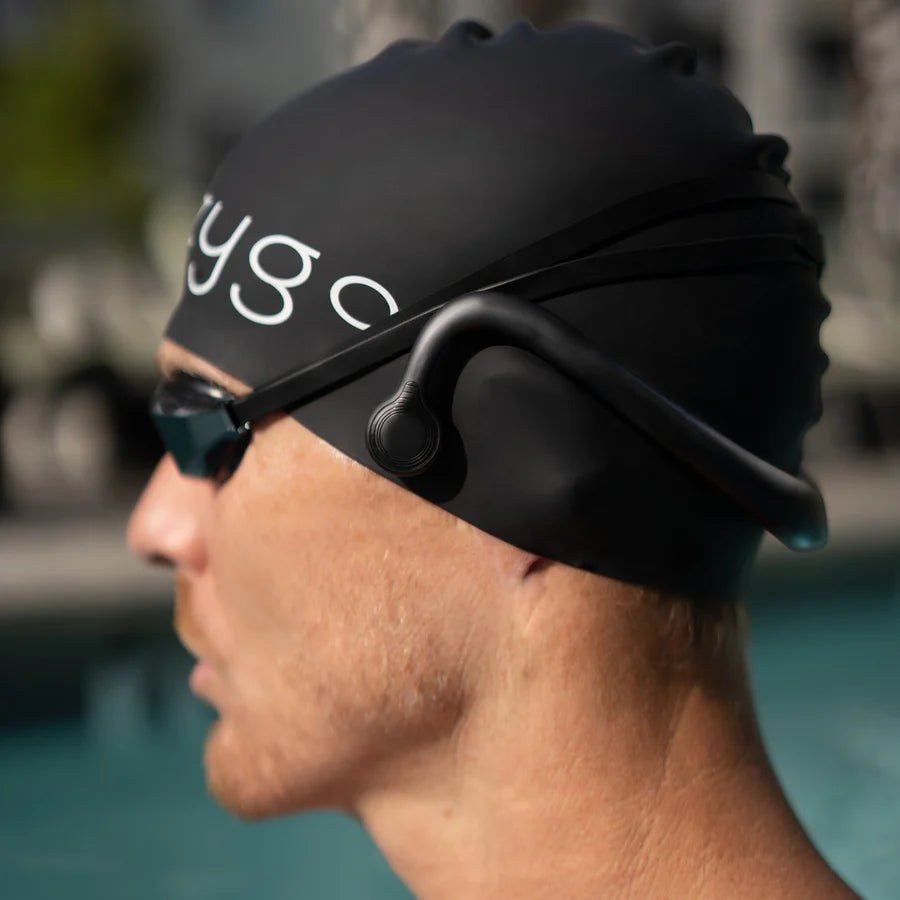
Both sit under a cap and both keep your ears open, which is the shared strength of bone conduction. ZYGO offers its headset in two sizes, which helps dial in fit under goggle straps. On battery, both are honest small-device numbers; ZYGO quotes roughly two to three hours on the headset, with the transmitter case recharging it several times between sessions. OpenSwim's fixed onboard battery is comparable in the same ballpark for a single swim. Neither is an all-day device, and neither claims to be.
Winner: Tie. Fit and comfort are close, both are cap-friendly, and battery is a wash for a typical workout. Two sizes is a mild edge for ZYGO.
5. Value
OpenSwim sits in the more affordable band — it does less, and it costs less, which is fair. ZYGO is a premium, investment-tier system; you are paying for the transmitter and the streaming-plus-coaching capability, not just a waterproof player. (Exact current prices aren't something to quote here — check the retailers. For historical context only, ZYGO's first-generation Solo launched around USD 300 in 2022.) The value verdict depends entirely on whether you'll use what ZYGO adds.
Winner: Depends on you. Pure playlist swimmer: OpenSwim is better value. Streaming or coaching: ZYGO justifies the step up.
Where the others fit
Two more names come up. H2O Audio Sonar is also bone conduction and reaches toward streaming through caching workarounds, but it has no live transmitter, so it isn't the same real-time experience. FINIS Duo is bone conduction and download-based like OpenSwim, with no two-way or coaching. So the streaming-plus-coach-comms lane is really ZYGO's alone; the rest are variations on stored playback.
Buy-this-if scenarios
- You just want music on your laps and hate fuss: Shokz OpenSwim. Simple, reliable, affordable.
- You want your actual phone library, live podcasts, or app workouts underwater: ZYGO.
- You're a competitive swimmer or coach who wants real mid-lap coaching: ZYGO, no substitute exists.
- You run remote or virtual coaching: ZYGO.
- You're gifting for a casual pool swimmer on a budget: OpenSwim.
Verdict
These aren't really competing for the same buyer once you see clearly what each does. Shokz OpenSwim is an excellent, dependable waterproof MP3 player, and for a lot of lap swimmers that is exactly enough. But ZYGO is playing a different game — live streaming and genuine coach-to-swimmer communication put it in a category OpenSwim doesn't enter. If either of those features speaks to you, the choice makes itself. You can see how ZYGO's system works and which model matches your training before deciding.
FAQ
Can Shokz OpenSwim stream Spotify underwater? No. It plays only files you've loaded onto it in advance. Live streaming is ZYGO's differentiator.
Does either let a coach talk to me while I swim? Only ZYGO, via a one-way live voice channel. OpenSwim has no communication feature.
Do both keep my ears open? Yes — both use bone conduction, so you still hear whistles and lane-mates.
Is ZYGO's range guaranteed? No. The roughly 50-meter figure is a pool-based manufacturer claim and varies with depth and with salt versus fresh water.
Disclosure: This post contains affiliate links. We may earn a commission from purchases made through these links at no extra cost to you. Prices and availability accurate at time of writing.
Disclosure: affiliate link — we may earn a commission at no extra cost to you.
Want gear like this on your content calendar?
Join AffluencerHub, get AI-matched to brand programs that fit your audience, and track every click to commission in one place.
Apply as a Creator