
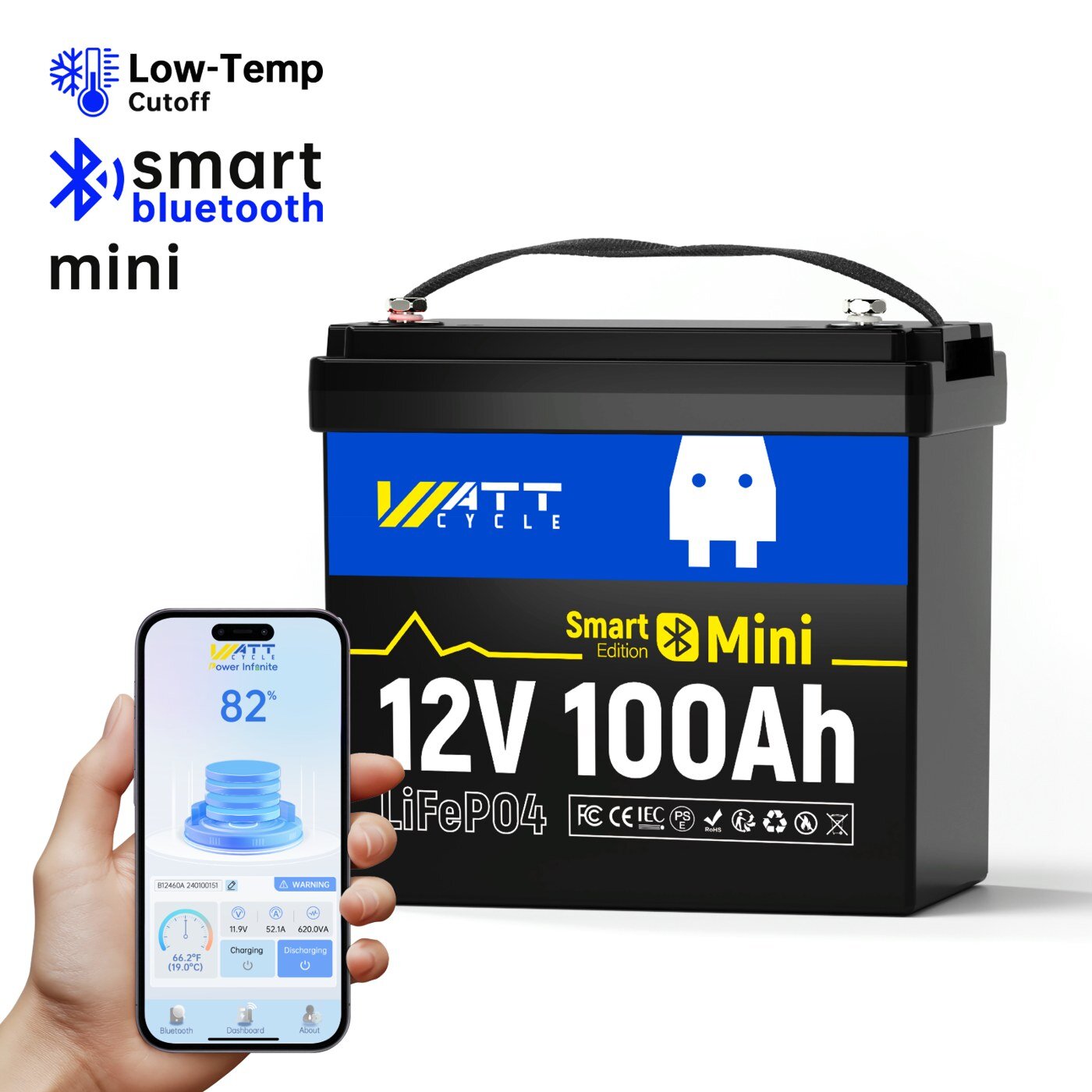
Lithium batteries for RVs, vans, and small solar setups used to start at a number that made people stick with lead-acid out of spite. WattCycle is part of the wave that broke that, selling a 12V 100Ah LiFePO4 with Bluetooth for around USD 199. The question every buyer actually has: is a battery this cheap hiding something? Here's an honest look at the 100Ah Mini, caveats included. Links use our affiliate tracking and open WattCycle.
The specs that matter
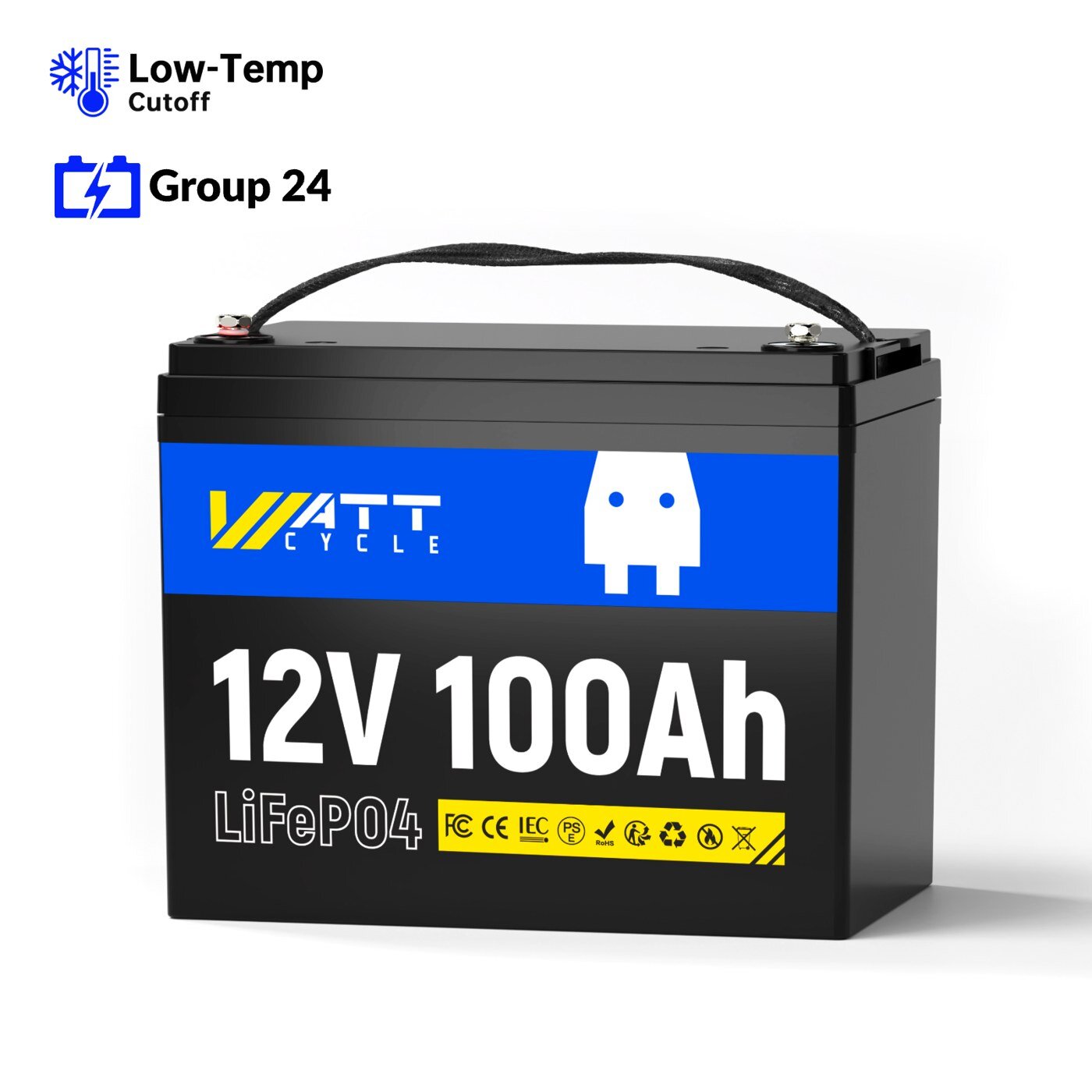
This is the compact "Mini" format — roughly 9.0 x 5.6 x 8.2 inches and about 20.8 lbs (9.5 kg), which is light enough to reshape where you can mount power in a van or boat. It uses prismatic LiFePO4 cells, a 100A continuous BMS, and an IP65 rating. The warranty is 5 years, stretching to 7 with registration. Bluetooth is built in, so you watch state of charge and cell balance from your phone.
| Spec | WattCycle 12V 100Ah Mini |
|---|---|
| Usable capacity | 100 Ah / ~1,280 Wh (independent testing measured a touch above rated) |
| Nominal voltage | 12.8V |
| BMS continuous | 100A |
| Round-trip efficiency | ~95% (typical for healthy LiFePO4) |
| Dimensions / weight | 9.0 x 5.6 x 8.2 in / 20.8 lbs |
| Rating / warranty | IP65 / 5 yr (7 with registration) |
| Street price | ~USD 199 |
What it gets right
The core job, it does. In independent bench testing the battery delivered slightly above its rated capacity after a top-balance, and round-trip efficiency landed at about 95% — exactly where a healthy LiFePO4 should sit. For a hundred-dollar-ish battery, meeting spec on the one number that counts is the whole ballgame.
The Bluetooth app earns its keep too. Being able to see cell balance and state of charge from your phone is the kind of feature that used to live two price tiers up. And a known current-sharing flaw from an earlier WattCycle model does not appear on this one — in a parallel test it actively shared load rather than sitting idle. For most van, trailer, and small off-grid builds, this covers the brief.
What to go in knowing
I won't pretend it's flawless, because the detailed teardown reviews don't. A new unit can arrive with a slight cell imbalance that a top-balance fixes, so if you have a bench supply, give it one before heavy use. The "serviceable" marketing oversells reality — the case is glued around the seam, not screwed, so getting inside without damage is hard despite the access holes. And the headline "15,000 cycles" figure is quoted at a shallow 60% depth of discharge; cycle life at the deeper discharges you'll actually use is lower, which is normal for the category but worth translating in your head.
None of these are dealbreakers at the price. They're the trade you make for paying a third of what a premium American brand charges.
Who should buy it
If you're building a weekend camper, a modest solar bank, or a trolling-motor setup and you want lithium weight and lifespan without the premium-brand sticker, this is a sensible pick. If you need bulletproof, no-caveats reliability for full-time off-grid living in extreme temperatures, budget up — this is a value battery, and value always comes with asterisks.
Living with it: install, cold weather, and the lead-acid math
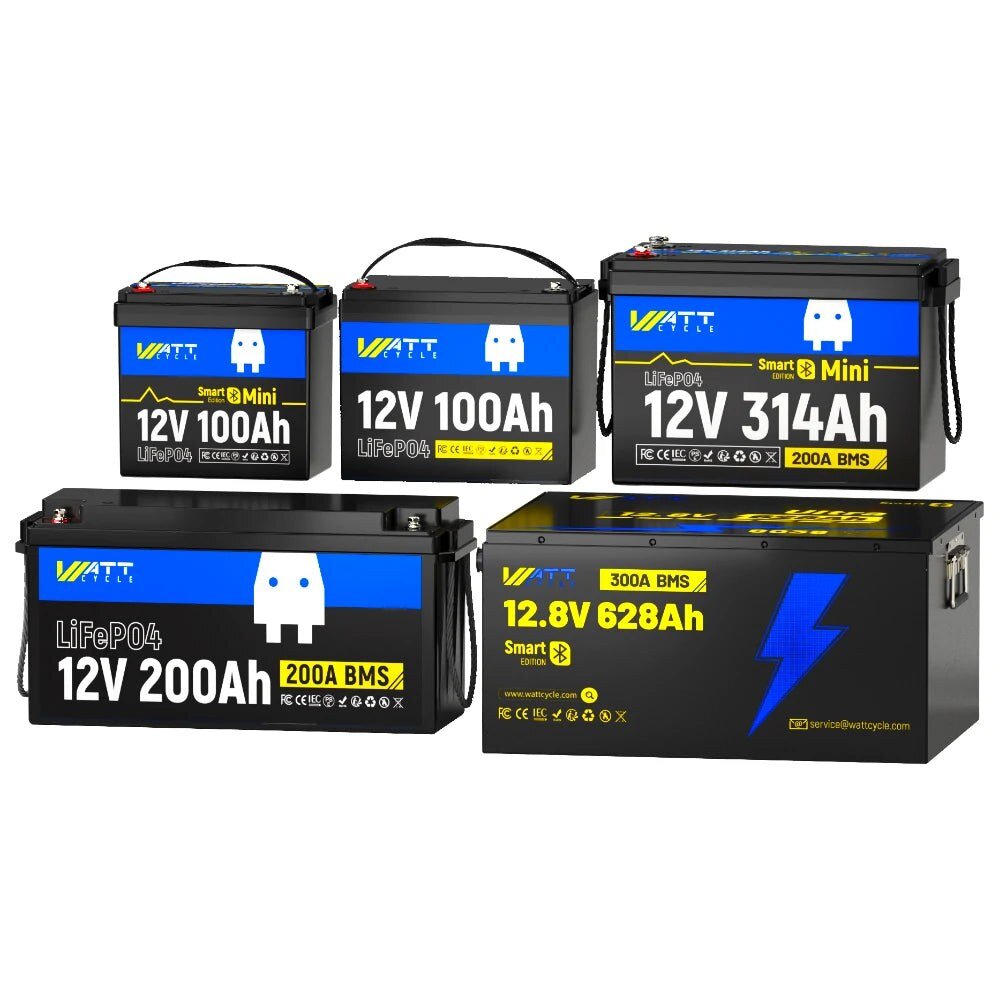
A few practical notes once it's in your hands. Mounting is where the Mini format earns its name — at about 20.8 lbs and a compact footprint, you can stand it on its side or tuck it into spaces a group-31 lead-acid battery would never fit, which matters in a van build where every inch is spoken for. Wire it to the right gauge for your loads, and give the Bluetooth app a few minutes on first setup to confirm the cells are balanced; that one check heads off the out-of-box imbalance the teardown reviews flagged.
Cold weather is the asterisk on every LiFePO4 battery, not just this one. Lithium cells shouldn't be charged below freezing, so if your build sees sub-zero temperatures, confirm whether your charger or the battery's own protection handles the low-temperature cutoff before you rely on it unattended. Then there's the lead-acid math, which is what makes the price make sense. A comparable lead-acid bank weighs far more, gives you only about half its rated capacity in usable terms because you shouldn't deep-cycle it, and lasts a small fraction of the cycles. Even after you price in the value-tier caveats, usable amp-hours per dollar across the battery's life still lands firmly in lithium's favor. That gap is the whole reason brands like WattCycle exist, and it's why "cheap lithium" is no longer a contradiction.
FAQ
Is WattCycle reliable? For the price, yes, with minor caveats. Independent testing confirmed capacity and efficiency; just top-balance a new cell pack and don't expect a truly serviceable case.
Will it run my RV? A single 100Ah handles lights, a water pump, phone and laptop charging, and short appliance runs. For air conditioning or long inverter loads you'll want multiple batteries in parallel.
What does the warranty cover? Five years standard, seven with registration — generous for the tier. Keep your purchase record.
Is the 15,000-cycle claim real? It's measured at 60% depth of discharge. Real-world cycle life at deeper discharge is lower but still far beyond lead-acid.
Sizing a build? Check current pricing and the Mini vs standard format at WattCycle.
Disclosure: This post contains affiliate links. We may earn a commission from purchases made through these links at no extra cost to you. Prices and availability accurate at time of writing.
Affiliate link — we may earn a commission at no extra cost to you.
Want gear like this on your content calendar?
Join AffluencerHub, get AI-matched to brand programs that fit your audience, and track every click to commission in one place.
Apply as a Creator