
Everything a UK buyer needs to understand watt-hours, LiFePO4, solar input and how to size a unit — with Bluetti as the worked example.
TL;DR: A portable power station is a big rechargeable battery with mains sockets, USB ports and (usually) a solar input. For most UK households and campers, a LiFePO4-based unit around 1–2kWh hits the sweet spot. If you want one brand that spans compact handhelds to whole-home backup, Bluetti's UK range is the easiest place to see the whole ladder in one place. Check current pricing before you buy — bands move.
What is a portable power station, exactly?
Strip away the marketing and a portable power station is three things bolted together: a battery, an inverter that turns that stored DC into household AC, and a charge controller that lets you refill the battery from the mains, a car, or solar panels. Think of it as a much larger, much smarter power bank — one that can run a fridge, a CPAP machine, power tools or a caravan's electrics instead of just topping up a phone.
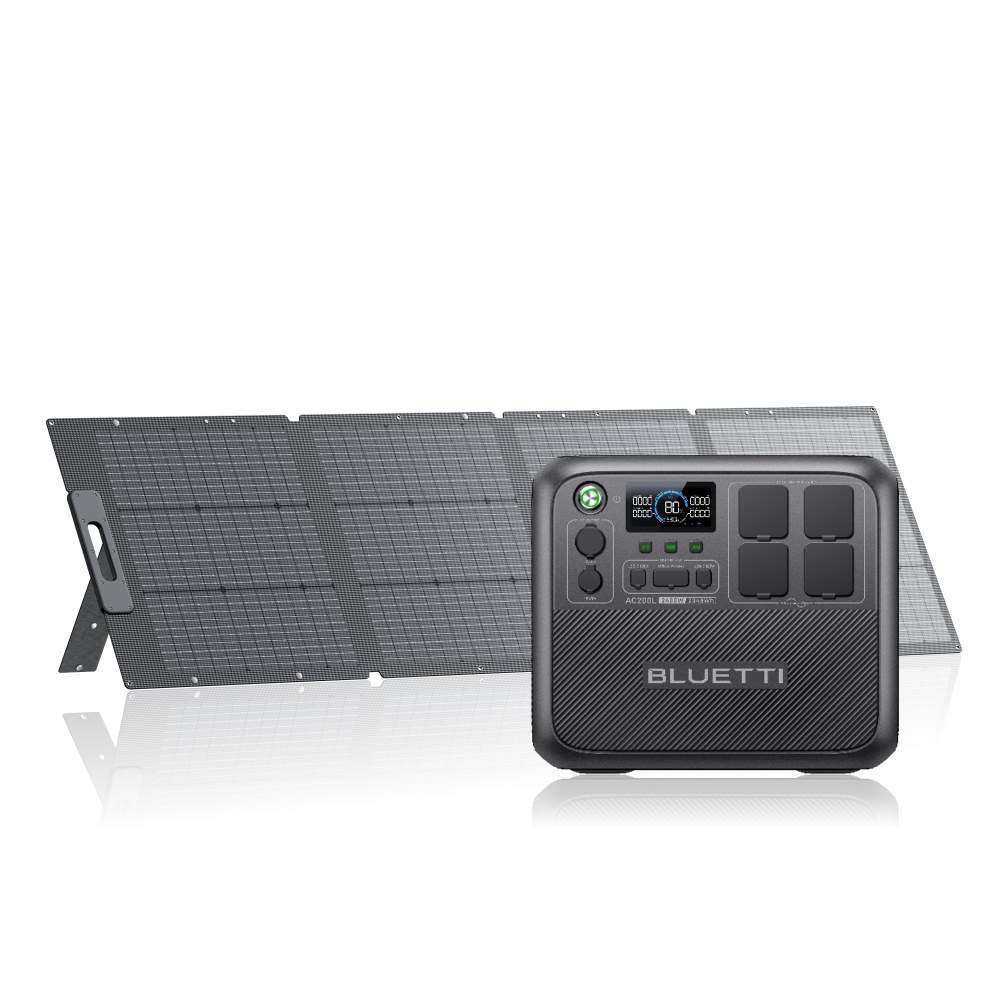
The word "generator" gets used loosely. A solar generator is simply one of these units paired with solar panels, with no petrol, no fumes and no noise. That distinction matters in the UK, where you can't run a petrol generator in a tent, a campsite awning or indoors during a power cut, but you can happily sit a battery unit in the kitchen.
Who actually needs one?
Four groups tend to buy these, and it's worth knowing which one you are before you spend anything.
- Campers and caravanners who want to keep a fridge cold, lights on and phones charged for a weekend without hooking up to a pitch.
- Van-lifers and off-grid dwellers who need a daily electrical system that recharges from the sun.
- Homeowners prepping for power cuts — storm season, grid faults, or just peace of mind for the freezer and the router.
- Tradespeople running tools on sites with no mains, where a quiet battery beats a petrol generator on noise, fumes and faff.
Your use case decides your capacity, your output and your budget. Everything below flows from that.
The 5 things to look for
1. Capacity — measured in watt-hours (Wh)
Capacity is the size of the tank. A watt-hour is one watt drawn for one hour, so a 1,000Wh (1kWh) unit will, in theory, run a 100W device for around ten hours, or a 500W device for roughly two. Real figures come in a little lower because inverters aren't perfectly efficient, but the maths is close enough for planning. Entry units sit around 250Wh; the popular middle ground is roughly 1–2kWh; flagships push past 3kWh and expand from there.
2. Output — measured in watts (W)
Capacity tells you how long; output tells you what you can run at all. A kettle, a microwave or a power tool might demand 1,500–2,000W the instant you switch it on. If the unit's continuous AC output is below that, it simply won't run the appliance no matter how big the battery is. Always check the continuous wattage against your thirstiest device, and look for a pure sine wave inverter so sensitive electronics behave.
3. Battery chemistry — LiFePO4 (LFP)
This is the single biggest quality signal. Older units used NMC lithium cells; the current serious players, Bluetti included, use LiFePO4 (LFP) across the main range. LFP lasts far more charge cycles before noticeable degradation, tolerates heat better and is chemically more stable. In plain terms: an LFP unit should still be useful many years after an NMC equivalent has faded. It's the difference between a purchase and a disposable.
4. Solar input (PV)
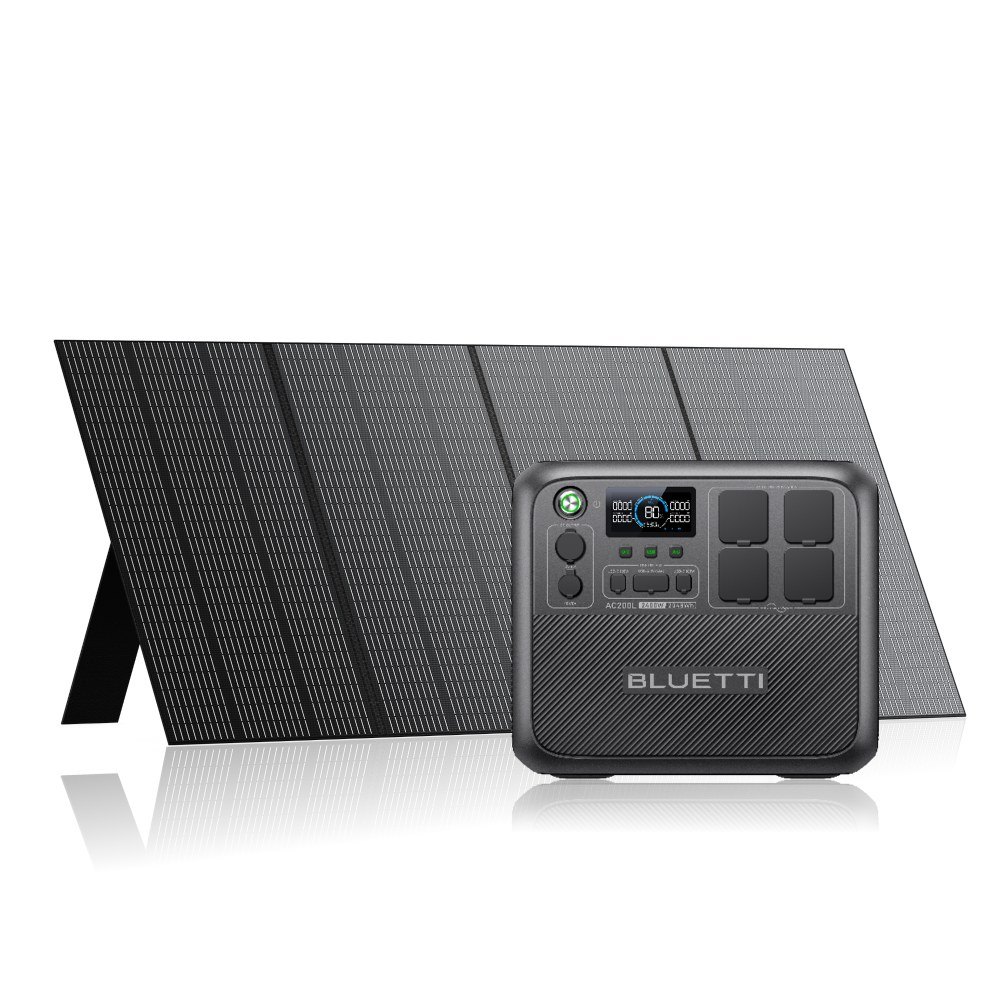
If you ever want to charge off-grid, check how many watts of solar the unit accepts and how fast it recharges. The best modern units take a high PV input and also support dual charging — mains and solar at the same time — so you can go from flat to usable in a fraction of the time older kit needed. For UK weather, more solar headroom is always welcome; our sun is not exactly Californian.
5. Expandability
Buy for today, but check the ceiling. Modular units let you clip on extra battery modules later, turning a 2kWh station into something far larger without buying a whole new system. The largest tiers scale toward whole-home backup with near-instant EPS/UPS switchover, so the lights barely flicker when the grid drops. If your needs might grow — a bigger van, a second freezer, working from home through outages — expandability saves money down the line.
Top picks by tier
- Entry / compact: the EB3A and Elite 30 V2 sit at the budget end — light, grab-and-go units for phones, laptops, a small cool box and a camping weekend.
- The 1kWh sweet spot: the AC180 is the classic first "proper" power station — enough to run most household essentials in short bursts without being a burden to carry.
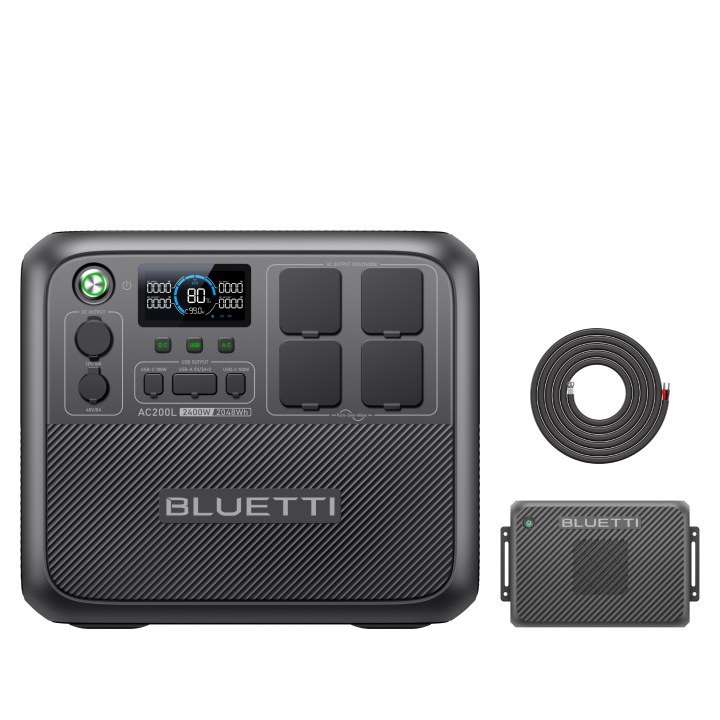
- Upper-mid ~2kWh: the AC200L and AC200MAX are the workhorses — big enough for a fridge through a power cut, a caravan's electrics, or a busy campsite.
- Premium ~2kWh: the Elite 200 V2 refines that class with faster charging and a tidier package.
- Rugged: the AC240 brings IP-rated weather resistance for messier jobsites and exposed pitches.
- Flagship 3kWh+: the Elite 300 and Elite 400 are the heavy hitters. According to TrustedReviews and TechRadar, the Elite 300 and Elite 400 land firmly in premium territory for capacity and build.
- Wearable and whole-home: the Handsfree wearable battery covers creators and drone pilots, while the AC500 and EP-series step up to whole-home backup.
Rough pricing (qualitative, GBP)
Prices shift with sales — the UK site has run an "Autumn Sale up to 50% off" style promotion — so treat these as bands and always check current before buying.
| Tier | Example | Rough GBP band |
|---|---|---|
| Entry / compact | EB3A, Elite 30 V2 | Budget / entry |
| 1kWh sweet spot | AC180 | Lower-mid |
| Upper-mid ~2kWh | AC200L, AC200MAX | Mid to upper-mid |
| Premium ~2kWh | Elite 200 V2 | Upper-mid |
| Flagship 3kWh+ | Elite 300, Elite 400 | Premium |
| Whole-home | AC500, EP-series | Top tier |
Common mistakes to avoid
- Buying on capacity alone. A huge battery with weak output still can't run a kettle. Match watts first.
- Ignoring chemistry. If a cheap unit doesn't mention LFP, assume the worse cell type and shorter life.
- Underestimating recharge time. Check solar and dual-charging figures if you'll ever be off-grid.
- No headroom. If your needs might grow, an expandable unit is cheaper than replacing everything later.
FAQ
Can I run a fridge in a power cut? Usually yes on a ~2kWh unit, provided its continuous output covers the fridge's start-up surge. Check the wattage.
Can I charge it and use it at once? Yes — these units pass through power, and the app lets you monitor charge over Bluetooth or Wi-Fi.
Is it safe indoors? Battery units produce no fumes, so unlike petrol generators they're fine inside.
Next steps
Work out your thirstiest appliance (watts) and your longest likely outage (hours), and let those two numbers point you to a tier. Then browse the full Bluetti UK range to see the ladder from compact to whole-home in one place, and check current pricing before you commit.
Disclosure: This post contains affiliate links. We may earn a commission from purchases made through these links at no extra cost to you. Prices and availability accurate at time of writing.
Disclosure: affiliate link — we may earn a commission at no extra cost to you.
Want gear like this on your content calendar?
Join AffluencerHub, get AI-matched to brand programs that fit your audience, and track every click to commission in one place.
Apply as a Creator