
Segway and Gotrax show up in nearly every "best electric scooter" search this year. One is priced like a toy at the low end and builds go-karts and dirt bikes at the high end; the other is a straightforward scooter-and-e-bike company. Here's what actually separates them, model by model, using each brand's own published pricing.
Segway and Gotrax get lumped together constantly, and that's fair enough — both sell electric scooters in the same $150–$900 zone where most first-time buyers are actually shopping. But the resemblance stops at the scooter aisle pretty fast. Gotrax is, at its core, a scooter-and-e-bike company. Segway builds scooters too, but it also builds a go-kart with a 2,400-watt dual-motor setup and a dirt bike that hits 96 km/h. That difference in ambition shows up in the pricing and the spec sheets, not just the marketing copy.
Browse Segway's current lineup before you commit to either brand — the overlap between them is narrower than the marketing suggests, and knowing exactly where they compete (and where they don't) will save you from comparing the wrong two models.
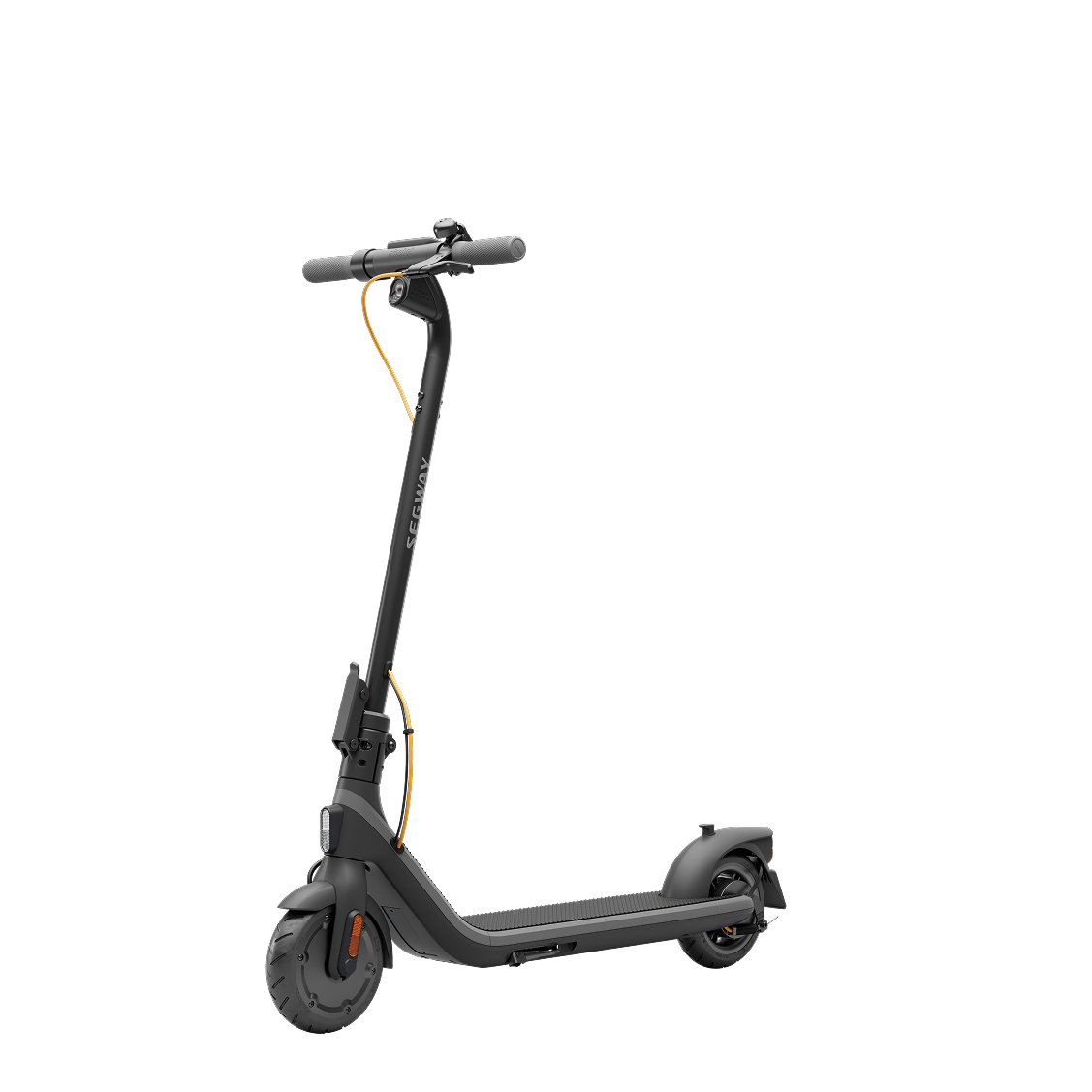
Image: A dark grey Segway DLX2 Plus kick scooter photographed at a three-quarter angle on a plain white background, showing the folded stem hinge, twin grip handlebar with an orange charging cable running down the neck, and the SEGWAY logo printed vertically on the stem — official Segway site
Where the two brands actually overlap
Three categories line up closely enough to compare head-to-head: budget-to-mid commuter scooters, kids' scooters, and, loosely, e-bikes.
Commuter scooters. Gotrax's G3 Pro Electric Scooter runs $549.99. Segway has two models that bracket it almost exactly: the DLX2 Plus at $399.99 undercuts it by $150, and the DLX2 Pro at $499.99 sits just below it. Above it, the E3 Pro ($699.99–$899.96) brings a meaningfully higher spec ceiling — 800W peak power, a 34-mile range at 9 mph, 10-inch tubeless tires, dual suspension, and an IPX5 water-resistance rating. So if the G3 Pro is your reference point for "what $550 gets you," Segway gives you a cheaper option below it and a faster, longer-range option above it. You're not locked into one price tier.
Kids' scooters. This one's a surprise. Segway's C2 Go actually undercuts Gotrax's kids' model — $149.99 versus Gotrax's XR Glow Kids Electric Scooter at $169.99. Both target roughly the same age range. The C2 Go is built for ages 6–10, weighs just 16.5 lbs, runs on 7-inch tires, and adds three riding modes plus ambient lighting. A $20 gap won't make or break anyone's budget, but when you're buying something a seven-year-old will outgrow in a year, every dollar counts a little more than it would on an adult purchase.
E-bikes. Here the comparison breaks down flat. Gotrax has two clearly priced e-bikes — the Ranger 16 at $499 and the R8 Fat Tire at $999 — which makes Gotrax dead simple to shop on price alone. Segway also sells e-bikes; its Muxi, Xiro, and Myon lines show up in the site's own sitemap. But pricing for those wasn't available at the time of writing. So if you're specifically e-bike shopping today and want a hard number to compare, Gotrax is the brand with its cards already on the table.
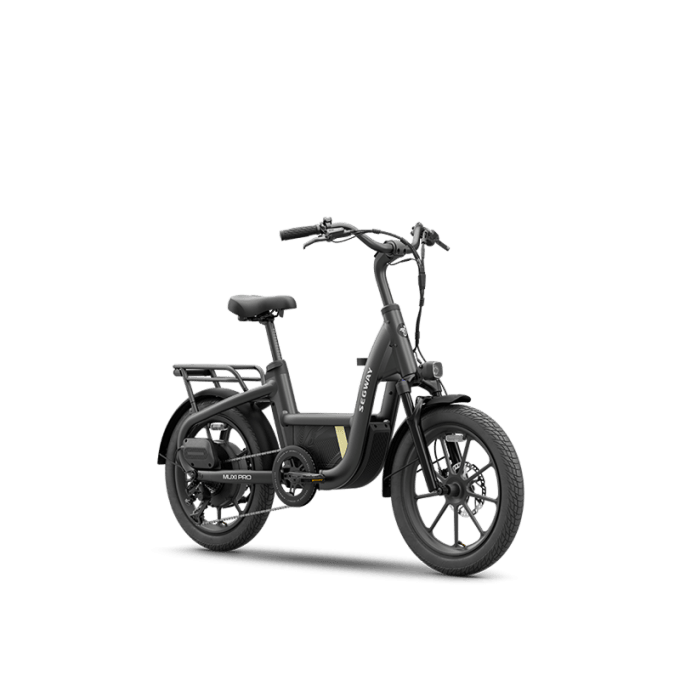
Image: A matte black Segway Muxi Pro cargo e-bike shown at a three-quarter angle, with a rear cargo rack, a low step-through frame, a front disc brake, and "SEGWAY" and "MUXI PRO" printed on the frame and battery casing — official Segway site
What Segway has that Gotrax simply doesn't
This is where the "vs" framing gets a little unfair to Gotrax, because Segway's catalog goes places Gotrax's doesn't touch at all.
Start with the Ninebot S2 self-balancing scooter ($649.99–$729.98). Max speed 11.2 mph, roughly 21.7 miles of range, rated for riders between 16 and 50 years old, standing 4'3" to 6'6", with an IP54 rating and a Bluetooth speaker built in. It's a hands-free, balance-board-style ride — nothing like a stand-up scooter to operate — and Gotrax doesn't have anything comparable here.
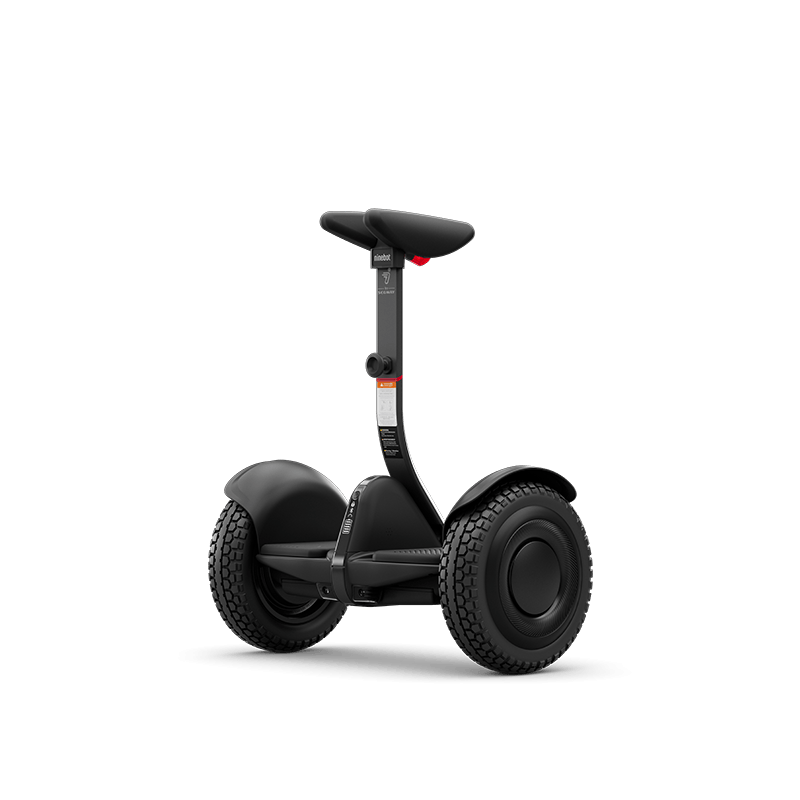
Image: A black, two-wheeled Ninebot S2 self-balancing scooter with a T-shaped knee control bar bearing the "ninebot" logo and a red warning label, plus two large knobby wheels with fender guards — official Segway site
Then there's the GoKart Pro2 ($2,499.99–$2,579.98). Three speed tiers: ECO capped at 5 mph, Sport at 11 mph, Race at 26.7 mph, plus manual modes that also top out around 26.7 mph. Power comes from dual motors rated 450W nominal / 2,400W max each, off a 54V, 432Wh battery, with an RGB taillight and brake light thrown in. This isn't a commuter product at all — it's closer to a backyard go-kart for adults who already own a scooter and want the next toy up. Gotrax has no answer for it here.
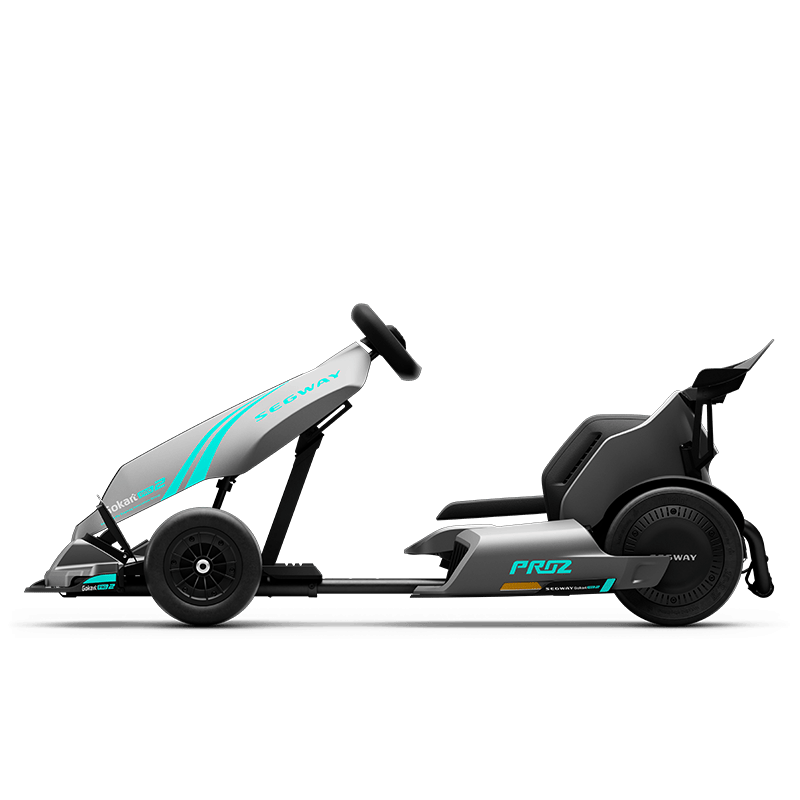
Image: The Segway GoKart Pro2 shown in side profile — the fold-down steering-wheel frame on the left with "SEGWAY" and teal accent stripes, and the assembled kart on the right with a bucket seat, rear spoiler, and "PRO2" lettering on the side panel — official Segway site
Nothing about the Xaber 300 eDirt Bike ($5,299.99) belongs in a scooter-brand comparison anymore, and that's the point. Segway built it around a 0–80 km/h sprint in five seconds and a 96 km/h ceiling, with 8,000W of nominal power and 21kW at peak driving it there. Marzocchi supplies the front end (220mm of travel), the stopping power comes from four-piston hydraulic discs on 220mm rotors, and traction control plus a proprietary electronic clutch system round out the electronics. Hauling it takes planning, too — 85kg with the battery in means it's not a one-person lift into a trunk — and none of that has an equivalent anywhere in Gotrax's lineup, because Gotrax simply doesn't build in this category.
None of this makes Segway "better" in some abstract sense. It makes Segway a broader company. If all you want is a commuter scooter, that breadth doesn't matter much to your decision. If you're the kind of buyer who starts with a scooter and might want a go-kart or a dirt bike down the line, it matters quite a bit — because you'd be shopping one brand instead of three.
Product-by-product comparison
| Model | Price | What It Fits |
|---|---|---|
| Segway DLX2 Plus | $399.99 | Budget beginners, short commutes (15.5-mi range, dual brakes, IPX4) |
| Segway DLX2 Pro | $499.99 | Step-up commuter tier, priced right against Gotrax's G3 Pro |
| Segway E3 Pro | $699.99–$899.96 | Serious commuters — 34-mi range, 800W peak power, IPX5, Find My tracking |
| Segway C2 Go (Kids) | $149.99 (reg. $179.99) | Ages 6–10, lighter and cheaper than Gotrax's kids model |
| Segway Ninebot S2 | $649.99–$729.98 | Teens/adults wanting a self-balancing ride, not a stand-up scooter |
| Segway GoKart Pro2 | $2,499.99–$2,579.98 | Backyard go-kart thrills for existing riders — not for commuting |
| Segway Xaber 300 | $5,299.99 | Off-road riders wanting motocross-grade performance |
| Gotrax G3 Pro (reference) | $549.99 | Mid-tier commuter scooter — Gotrax's closest match to the DLX2/E3 tier |
Real-world scenarios
- Commuting on a tight budget, nothing fancy: the DLX2 Plus at $399.99 beats Gotrax's G3 Pro on price and still covers a 15.5-mile range with dual brakes.
- Want the longest range and the most tech here: the E3 Pro's 34-mile range, 800W peak power, and Apple Find My tracking put it ahead of anything Gotrax has at a comparable price.
- Buying a first scooter for a young kid: Segway's C2 Go is $20 cheaper than Gotrax's XR Glow Kids model and lighter at 16.5 lbs.
- Shopping for an e-bike against a fixed budget: Gotrax wins by default — its Ranger 16 ($499) and R8 Fat Tire ($999) have public pricing right now; Segway's e-bike lines don't — not yet, anyway.
- Want something Gotrax doesn't sell at all: the Ninebot S2, GoKart Pro2, and Xaber 300 only exist in Segway's catalog.
The Verdict
For straight commuter-scooter shopping, Segway casts the wider net. There's a cheaper entry point in the DLX2 Plus, a mid-tier option that lines up directly against Gotrax's G3 Pro in the DLX2 Pro, and a higher-spec option above both of them in the E3 Pro that Gotrax doesn't appear to match at a similar price. Segway also wins the kids'-scooter price comparison, even if the margin is small. Gotrax's clearest edge here is e-bikes, where its pricing is public today and Segway's isn't.
If you're comparing scooters apples-to-apples, check Segway's current pricing here — the DLX2 Plus and E3 Pro both undercut or outperform Gotrax's nearest equivalent depending on what you value more, price or range. If you're set on an e-bike specifically, Gotrax is the easier brand to price-shop right now.
FAQ
Q: Is Segway or Gotrax better for daily commuting?A: On the numbers here, Segway. The DLX2 Plus ($399.99) beats Gotrax's G3 Pro ($549.99) on price for a shorter-range commuter build, and the E3 Pro ($699.99–$899.96) offers more range (34 miles), more power (800W peak), and a higher water-resistance rating (IPX5) than anything Gotrax has listed at a similar price.
Q: Does Segway make anything Gotrax doesn't sell at all?A: Yes, three categories. The Ninebot S2 self-balancing scooter, the GoKart Pro2 electric go-kart, and the Xaber 300 eDirt bike don't have Gotrax equivalents.
Q: Which brand is cheaper for a kids' scooter?A: Segway. The C2 Go ($149.99, regularly $179.99) undercuts Gotrax's XR Glow Kids Electric Scooter ($169.99) by $20, and it's lighter at 16.5 lbs versus a heavier build.
Q: Are Segway scooters waterproof?A: They carry water-resistance ratings, not full waterproofing. The DLX2 Plus is rated IPX4, the E3 Pro is rated IPX5, and the Xaber 300 dirt bike carries an IPX5 rating across the whole bike. None of these are rated for submersion — ride in rain, not through floods.
Q: Is Gotrax better for e-bikes?A: Based on published pricing, yes, at least for comparison-shopping purposes. Gotrax's Ranger 16 ($499) and R8 Fat Tire ($999) have clear public prices today. Segway does sell e-bikes through its Muxi, Xiro, and Myon lines, but pricing for those wasn't published at the time of writing, so a direct dollar-for-dollar comparison isn't possible right now.
Q: What's the safest first electric scooter if I've never ridden one before?A: The DLX2 Plus. Segway's own product copy markets it as built for beginners and short commutes, and at $399.99 with dual brakes and a 15.5-mile range, it's the lowest-commitment adult scooter here.
Disclosure: This article contains affiliate links. If you click through and make a purchase, we may earn a commission at no additional cost to you. Product selections reflect publicly available pricing and specifications at the time of writing; prices, discounts, and availability change often, so confirm current details on the brand's site before buying.
Disclosure: affiliate link — we may earn a commission at no extra cost to you.
Want gear like this on your content calendar?
Join AffluencerHub, get AI-matched to brand programs that fit your audience, and track every click to commission in one place.
Apply as a Creator