
Segway's catalog stretches from a $150 scooter built for six-year-olds to a $5,300 electric dirt bike that hits 96 km/h. Picking the wrong one wastes real money. This guide walks through six current models by who they actually fit. Then it stacks the commuter-focused E3 Pro against Gotrax's closest rival on price and spec, and says plainly where Segway earns its premium and where it doesn't.
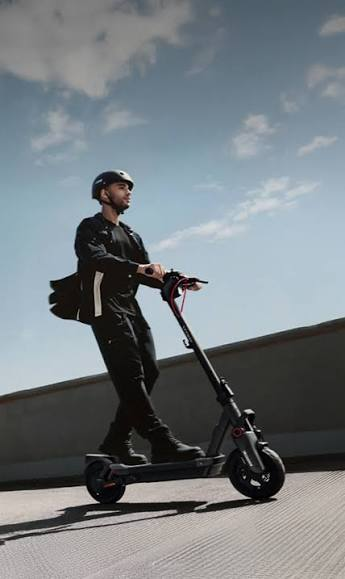
Segway isn't just scooters anymore
Type "segway.com" into a browser and it redirects you to Ninebot's corporate site. That's not a broken link — it's history. Segway Inc., the American company that turned "self-balancing" into a household word, got absorbed into Ninebot back in 2015. The actual storefront now lives at store.segway.com, a separate, fully live site selling six product families: kick scooters, kids' scooters, self-balancing boards, e-bikes, go-karts, and dirt bikes.
None of that is toy-aisle stuff. Only one model in the current lineup, the C2 Go, targets kids specifically, ages 6 to 10. Everything else is built for teens and adults, several models carry 16+ or 18+ age guidance, and most don't legally require a license to ride — though local rules on where you're allowed to ride them still vary, so check yours before buying. Segway's own homepage copy calls itself "the worldwide leader in personal transportation," and the product pages back that framing with hard numbers: mph, mile range, watt output, IP ratings. Less "fun gadget," more "vehicle you commute on."
Start here: which category fits you
Six models, six very different jobs.
Commuting short distances on a budget → DLX2 Plus, $399.99. Segway pitches this one as lightweight and beginner-friendly, with a 15.5-mile range, dual brakes, and IPX4 water resistance. That's splash-proof, not submersible — fine for rain, not for riding through standing puddles.
Commuting further, want smart features → E3 Pro, $699.99 to $899.96 depending on color and bundle. Top speed 20 mph, 34 miles of range at a steady 9 mph, 800W peak power, dual suspension, 10-inch tubeless tires, and IPX5 water resistance — a real step up from the DLX2 Plus's IPX4. It also pairs with Apple Find My, so losing track of where you parked it is harder to do. RGB lighting is standard, which reads more style than substance, but it's there.
Buying for a kid → C2 Go, $149.99, down from a regular $179.99 at last check. Ages 6 to 10, 7-inch tires, three riding modes, and — Segway's own words — "colorful ambient lights." It weighs 16.5 lbs, light enough for a kid to actually carry it themselves, which matters more than it sounds like it should.
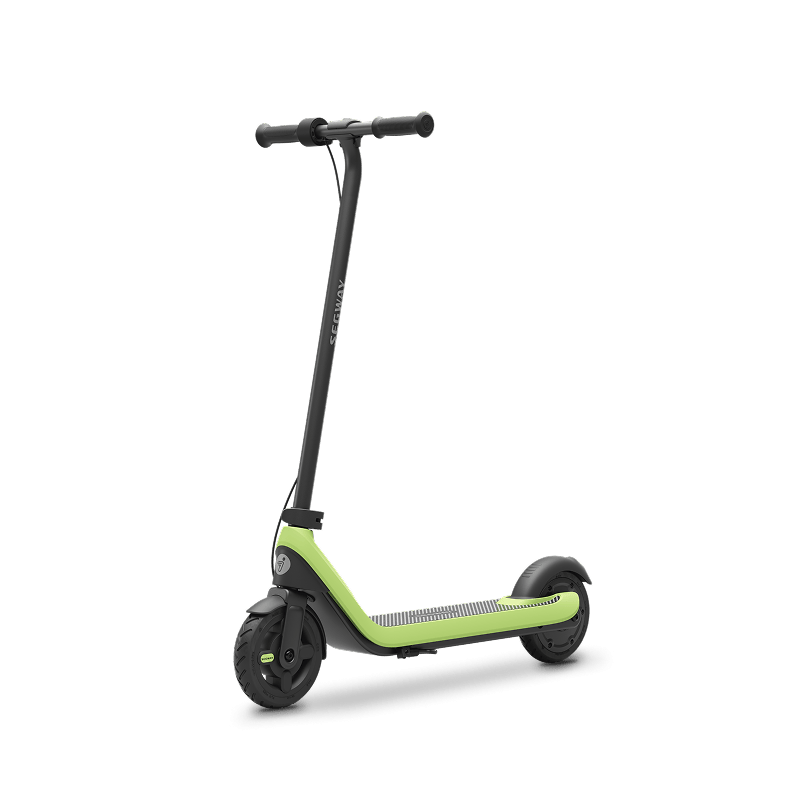
Image: A smaller, kid-sized kick scooter in green and black with the SEGWAY logo printed on the stem, a black T-bar handlebar with two grips, and a round badge on the footboard — official Segway site
Want the self-balancing thing, not a scooter → Ninebot S2, $649.99 to $729.98. Top speed roughly 11.2 mph, range about 21.7 miles, and a rider window from age 16 to 50, height 4'3" to 6'6", weight capacity 88 to 220 lbs. It's IP54-rated, so treat it like most electronics: fine with light rain, not a pool toy. Bluetooth speaker and RGB lights come along for the ride, same as the E3 Pro.
Backyard racing, not commuting → GoKart Pro2, $2,499.99 to $2,579.98. This isn't a kid's pedal kart with a motor bolted on. It runs four speed tiers — ECO capped at 5 mph, Sport at 11 mph, Race at 26.7 mph, and a Manual mode (I/II/III) that also tops out at 26.7 mph — off a 54V, 432Wh battery pushing two motors rated 450W nominal and 2,400W max combined peak. RGB taillights double as brake lights. "Play like a pro" is the marketing line, and for once it's not far off.
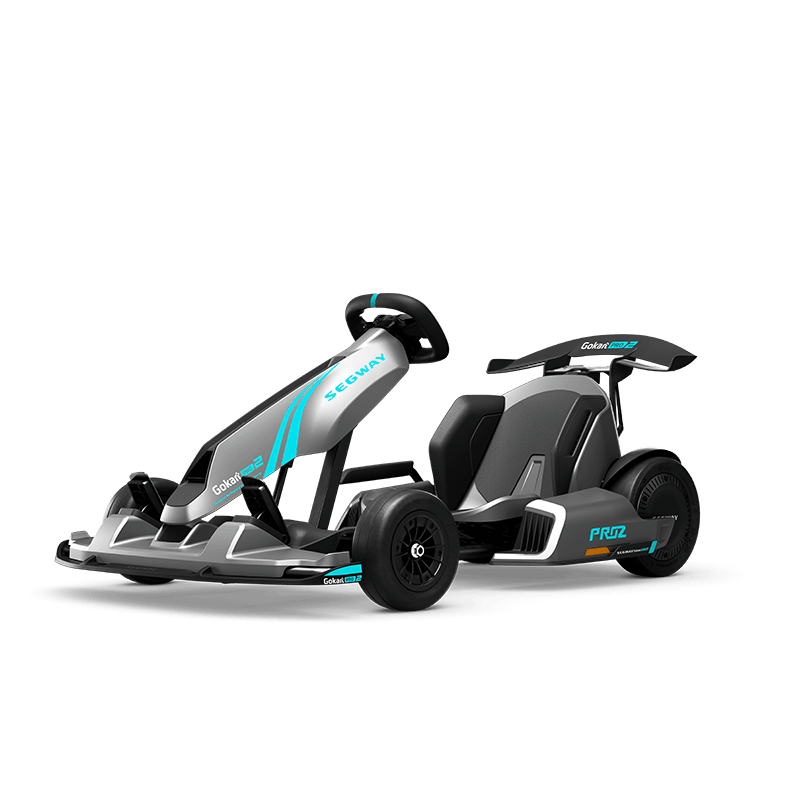
Image: A silver-and-teal go-kart attachment kit next to the assembled GoKart Pro2 — a low bucket seat, roll-cage-style rear spoiler, steering wheel on an angled column, and "GoKart Pro2" / "SEGWAY" branding printed on the bodywork — official Segway site
Off-road performance, money isn't the constraint → Xaber 300, $5,299.99. This is the outlier of the lineup, by a wide margin. Max speed 96 km/h, 0-80 km/h in five seconds, a custom 8,000W nominal / 21kW max motor Segway calls its "High-Performance Mid-Mounted Flat-Wire Motor," and a 72V, 44Ah lithium battery. Marzocchi handles the front suspension (37mm fork, 220mm travel), there's a multi-link rear, and braking is four-piston hydraulic discs front and rear on 220mm rotors. Traction control and something Segway brands "Virtual E-Clutch" round out the electronics. At 85 kg with the battery installed, this is not a bike you casually toss in a trunk.
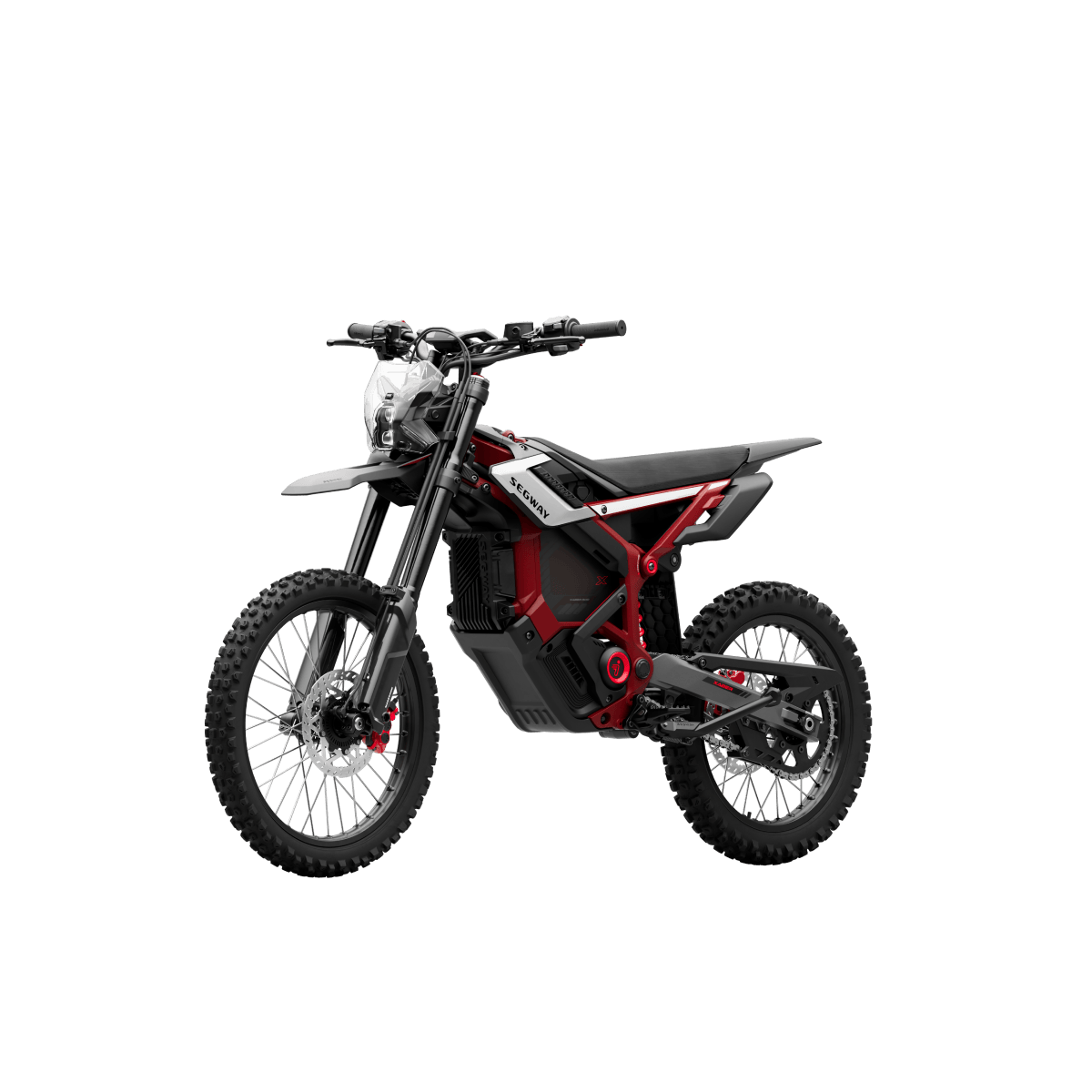
Image: A red, black, and white electric dirt bike with knobby off-road tires, spoked wheels, a visible front disc brake, and "SEGWAY" printed on the frame near the mid-section — official Segway site
Segway vs Gotrax: does the premium hold up?
Gotrax is the most direct, verifiable price competitor across nearly every Segway category — kids' scooters, e-bikes, and commuter scooters all overlap.
Take the mid-range commuter tier. Gotrax's G3 Pro Electric Scooter sits at $549.99, landing almost exactly between Segway's DLX2 Pro (around $499.99) and the E3 Pro's $699.99 starting price. That middle spot isn't an accident — it's where most casual buyers actually shop. If your priority is pure price-per-mile of range, Gotrax forces Segway to justify the gap with features, not just brand name.
Where Segway pulls ahead: the E3 Pro's Apple Find My integration and IPX5 rating aren't things a $549.99 scooter typically matches. Where Gotrax wins outright: if all you want is A-to-B commuting without smart-tracking extras, paying $150-plus more for the E3 Pro over the G3 Pro buys features you might never actually open your phone to use.
Kids' scooters tell a different story. Gotrax's XR Glow runs $169.99; Segway's C2 Go undercuts it at $149.99. Same category, Segway cheaper — a rare case where the flashier brand is also the better deal.
E-bikes are Gotrax's stronger flank. Its Ranger 16 starts at $499 and the fat-tire R8 comes in at $999, both well below where Segway's e-bike lines get marketed. Segway's e-bikes exist in the catalog, but the brand's clearest engineering wins this year sit in scooters, self-balancing boards, go-karts, and dirt bikes — not bikes.
Gotrax wins on flat-out value in the commuter-scooter middle tier. Segway wins when the category has no real comparison point — nothing on the market touches the Xaber 300's spec sheet at any price, and the GoKart Pro2 doesn't have a direct rival either.
Who should skip Segway entirely
If range-per-dollar is your only metric and you're shopping the sub-$400 commuter tier, Gotrax and a handful of other budget brands will out-value the DLX2 Plus. Want an e-bike specifically? Shop around first — Segway's bike lineup exists, but it clearly isn't where the brand's R&D budget is going right now.
Product comparison
| Model | Price | Best fit |
|---|---|---|
| Segway DLX2 Plus | $399.99 | Budget beginner commuting, 15.5-mile range |
| Segway E3 Pro | $699.99–$899.96 | Longer commutes, smart tracking, IPX5 rating |
| Segway C2 Go | $149.99 (reg. $179.99) | Kids ages 6–10 |
| Segway Ninebot S2 | $649.99–$729.98 | Self-balancing riders, teens through adults |
| Segway GoKart Pro2 | $2,499.99–$2,579.98 | Backyard/track racing, adjustable speed tiers |
| Segway Xaber 300 | $5,299.99 | Serious off-road performance, no budget ceiling |
FAQ
Is Segway still just the self-balancing scooter thing from the 2000s?No. That product exists — the Ninebot S2 carries the torch — but it's one of six categories now: kick scooters, kids' scooters, self-balancing boards, e-bikes, go-karts, and dirt bikes.
Do I need a license to ride a Segway?Most current models don't require one. Age guidance varies by product — the Ninebot S2 specs a rider window of 16 to 50 — and local laws on where you can legally ride still differ by city and country, so check before buying.
What's the real difference between IPX4 and IPX5 water resistance?IPX4, on the DLX2 Plus, means splash-resistant from any direction: rain, sure; standing water, no. IPX5, on the E3 Pro, tolerates a low-pressure water jet — a meaningful step up if you commute regardless of weather.
Is the GoKart Pro2 safe for kids?It ships with four speed tiers, including an ECO mode capped at 5 mph, but the top-end modes hit 26.7 mph. Treat it as a family vehicle with adjustable limits, not a kids' toy by default.
Segway or Gotrax — which should I actually buy?Depends what you're buying. For a straightforward commuter scooter under $600, Gotrax's G3 Pro is hard to beat on price. For anything needing smart features, off-road performance, or a go-kart, Segway doesn't really have direct competition at the same spec level.
Is the Xaber 300 legal to ride on the street?It's built and marketed as an off-road eDirt bike. Street-legal status depends entirely on local vehicle regulations, which vary enough that "check with your local DMV or equivalent" is the honest answer, not a cop-out.
See current Segway pricing and availability before you decide — bundle colors and configurations shift the E3 Pro, Ninebot S2, and GoKart Pro2 prices shown above.
This article contains affiliate links. If you click through and make a purchase, we may earn a commission at no additional cost to you. Product prices, specs, and availability are pulled directly from the retailer's site and can change without notice, so confirm current pricing before buying. We were not paid by Segway or Gotrax to write this, and the comparisons above reflect our own research.
Disclosure: affiliate link — we may earn a commission at no extra cost to you.
Want gear like this on your content calendar?
Join AffluencerHub, get AI-matched to brand programs that fit your audience, and track every click to commission in one place.
Apply as a Creator