
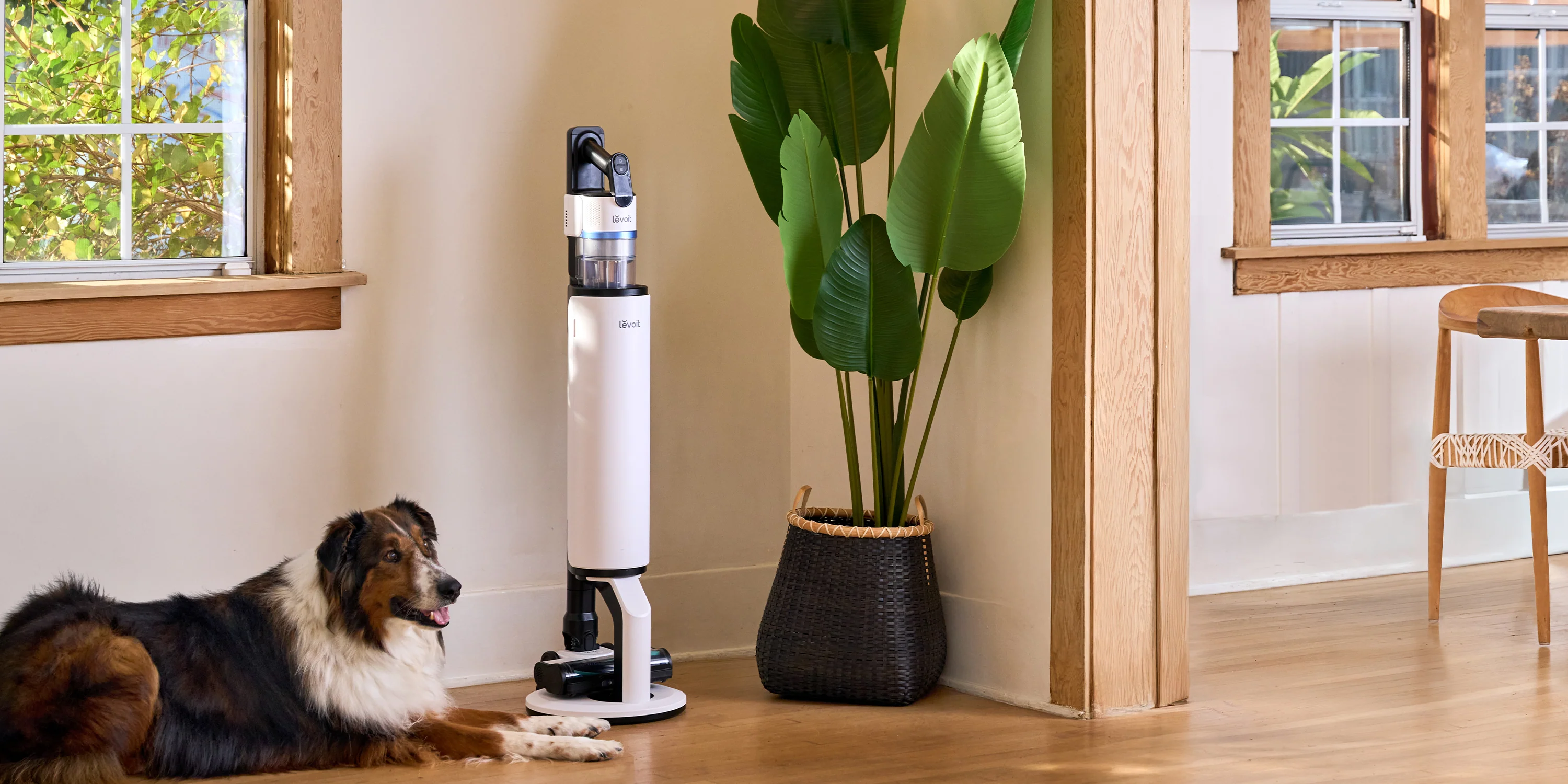
TL;DR: I burned incense three times a week for a month to spike PM2.5 above 150 μg/m³ on demand. The 400S is the one most people should buy, the 300 punches well above $99, and the 600S only earns its filter bill past 400 sq ft. See current pricing →
01The setup
Three purifiers, three rooms, one Temtop M2000 air-quality meter placed ten feet from each unit. Not because I meditate — because I needed a repeatable way to make the air go bad.
The Core 300 lived in my 180 sq ft bedroom. The Core 400S handled the 350 sq ft living room. The Core 600S sat in a 620 sq ft open-plan kitchen and dining area with nine-foot ceilings. All three ran daily, mostly on auto where available, with forced max-speed tests after cooking, incense and one bad wildfire smoke day in late August.
How we tested these three
02Core 300: the small-room overachiever
The Core 300 is the model most people buy first. It's 7.5 pounds, roughly $99, and has no app, no WiFi, no sensor. Three physical fan buttons and a timer. That's it.
It also happens to work.
H13 True HEPA rated to 99.97% at 0.3 microns, CADR of 141 CFM across smoke, dust and pollen. In my bedroom on speed 2 it kept PM2.5 below 5 μg/m³ overnight, every night. Sleep mode measures 24 dB at three feet — inaudible with a fan running elsewhere in the house.
The one test that mattered: incense lit at 9 PM, speed 3, meter running. PM2.5 peaked at 138 μg/m³. Twenty-four minutes later it was back under 15. In a 180 sq ft room, that is exactly what you want.
The trade-off is the filter. Replacements run about $30 and Levoit rates them for six months; in a moderately clean bedroom I'd expect closer to eight. Annual filter cost: about $45.
03Core 400S: the one most people should actually buy
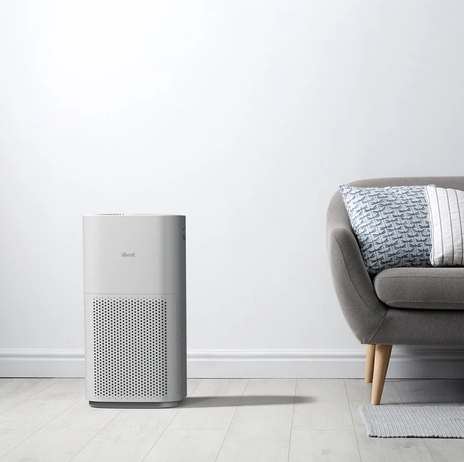
This is the middle child, and also the model that keeps winning "best overall" nods and averages 4.6 stars across Amazon's 28,000-plus reviewers. At around $189 on sale, $219 list, you get:
- 260 CFM CADR across dust, smoke and pollen
- H13 True HEPA plus a proper carbon layer
- A laser PM2.5 sensor on the front display
- VeSync app, Alexa and Google Home support
- Auto mode that actually reacts
Auto mode is what separates it from the cheaper sibling. I fried salmon on the stove one Wednesday. Fifteen seconds after PM2.5 crossed 30 in the app, the fan ramped from speed 1 to speed 3. Eleven minutes later the room was under 15 again. I did not touch the unit.
Rated for 403 sq ft at 4 ACH; my living room is 350. It idled on speed 1 at about 29 dB most days, sleep mode at 24 dB. I heard nothing.
Filter cost is the honest downside: $50 every six months, so about $100 a year — roughly twice the Core 300's rate. You're paying for the sensor and the bigger CADR.
04Core 600S: when the room is too big for the 400S
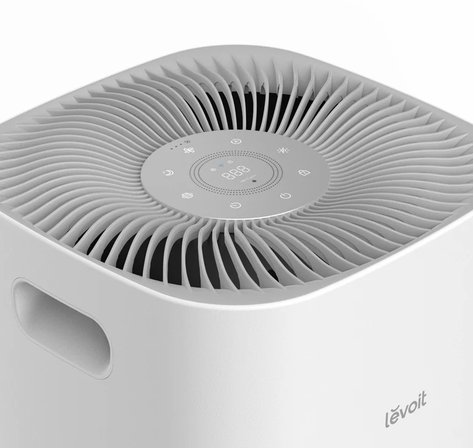
Here's where the marketing starts to stretch. The 600S claims coverage up to 2,933 sq ft at 1 air change per hour, and 635 sq ft at the more useful 4 ACH standard. Ignore the 1 ACH number. Nobody wants their air cleaned once an hour.
At $299.99 with a redesigned filter and fan motor, CADR jumps to 410 CFM for smoke and around 425 for dust — roughly 58 percent more than the 400S. In my 620 sq ft open kitchen, it cleared a 148 μg/m³ incense spike to under 12 in 32 minutes on speed 4. The same test with the 400S in the same room took 54 minutes.
The 600S adds a light sensor that dims the display when the room goes dark, which the 400S lacks. Same 24 dB sleep mode, same app, same voice support.
The filter is where the math gets painful: $79.99 every six to eight months. Over two years of ownership I project total costs around $590 versus $405 for the 400S. If your room is under 400 sq ft you don't need this. If your space is 400 to 635 sq ft with high ceilings or open flow, you probably do.
05Head to head
| Model | Price | CADR (smoke) | Coverage (4 ACH) | Filter cost/year |
|---|---|---|---|---|
| Core 300 | $99 | 141 CFM | 219 sq ft | ~$45 |
| Core 400S | $189–219 | 260 CFM | 403 sq ft | ~$100 |
| Core 600S | $299 | 410 CFM | 635 sq ft | ~$140 |
Note that no single column wins outright. The 300 wins on running cost, the 600S on raw airflow, and the 400S is the one that doesn't lose badly on either.
06Where they all stumble
✓What all three got right
- H13 True HEPA on every model, no ionizer stage, no ozone
- 24 dB sleep mode across the range — genuinely inaudible
- Particle clearance matched or beat the coverage ratings in our rooms
- Under 7 W in sleep or auto; roughly $18–30 a year to run 24/7
–Where they fall short
- Odour. The carbon is a thin layer in the cylindrical cartridge. After a week of nightly cooking tests, a faint garlic-and-fish smell hung around for a couple of hours on both the 400S and 600S.
- VeSync setup. Four minutes on the 400S, about ten on the 600S because it kept losing the WiFi handshake. Stable once connected.
- Filter authenticity. Third-party knockoffs are widespread and none of the ones we've seen meet H13 spec.
If odour is your main concern, a Winix 5510 with its pelleted carbon bed does better. If particles are the concern, Levoit wins on price-per-CFM.
Levoit Core 400S — the one I'd buy again
260 CFM, 403 sq ft at 4 ACH, laser PM2.5 sensor and auto mode that reacts in about 15 seconds. Core 300 at $99 for bedrooms; 600S at $299 past 400 sq ft.
🌬️ Buy replacement filters direct or from a verified retailer — third-party marketplace cartridges rarely meet H13 spec and often fit loosely enough to let unfiltered air bypass the filter entirely. Affiliate link — we may earn a commission at no extra cost to you.
07Who should buy which
Core 300 — a bedroom, nursery or home office under 220 sq ft, and you want the cheapest genuine HEPA option that isn't a toy.
Core 400S — 220 to 400 sq ft, you want auto mode, and you use Alexa or Google. This is the default recommendation for most homes.
Core 600S — open-plan living space of 400 to 635 sq ft, you cook often, or you live somewhere with wildfire smoke a few weeks a year.
Frequently asked questions
Is H13 True HEPA better than True HEPA? Marginally. H13 captures 99.97% at 0.3 microns per the European EN 1822 standard; standard True HEPA hits the same figure with slightly looser tolerances at the tail sizes. In practice both perform well for household use.
Do these units produce ozone? No. Levoit Core purifiers are pure mechanical HEPA with no ionizer stage — a real advantage over Winix PlasmaWave models if you have respiratory sensitivities.
How often do I actually need to replace the filter? Levoit says six to eight months for the 300, six for the 400S, six to twelve for the 600S. In a low-particulate home you can push those windows about 20 percent longer; with pets or heavy cooking, cut them 20 percent shorter.
Can I run these all night? Yes. Sleep mode drops the fan to its lowest setting and dims or disables the display. Power draw stays under 7 watts; running 24/7 costs about $18 to $30 a year in electricity.
Do I need the smart version? Only if you want auto mode or scheduling. The non-smart Core 300 does the exact same filtration as the Core 300S for $30 less — and note the 300S adds WiFi but no sensor, so it can't do real auto mode anyway.
Thirty days and a lot of incense later: buy the 400S unless your room genuinely says otherwise, and budget for filters before you budget for the unit.
Want gear like this on your content calendar?
Join AffluencerHub, get AI-matched to brand programs that fit your audience, and track every click to commission in one place.
Apply as a Creator