
Most travellers overpay for hotels not because they're careless, but because they misunderstand how hotel pricing works. This how-to explains the mechanics, then gives you a repeatable process. Work through it once with your next trip open, and compare live hotel prices on Trivago as we go. The goal isn't luck. It's a method you can run every time.
Why the same room has different prices
Start with the thing nobody explains.
A single hotel room is sold through many channels at once: the hotel's own website, several online travel agencies, sometimes bulk "room suppliers" who buy inventory and resell it. Each channel sets its own rate, adds its own fees, and runs its own promotions. That's why the identical room can cost noticeably more on one site than another on the same night.
A metasearch engine exists precisely to expose that gap. According to trivago's help centre, it's not a booking site itself; it compares the offers that booking sites provide and shows them side by side, then hands you off to whichever channel you choose. You never pay Trivago. The booking site takes the payment and owns the reservation.
Understand that split and the rest of this guide clicks into place.

01Search broad before you search narrow
Enter your destination, dates, and guest count. Don't filter yet.
Why hold off? Because your first look should map the whole price landscape, not a slice of it. You want to know the floor, the ceiling, and roughly where the bulk of decent rooms sit before you start cutting options. Filter too early and you never learn what "normal" costs in that city.
02Read the price context, not just the number
trivago has invested heavily in showing whether a rate is high or low for a destination. The company's engineering team has written about aggregating billions of historic prices to build that context at speed.
Use it as a benchmark. A number in isolation tells you nothing. A number flagged as above the usual range for that city, in that season, tells you to pause. This is the single habit that separates people who guess from people who decide.
03Sort twice, on purpose
Sort by price first. Now you see the floor and the cheapest available channel for it.
Then sort by guest rating. Now you see what a modest step up in spend actually buys. The intelligent choice usually lives between those two sorts: not the rock-bottom room with worrying reviews, not the top of the list, but the best-reviewed option within a few dollars of the floor.
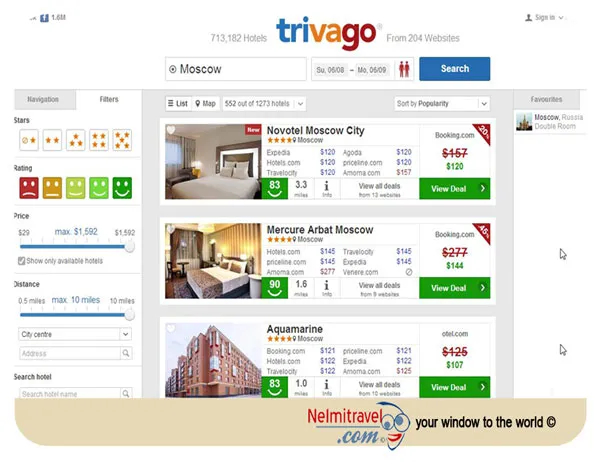
04Check who is selling the room
Here's a nuance most quick guides skip.
The cheapest offer isn't always the smartest booking. A rate from a channel with clear cancellation terms, or from the hotel directly, can be worth a small premium, because flexibility has value the moment your plans wobble. When two offers are close, let the terms break the tie, not the headline price.
05Test flexible dates deliberately
If your trip can move, run it twice.
Hotel rates respond sharply to day of week and demand. A Sunday arrival can price very differently from a Friday one. Shifting a weekend by a single night sometimes moves the total enough to notice. This isn't a trick; it's just supply and demand made visible, and metasearch is the fastest way to see it.
06Verify the total on the booking site
When you click through, the booking site opens. This is where you confirm reality.
Read the full total, including taxes and any resort or service fees, before you enter payment details. These charges aren't hidden fees in the sinister sense; they're standard industry pricing that sometimes surfaces at the final screen. Confirm the number matches your expectation, then book.
Putting the method to work
Here's the process condensed, matched to common APAC trips.
| Trip type | Key move | What it protects | Where to run it |
|---|---|---|---|
| City break, Singapore | Sort by rating near the price floor | Sleep quality for a small premium | Compare Singapore hotels on Trivago |
| Peak-season coast, Australia | Read price context before booking | Overpaying in high demand | Check Australia stays on Trivago |
| Flexible getaway | Test two date ranges | Finding the cheaper night | Compare hotel prices on Trivago |
| Work trip | Prioritise cancellation terms | Flexibility when plans change | Search business hotels on Trivago |
Every link opens the same comparison tool. What changes is the intent you bring to it.
Common mistakes that quietly cost you
- Filtering before you understand the market. You can't spot a good deal if you never saw the range.
- Trusting the headline over the total. The number that matters is the one on the final booking screen, fees included.
- Chasing the last few dollars into a bad cancellation policy. On a trip that might shift, flexibility is worth paying a little for.
- Booking the instant something looks fine. Two more minutes of sorting is the cheapest insurance in travel.
trivago says its sites cover more than 2.5 million properties across roughly 190 countries, so the method scales from a single overnight to a month-long itinerary. The tool doesn't change. Your discipline does.
Trivago APAC — run the six-step method
Search broad, read price context, sort twice, check who's selling, test flexible dates, verify the total on the booking site.
Compare hotel prices on TrivagoTrivago compares the offers many booking sites list for the same room and hands you off to whichever one you pick — you pay that booking site, not Trivago. Affiliate link — we may earn a commission at no extra cost to you.
FAQ
Does Trivago actually find the cheapest price? It surfaces the cheapest offer among the booking sites it works with and shows who's providing it. Comparing directly with the hotel occasionally beats it, which is why the method above includes a final check.
Why did the price rise after I clicked through? Rates update constantly, and the booking site may display taxes or fees on the final page. Always confirm the full total before paying.
Is it safe to book through the sites Trivago links to? You're booking with established online travel agencies, hotel chains, or the hotels themselves. Trivago passes you to them; they process payment and hold the reservation, so keep their confirmation.
How far ahead should I search? Search early to learn the price range, then watch it. For flexible trips, comparing a few date options often matters more than booking on any specific day.
Can I use one method for both Australia and Singapore? Yes. The same six steps apply across the APAC sites, which cover both markets.
Want gear like this on your content calendar?
Join AffluencerHub, get AI-matched to brand programs that fit your audience, and track every click to commission in one place.
Apply as a Creator