
Flat-pack furniture has grown up. Here's how to spend well when every pound and every square metre counts.
TL;DR: If you're kitting out a rental or a first flat and want functional storage without a designer price tag, value-focused flat-pack brands like Songmics Home cover most of the essentials — drawer chests, TV units, dining sets, bedside tables — at entry-to-mid pricing. Buy for the room you actually have, prioritise pieces that double as storage, and check the anti-tip kit is in the box before you assemble anything.
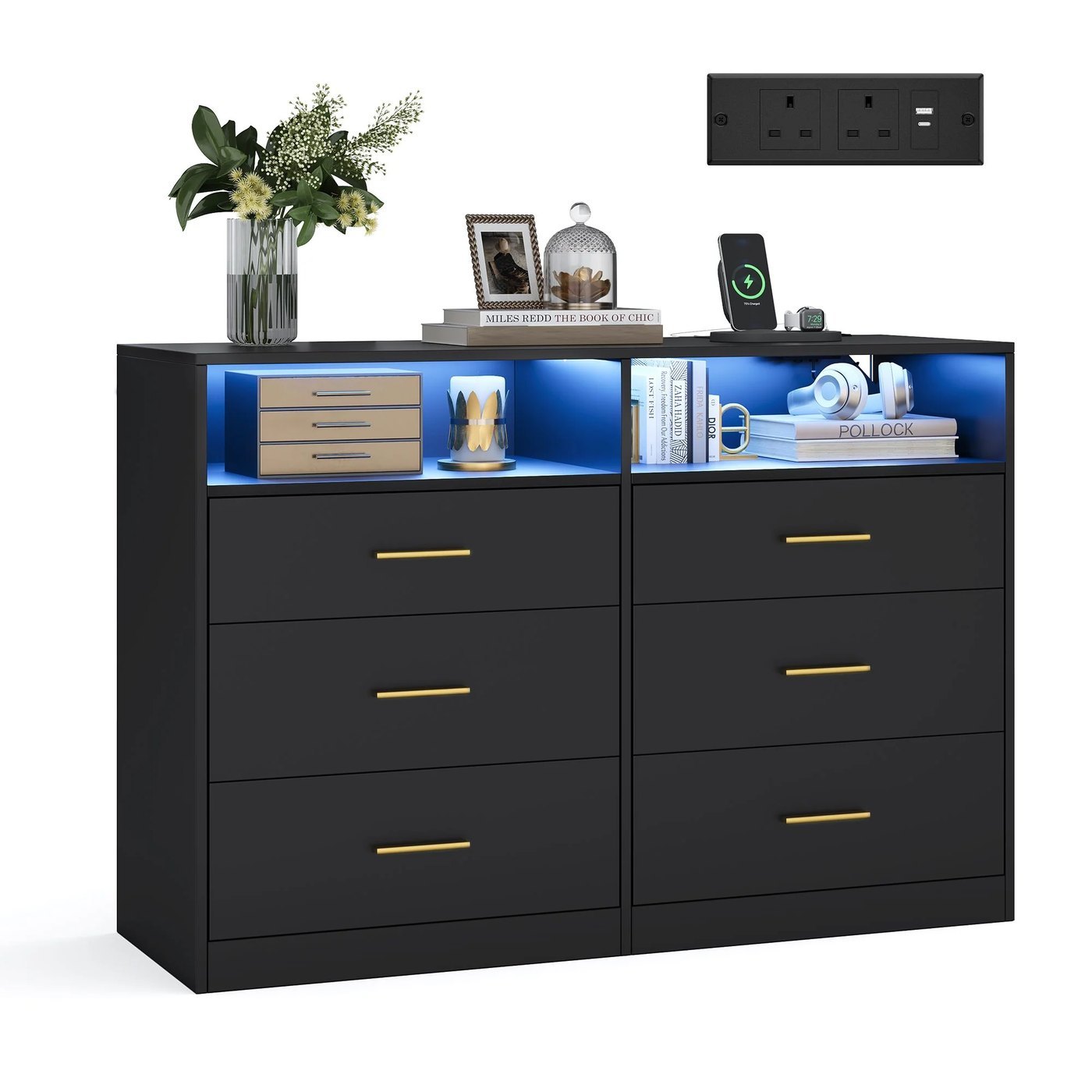
Furnishing a place from scratch is one of those jobs that looks cheap until you add it all up. A bed here, a wardrobe there, somewhere to put the telly, a table you can actually eat at. Do it badly and you either overspend on things you'll drag between three flats, or you buy the cheapest possible everything and replace half of it within a year. Neither is fun.
This guide is about the sensible middle. Most people don't need heirloom oak, and most people can't afford it anyway. What they need is furniture that stores things, survives a house move or two, and doesn't look like it came free with a magazine. In 2026 there's a lot of that around, and a fair amount of it is flat-pack. Below is how to shop for it without regret.
Start with storage, not style
The single most useful shift when you're on a budget: stop thinking of storage as a separate category. In a small home, nearly every piece of furniture should earn its keep by holding something.
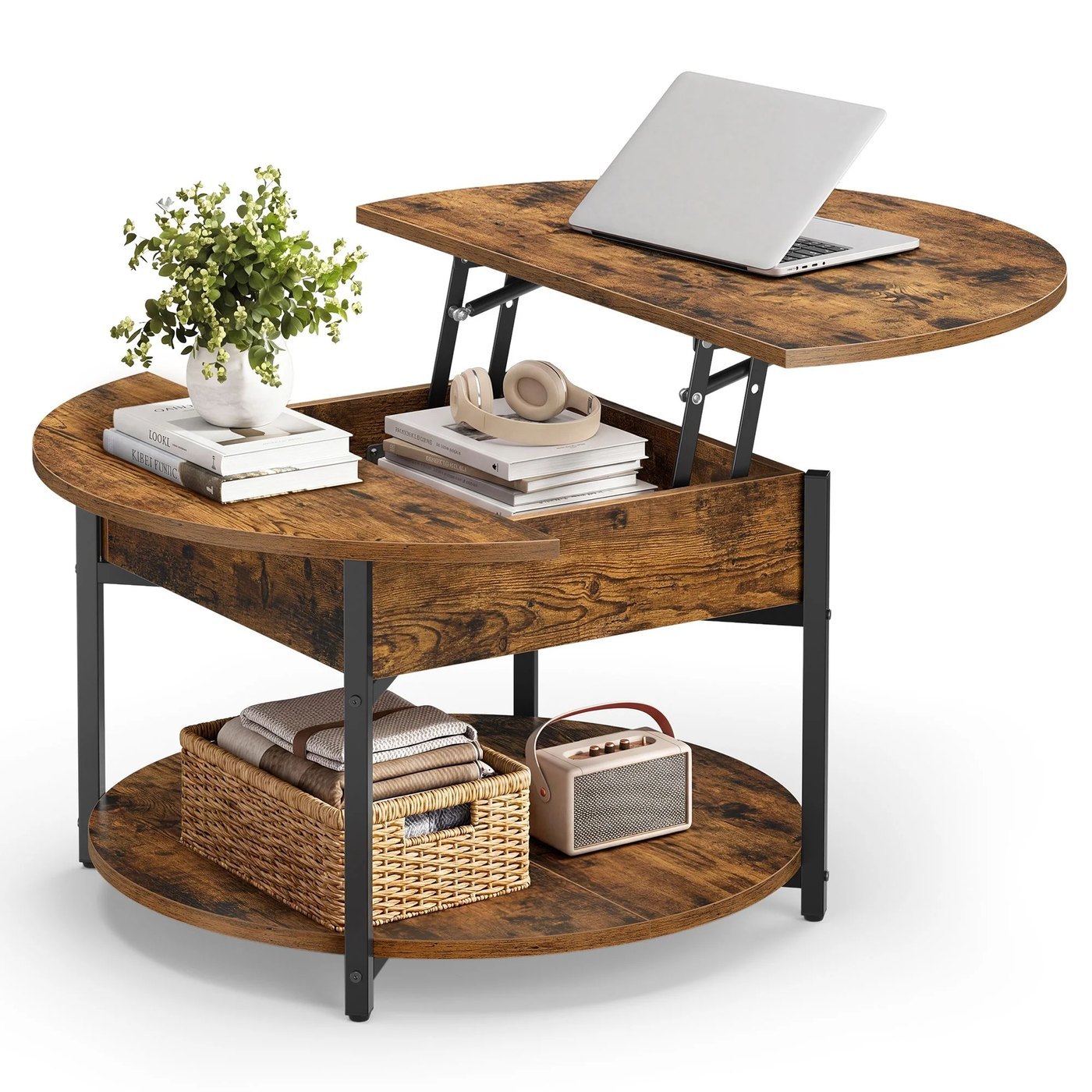
A coffee table that just sits there is a missed opportunity. A coffee table with a lift-top or a hidden compartment swallows remotes, chargers, blankets and the general clutter that otherwise ends up on the sofa. A bedside table with two drawers beats a bare stool. A TV stand with cabinets and open shelving hides the router and holds books at the same time.
This matters more the smaller your place is. If you're in a studio or a one-bed, you don't have the luxury of a dedicated cupboard for everything, so the furniture has to absorb the mess. Buy multifunctional first, decorative second.
Understand what flat-pack is actually made of
"Solid wood" furniture at a budget price almost never means what you think it means. Here's the rough hierarchy you'll meet online:
- Particleboard (chipboard) — wood chips bonded with resin, wrapped in a printed laminate or melamine finish. Light, cheap, and by far the most common material in entry-level flat-pack. Perfectly fine for a chest of drawers or TV unit that won't get soaked or overloaded.
- MDF — denser and smoother than particleboard, takes a painted finish well, a bit heavier. Common on doors and fronts.
- Engineered wood with a real veneer — a step up in look and feel, usually mid-band pricing.
- Solid wood — pine at the affordable end, hardwoods at the premium end. Heavier, more forgiving of knocks, more expensive to buy and to move.
None of these is "bad." The mistake is expecting solid-wood behaviour from a laminate chipboard piece. Don't stand on the drawers, don't let water pool on a laminate top, and don't overload a shelf past what the instructions say. Treated sensibly, laminate furniture lasts years.
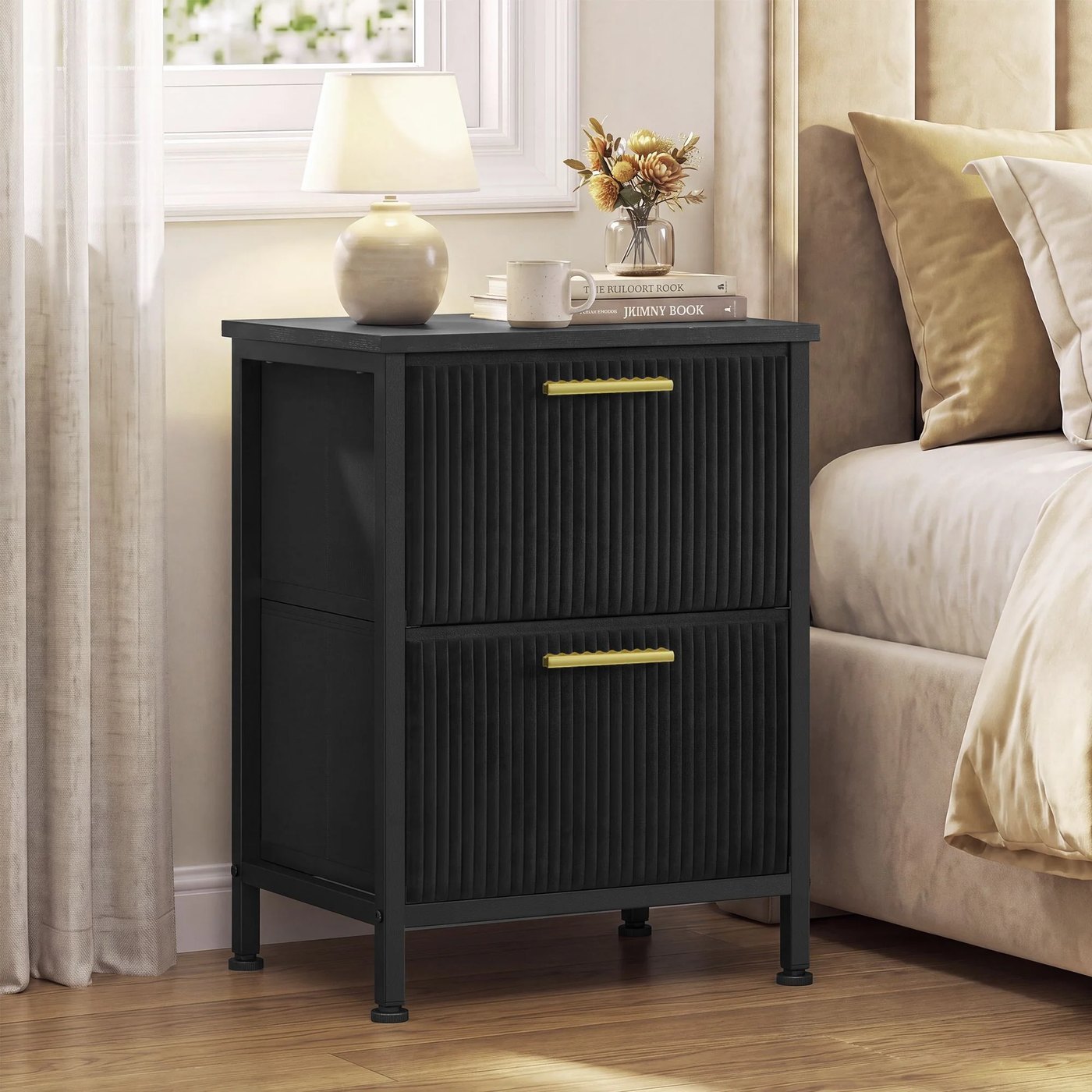
Newer budget ranges also use fabric-wrapped fronts — corduroy and boucle finishes have shown up on drawer chests and bedside tables, giving a soft, warmer look than flat laminate. It's a styling trick borrowed from pricier furniture, and it works, though fabric fronts need the occasional brush-down.
Measure the room, then measure the doorway
Everyone measures the space the furniture will sit in. Far fewer people measure the route it has to travel to get there. Flat-pack sidesteps this neatly — it arrives in flat boxes and assembles in the room — but if you're buying anything pre-built, or a large flat-pack box, check your hallway, stairwell and doorframes first.
For the room itself, sketch it roughly with the fixed points marked: radiators, windows, sockets, the swing of the door. A drawer chest needs clearance to open its drawers. A dining table needs room to pull the chairs out and sit down. On paper it's obvious; in a shop it's easy to forget.
If floor space is tight, think vertically. Taller, narrower chests hold as much as wide low ones while taking less floor. Wall-adjacent pieces free up the middle of the room, which is what makes a small space feel liveable.
The assembly reality check
Flat-pack has a reputation, most of it earned in the 1990s. Modern kits are generally better: pre-drilled holes, cam-lock fittings, numbered parts. Still, a few honest points:
- Give yourself more time than you think. A chest of drawers is an hour-plus job the first time.
- Lay every part out and count the fittings before you start. It's miserable to discover a missing dowel at step nine.
- A cordless screwdriver saves your wrist but can strip fittings if you go in on full torque. Finish the last turns by hand.
- Assemble large pieces in or near their final position. Carrying a fully built wardrobe through a doorway is how corners get chipped.
And the one that actually matters for safety: fit the anti-tip strap. Tall chests and drawer units can topple if a child climbs them or if too many drawers open at once. Reputable flat-pack now ships an anti-tip kit — a bracket and strap that fixes the unit to the wall. It takes five minutes. Fitting it is not optional if there are kids in the house.
Buying furniture online without the showroom
You can't sit on a sofa through a screen, so shopping online means reading carefully instead. A few habits that pay off:
- Read the dimensions, not the photo. Styled product shots make everything look larger and airier. The numbers don't lie; the lighting does.
- Check the material description, using the hierarchy above. If it just says "wood," assume engineered until told otherwise.
- Look for weight capacity and load ratings on shelving and tables.
- Read the middling reviews, the three-star ones. Five-star reviews tell you it arrived; three-star reviews tell you what annoyed people after a month.
- Confirm what's in the box — some "sets" are sold per item. And check whether fixtures like the anti-tip kit are included or extra.
Value brands such as Songmics Home, which sits in the same group as VASAGLE, tend to publish reasonably full spec sheets and dimensions, which makes this kind of due diligence easier than it is on an anonymous marketplace listing.
Room-by-room priorities on a budget
You don't have to buy everything at once, and you shouldn't. Spend where it counts.
Bedroom. A decent bed frame and a chest of drawers are the workhorses. Bedside tables with drawers add storage you'll use daily. This is the room to get right first, because you spend a third of your life in it.
Living room. A TV unit with storage and a storage coffee table do a lot of quiet work hiding clutter. Everything else — shelving, side tables — can come later.
Kitchen/dining. A compact dining set, ideally a table with benches, seats more people in less space than individual chairs, and the benches tuck fully under the table when not in use. That's a genuine small-space win.
Home gym corner. If you've folded a workout space into the flat, compact kit like an adjustable dumbbell set replaces a rack of fixed weights and stores in a fraction of the room. Storage furniture and fitness gear increasingly come from the same value brands, so it's worth a look.
Common mistakes to avoid
- Buying the set before measuring. The number one source of returns.
- Chasing the lowest price on structural pieces. Save on decorative bits; don't skimp on the frame that holds your mattress.
- Ignoring the load rating and then wondering why the shelf bowed.
- Skipping the anti-tip kit. Covered above, worth repeating.
- Over-furnishing early. Live in the space a few weeks before buying the "nice to haves." You'll make better choices.
FAQ
Is flat-pack furniture worth it, or is it false economy?For most budgets it's genuinely worth it. The economy stops being false when you match the material to the job — laminate chipboard for light-duty storage, sturdier engineered wood or solid wood for anything that takes real weight or a lot of wear.
How long does budget flat-pack actually last?Treated sensibly and not overloaded, several years and multiple moves. What kills it early is water damage, over-tightened fittings, and repeated disassembly, which loosens the joints each time.
Can I move flat-pack furniture between homes?Yes, though every dismantle-rebuild cycle weakens cam fittings a little. If you know a piece will move often, keep the instructions and buy spare fittings.
What's the single best budget buy for a small flat?Anything that stores things while doing another job: a lift-top coffee table, a storage bed frame, a bench that hides shoes. Dual-purpose pieces punch well above their price.
Do I really need the anti-tip strap?If there are children or pets, yes, always. Even without them, it's cheap insurance against a loaded chest tipping.
Furnishing a first home on a budget isn't about finding the cheapest of everything. It's about buying furniture that stores your life, survives your next move, and doesn't make you wince when you look at the total. Get the storage-smart pieces right and the rest is decoration.
Disclosure: This post contains affiliate links. We may earn a commission from purchases made through these links at no extra cost to you. Prices and availability accurate at time of writing.
Disclosure: affiliate link — we may earn a commission at no extra cost to you.
Want gear like this on your content calendar?
Join AffluencerHub, get AI-matched to brand programs that fit your audience, and track every click to commission in one place.
Apply as a Creator