
Bar, flow rate, motor type, and the one accessory that changes everything — how to pick the right pressure washer, using Kärcher's K-series as the reference.
A pressure washer is one of those tools that feels like a gimmick until you use one, and then you can't stop finding jobs for it. Patios, driveways, cars, bikes, garden furniture, wheelie bins — all of it goes from grubby to new in minutes. The trick is buying the right one for what you'll actually clean. This guide runs through the specs that matter and how Kärcher's familiar yellow lineup is organised.
The Kärcher K-numbers, decoded
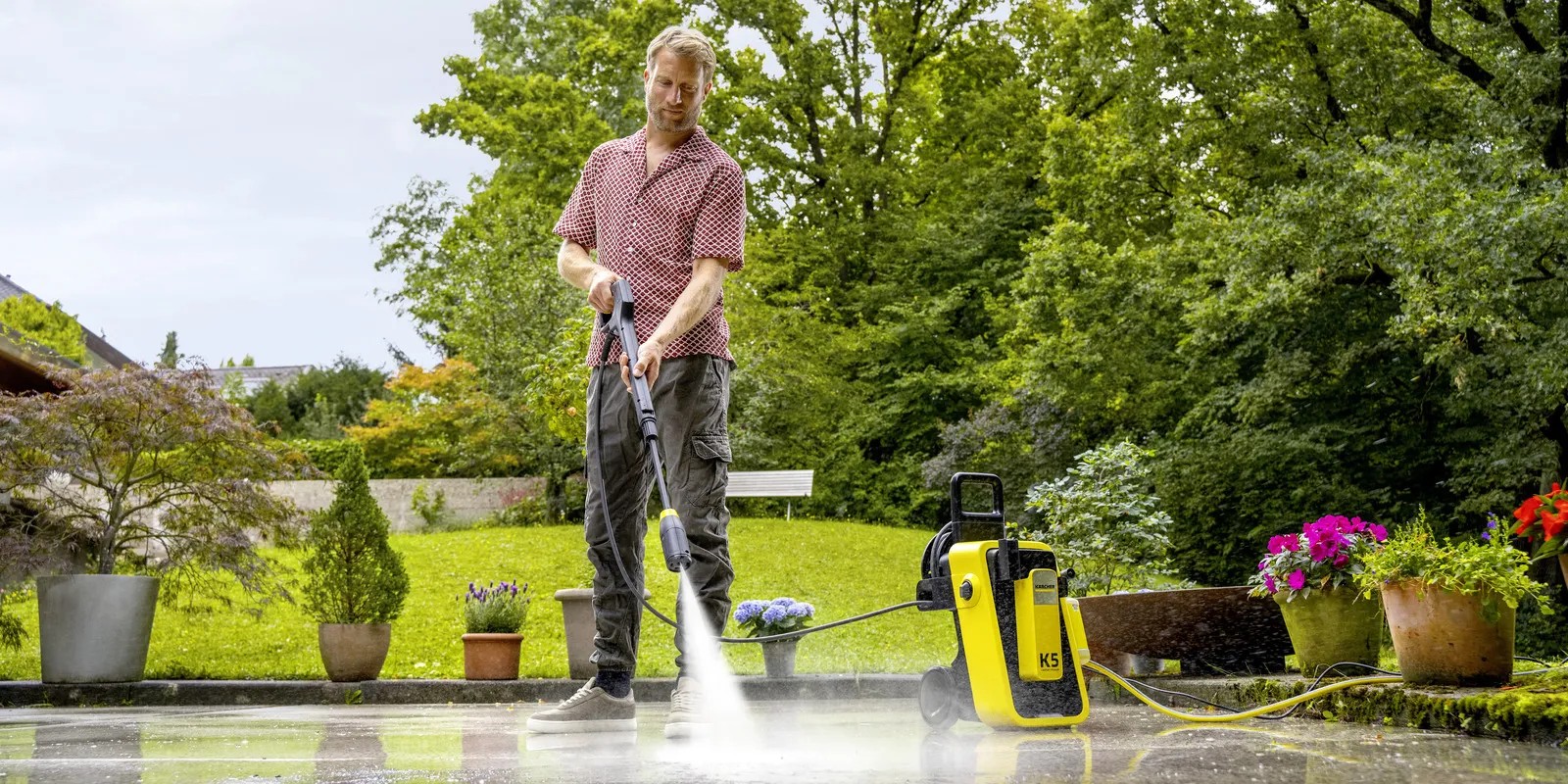
Kärcher's home range is numbered, roughly K2 up to K7, and the number is a quick proxy for power and how heavy a workload it's built for.
- K2 (entry). Light, compact, cheap. Great for bikes, wheelie bins, garden furniture, a small patio, the occasional car. If your jobs are small and occasional, don't overbuy — this is plenty.
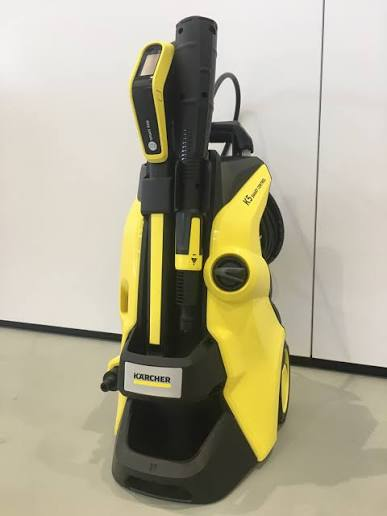
- K4 / K5 (mid-range). The sweet spot for most homes. Enough power for driveways, larger patios, and regular car cleaning, without being unwieldy. The K5 in particular is the one a lot of households land on.
- K7 (top). The most powerful home tier, built for big areas and frequent, heavy use — long driveways, large paved areas, jobs you do often.
The honest rule: buy for your biggest regular job, not the once-a-year one. A K5 that handles your weekly reality beats a K7 that mostly sits in the garage.
The specs that actually matter
Beyond the model number, three things decide performance.
Pressure (bar). How hard the water hits — this shifts stubborn, stuck-on grime. Higher bar tackles tougher dirt on hard surfaces. More isn't always better on delicate surfaces, but for driveways and patios it helps.
Flow rate (litres per hour). How much water moves through — this is what rinses dirt away once the pressure has lifted it. It's the underrated spec; a good flow rate is why higher models clean large areas faster.
Motor type. Entry models use an air-cooled universal motor; higher models (K5 and up) often use a water-cooled induction motor. The induction motor runs quieter and is built to last longer under heavy use. If you'll use it often, this is worth paying up for.
The accessory that changes everything
If you buy one add-on, make it a surface cleaner (Kärcher calls its versions by names like the T-series patio cleaner). It's a flat, spinning disc that glides over patios and driveways, cleaning a wide path evenly and — crucially — without spraying dirty water up your legs and windows. It turns a slow, streaky, splashy job into a fast, even one. Most people who own one say it's the accessory that made the washer worth it.
Two others worth knowing:
- Dirt blaster / rotary nozzle. A concentrated, rotating jet for stubborn spots — the most powerful nozzle for stuck-on grime.
- Detergent / snow foam. For cars especially, a foam pre-soak lifts dirt so you're not grinding grit into the paint.
Match the washer to the jobs
Small and occasional (bikes, bins, furniture, one car). A K2-class machine. Light, easy to store, does the job.
The all-rounder home (driveway, patio, cars, regular use). A K4 or K5 with a surface cleaner. This covers the vast majority of households and is where most buyers should look first.
Big areas, frequent heavy use. A K7-class machine with the induction motor and a larger surface cleaner. Built for the workload; overkill if your jobs are small.
Cars above all. Prioritise a foam/detergent setup and a gentler technique over raw pressure — you want dirt lifted, not paint stripped.
A note on using it well
Two habits save surfaces and effort. Keep the nozzle moving and at a sensible distance — too close, or lingering, can mark soft stone, wood, or paint. And start gentle: use a wider fan nozzle first and only reach for the dirt blaster on spots that need it. Power is easy to add and hard to undo.
Frequently asked questions
Which Kärcher should most people buy?For a typical home with a driveway, patio, and a car or two, a K4 or K5 hits the balance of power, size, and price. Pair it with a surface cleaner.
Is a higher bar rating always better?For hard surfaces like driveways, more pressure helps with stubborn grime. But flow rate matters just as much for rinsing, and on delicate surfaces too much pressure can do damage. Balance both, and match technique to the surface.
What's the single best accessory?A surface (patio) cleaner. It cleans large flat areas quickly and evenly, with far less splash-back than a lance alone.
Can I clean my car with a pressure washer?Yes — use a detergent/foam pre-soak, a wider nozzle, and keep your distance. Avoid the concentrated dirt-blaster jet on paintwork.
The bottom line
Choosing a pressure washer comes down to matching power to your biggest regular job, checking pressure and flow rate, favouring an induction motor if you'll use it often, and buying a surface cleaner from day one. Get that combination right and it'll earn its shelf space fast. To match a model to your jobs, see Kärcher's pressure washer range and start from the size of the areas you actually clean.
Disclosure: This post contains affiliate links. We may earn a commission from purchases made through these links at no extra cost to you. Specifications, prices, and availability are accurate at the time of writing and are subject to change.
Disclosure: affiliate link — we may earn a commission at no extra cost to you.
Want gear like this on your content calendar?
Join AffluencerHub, get AI-matched to brand programs that fit your audience, and track every click to commission in one place.
Apply as a Creator