
Battery capacity, output, ports, recharge speed — what actually matters when you're picking a portable power station, using BLUETTI's lineup as a reference.
A portable power station is a big battery with wall sockets on the front. That's the simple version. The useful version is knowing which specs decide whether it runs your fridge through a blackout, keeps a campsite going for a weekend, or just tops up a phone. This guide walks through the numbers that matter and where a brand like BLUETTI fits.
The two numbers that decide everything
Every power station is described by two headline figures, and mixing them up is the most common buying mistake.
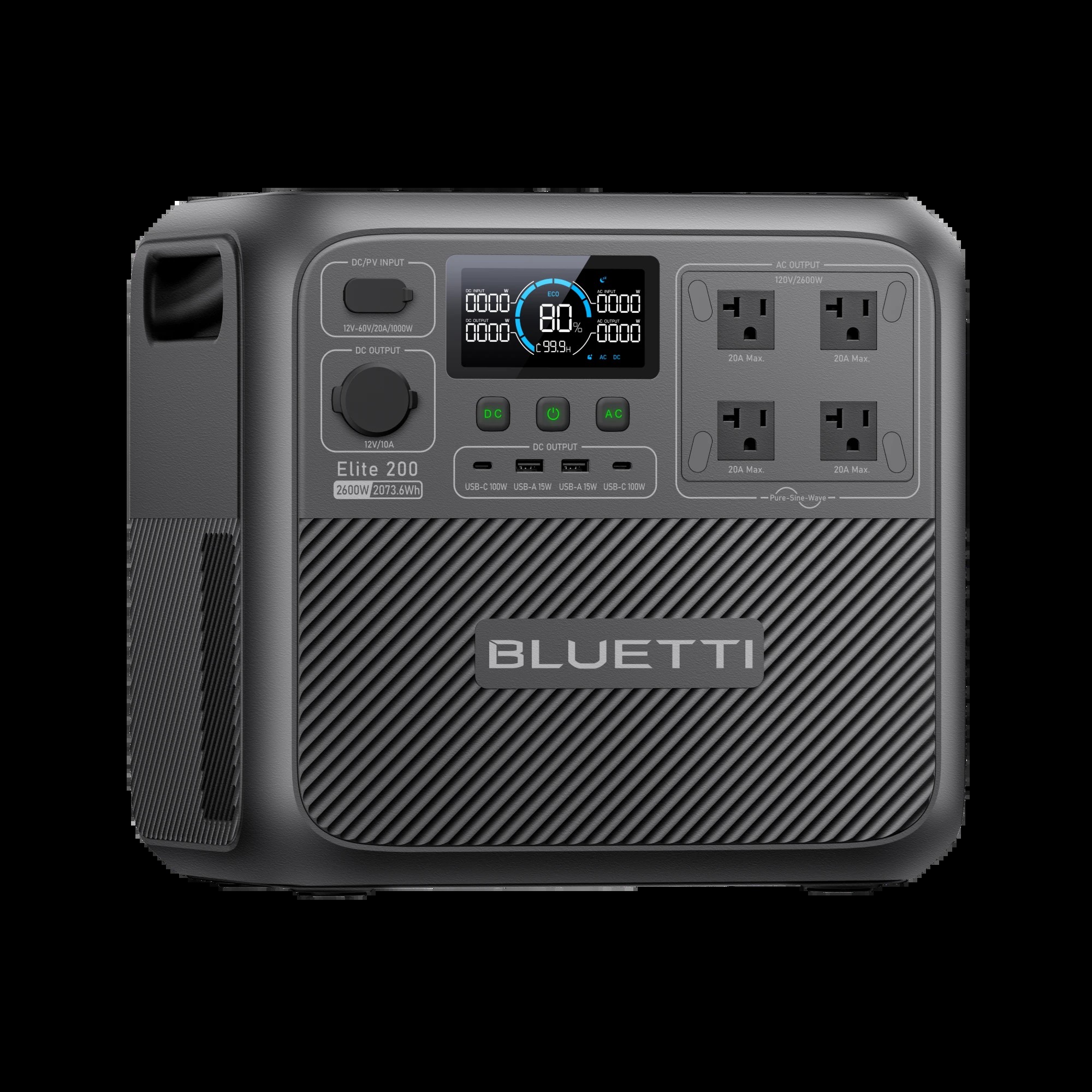
Capacity (watt-hours, Wh) is how much energy it stores — the size of the tank. A larger Wh number runs your devices for longer. BLUETTI's Elite 200 V2, for example, stores 2,073.6Wh; the AC200L holds 2,048Wh. Roughly, that's enough to recharge a phone dozens of times, run a mini-fridge for the better part of a day, or keep laptops and lights going through an evening.
Output (watts, W) is how much power it can deliver at once — the size of the tap. This decides what you can plug in, regardless of capacity. A high-draw appliance like a kettle, microwave, or space heater needs a station rated for it. The Elite 200 V2 delivers 2,600W; the AC200L delivers 2,400W — both enough for most household appliances people actually want to run off-grid.
Simple rule: watt-hours for how long, watts for what. Undersize either and you'll be frustrated.
Battery chemistry: look for LiFePO4
Not all lithium batteries age the same way. LiFePO4 (lithium iron phosphate) cells last far more charge cycles than older lithium-ion and handle heat better, which is why serious portable power stations — BLUETTI's included — have moved to them. In plain terms: a LiFePO4 unit is one you keep for years, not one you replace after a couple of camping seasons. It's the single spec most worth insisting on.
Ports: count them, then count again
Capacity and output get the headlines, but ports decide daily convenience. Before buying, list what you actually plug in and check the unit covers it:
- AC outlets for appliances and laptops (check the count and the total wattage).
- USB-C with high wattage (100W) for fast laptop and phone charging without a brick.
- USB-A for older accessories.
- DC / car outlet for fridges, pumps, and 12V gear.
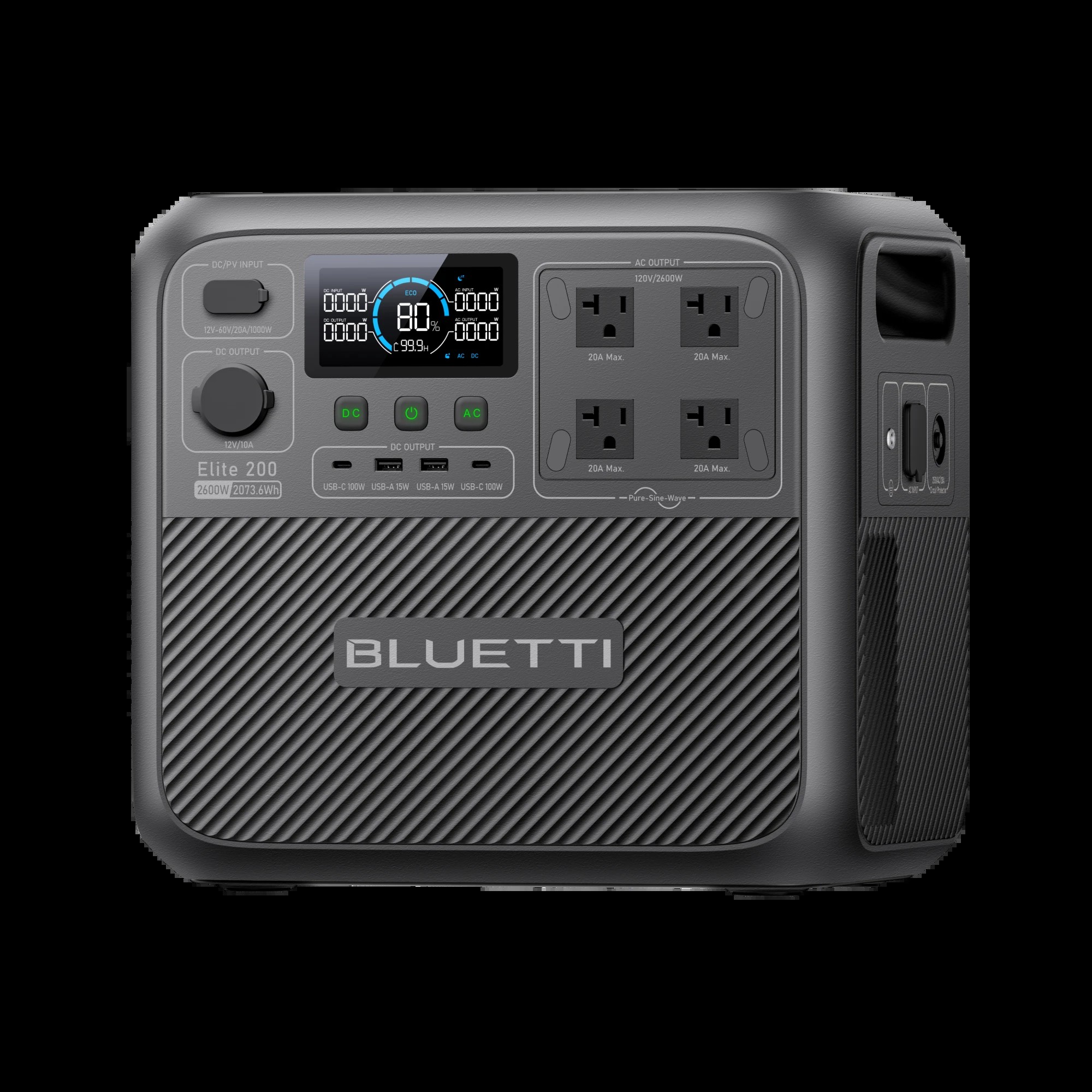
The Elite 200 V2 spreads across AC outlets, two 100W USB-C ports, USB-A, and a 12V DC output — a practical mix for a mixed household of devices. A station with the right capacity but too few of the ports you use is a daily annoyance.
Recharge speed and solar
How fast it refills matters as much as how much it holds — especially for back-to-back trips or multi-day outages. Two things to check: how quickly it recharges from a wall socket, and whether it accepts solar input. BLUETTI stations take a solar panel, which turns a power station from a one-charge battery into something you can top up off-grid over a sunny day. If you camp or plan for outages, solar capability is worth prioritising.
Match the station to the job
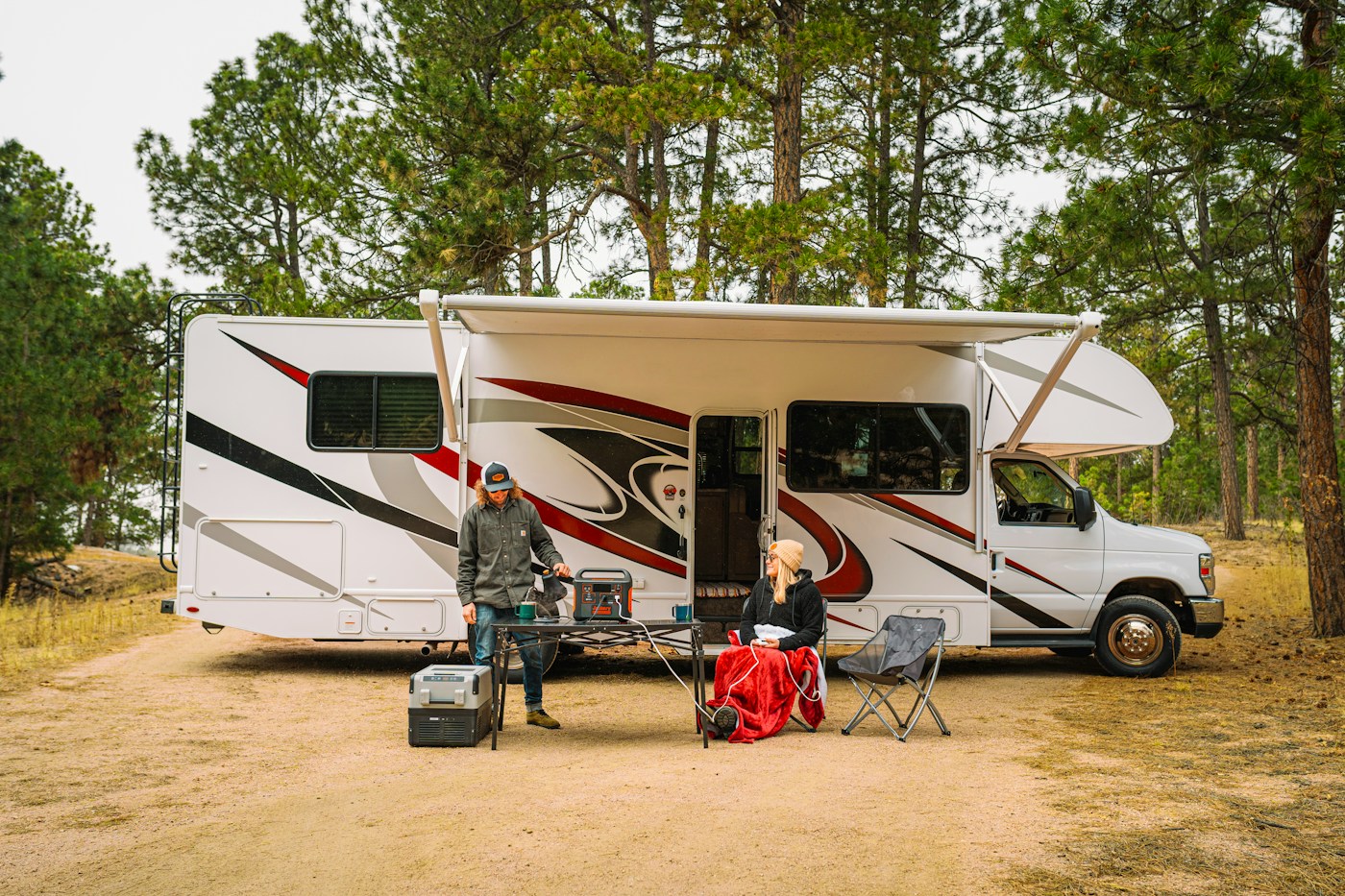
Weekend camping / vans. A mid-to-large unit in the ~2,000Wh range (Elite 200 V2, AC200L) runs a cool box, lights, phones, and a laptop for a couple of days. Add a solar panel to stretch it.
Home backup. Size to the essentials you'd want during an outage — router, a few lights, phones, maybe a fridge in short stints. Output rating matters here; a fridge's start-up surge needs headroom.
Day trips and work sites. If you're only running tools, a camera, or a laptop, you can go smaller and lighter. Don't overbuy capacity you'll never drain.
Frequent travel. Weight and size become the deciding factor. Read the actual dimensions, not just the specs.
Frequently asked questions
What can a ~2,000Wh station actually run?Phones and laptops many times over, lights and a router all evening, a mini-fridge for a good stretch, and short bursts of high-draw appliances if the output rating (e.g. 2,600W on the Elite 200 V2) allows. Exact runtime depends on the device's wattage.
Is LiFePO4 worth paying for?For most buyers, yes. It's the difference between a battery that lasts years of regular use and one that fades quickly. It's the spec to prioritise.
Can I recharge it with solar?BLUETTI stations accept solar input, so you can top up off-grid with a compatible panel. Charge speed depends on the panel and sunlight.
Do I need the biggest one?Usually not. Oversizing adds weight and cost you won't use. Match watt-hours to how long you need power and watts to your highest-draw device, then stop.
The bottom line
Buying a portable power station comes down to four checks: enough watt-hours for your run time, enough watts for your biggest device, LiFePO4 cells, and the right ports plus solar if you'll go off-grid. Get those right and the rest is preference. If you're comparing models against that checklist, BLUETTI's current lineup is a sensible place to start.
Disclosure: This post contains affiliate links. We may earn a commission from purchases made through these links at no extra cost to you. Specifications, prices, and availability are accurate at the time of writing and are subject to change.
Disclosure: affiliate link — we may earn a commission at no extra cost to you.
Want gear like this on your content calendar?
Join AffluencerHub, get AI-matched to brand programs that fit your audience, and track every click to commission in one place.
Apply as a Creator