
A working guide to picking a ring that actually looks like the person wearing it, without guessing your way through the process.
TL;DR: If you want something that isn't the same solitaire everyone else has, a made-to-order piece from a workshop like Capucinne gives you real control over stone, metal, and setting — but you need to know a few things first so you're not choosing blind. This guide walks through the actual decisions, in the order they matter.
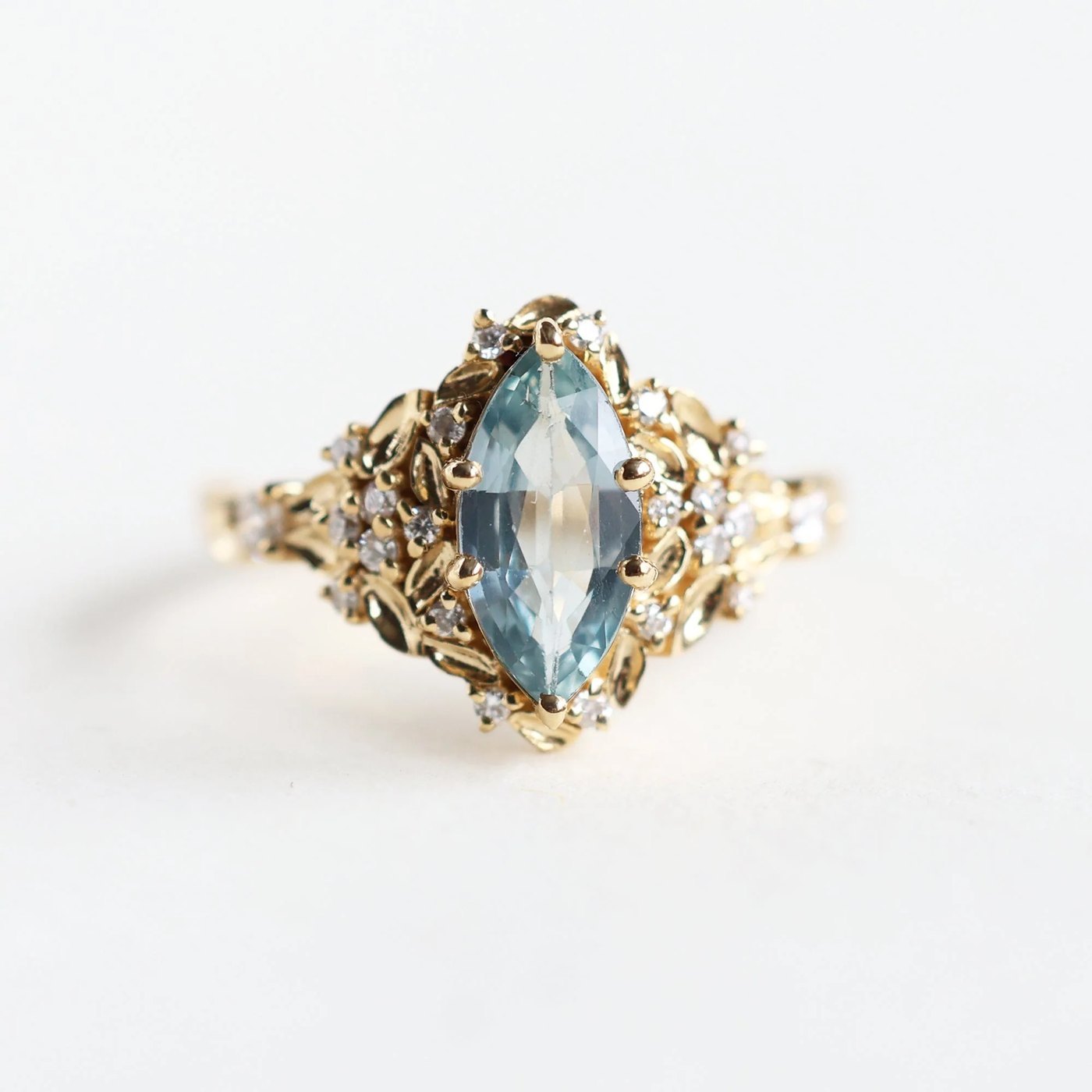
Buying an engagement ring used to mean walking into a shop, looking at a tray of near-identical round diamonds, and picking the biggest one your budget allowed. That still happens. But in 2026 a lot of people want the opposite: a ring that reflects a specific taste, a specific color, a specific idea. That's where custom and made-to-order jewelry has quietly taken over a chunk of the market.
The trouble is that "custom" can mean anything from a mass-produced ring in a slightly different metal to a piece designed around a single stone you chose yourself. And the decisions pile up fast. So let's take them one at a time.
Start with the stone, not the setting
Most people fixate on the setting — the shape of the band, the prongs, the halo. Fair enough, that's what you see first. But the stone drives almost every other choice, so it makes sense to settle it early.
Here are the main options you'll run into, described plainly:
Natural diamond. The traditional pick. Mined, graded on the familiar cut/color/clarity/carat scale. It carries the most cultural weight and, honestly, the most emotional expectation. It's also the most expensive per carat by a wide margin, and sits firmly in the premium band.
Lab-grown diamond. Chemically and optically a diamond, grown in a controlled environment rather than mined. To the eye — and to most testing equipment — it behaves like a natural stone. The practical draw is that you get a noticeably larger or cleaner stone for the same spend, which pushes it into the mid band for a size that would be premium if mined. Many buyers also choose it for ethical reasons; if that matters to you, ask the seller to state the origin in writing rather than assuming.
Moissanite. A separate mineral (silicon carbide), not a diamond substitute pretending to be one. It's very hard, very bright, and throws more colored light ("fire") than diamond does, which some people love and some find a bit disco-ball. It's the most budget-friendly of the bright white options, sitting in the entry-to-mid band even at larger sizes.
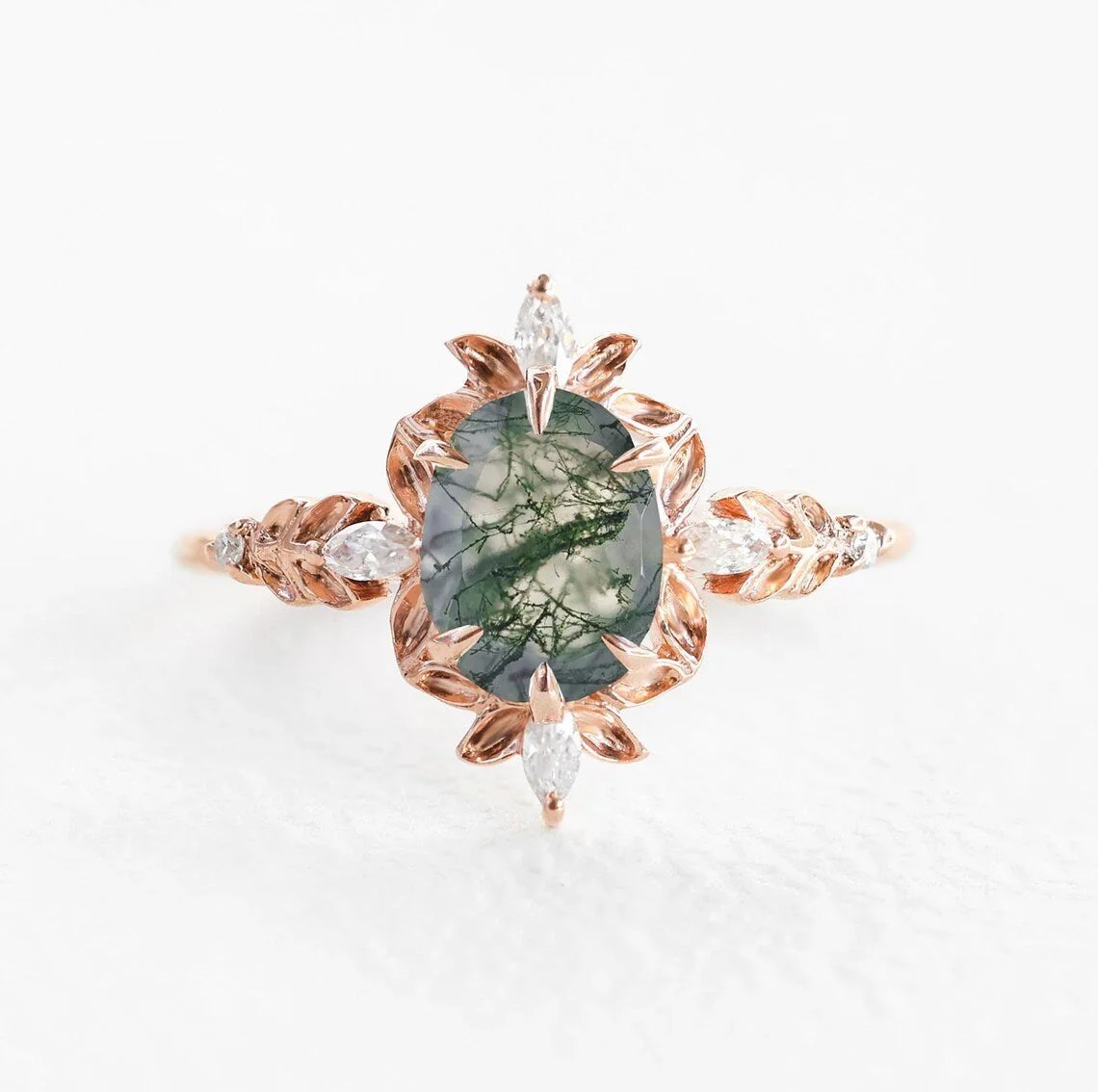
Colored gemstones — sapphire, moss agate, and others. This is where custom rings get genuinely interesting. A teal or peach sapphire, or a milky green moss agate with its dendritic inclusions, gives you a ring nobody else has. Sapphires are hard and hold up well to daily wear. Softer or more inclusion-heavy stones like moss agate are stunning but need a bit more care, so it's worth asking how a given stone handles knocks before you commit to it as an everyday ring.
There's no "correct" answer here. A marquise aqua sapphire and a round lab diamond are aimed at completely different people, and both are legitimate choices.
Then pick the metal
Metal is a smaller decision than the stone but it changes the whole mood of the ring, and it affects durability.
- 14k gold is harder and more scratch-resistant than 18k, and cheaper. Good for hands that take a beating.
- 18k gold has a richer color and higher gold content, at a higher price and slightly softer feel.
- Platinum is dense, naturally white, and very durable, though it's the priciest of the three and shows fine surface scratches as a soft patina over time.
Color matters too. Yellow and rose gold flatter warm skin tones and pair beautifully with peach or champagne stones; white metals keep the focus on a bright white diamond or a cool-toned sapphire. Workshops that make to order will usually let you specify 14k, 18k, or platinum in yellow, white, or rose — so this is a lever you actually get to pull, rather than taking whatever's in the case.
Setting: looks and life expectancy
The setting is where the ring's personality lives, but it's also a practical decision because it determines how much the stone is protected and how the ring wears day to day.
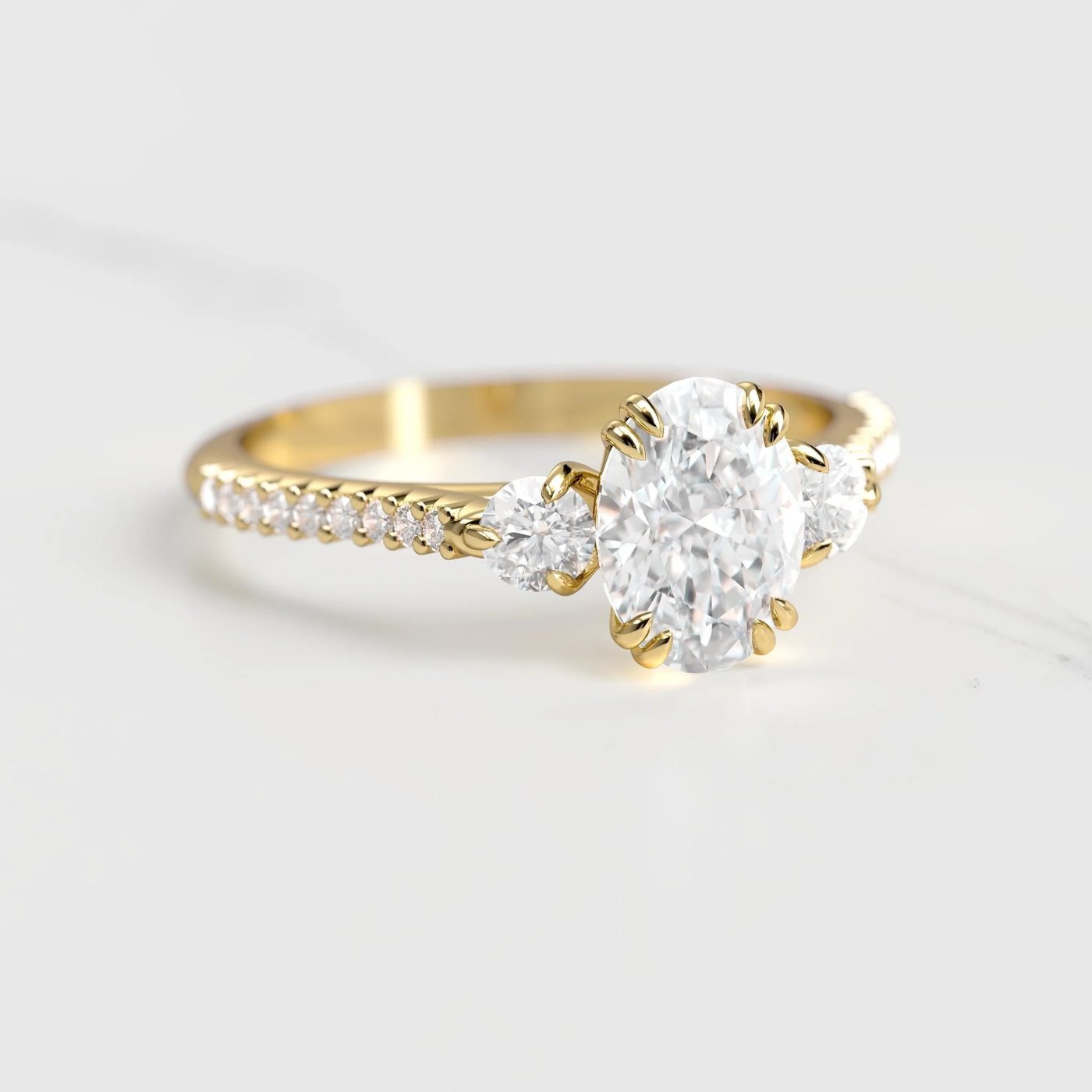
A solitaire shows off a single stone cleanly. A halo rings the center stone with smaller stones to make it read larger and add sparkle. A half-eternity or full-eternity band sets stones partway or all the way around — gorgeous, and it catches light from every angle, but full eternity bands can't usually be resized, so get the size right. Bezel settings wrap the stone in metal, which is the toughest option for active hands. Prong settings let in the most light but expose the stone more.
Think honestly about the wearer's life. Someone who gardens, lifts, or works with their hands is better served by a lower-profile bezel or a sturdy band than by a tall, exposed prong setting, however dramatic it looks in photos.
How the made-to-order process actually works
This is the part that scares people off, and it shouldn't. A typical made-to-order flow looks like this:
- You choose a design (or ask for a variation on one).
- You specify stone type, size, metal, and finish.
- The workshop confirms the spec, sometimes with a rendering.
- The piece is made, which takes time — made-to-order isn't next-day, so plan around the proposal or wedding date.
- It ships with documentation for the stone and metal.
The main thing to internalize: made-to-order means lead time. If you have a date, ask the production and shipping window up front and build in a buffer. It's the single most common way people get caught out.
Common mistakes to avoid
- Buying for the photo, not the finger. Rings look different in a studio shot than on a hand under office lighting. Consider the wearer's daily setting.
- Ignoring ring size on eternity bands. As above — many can't be resized.
- Skipping the documentation. For any diamond, natural or lab, get the grading report. For colored stones, get the origin and treatment info in writing.
- Assuming "custom" always means fully bespoke. Clarify how much is actually customizable — some sellers only swap metal color, others build around your chosen stone.
- Treating a ring as an investment. Buy it because you'll love wearing it. Resale and appreciation are unpredictable and not the point.
Buying custom jewelry online: a short checklist
Buying an expensive ring you can't hold first is nerve-wracking, so pin down these before you pay:
- What's the return and remake policy, especially for a made-to-order piece?
- What documentation comes with the stone?
- What's the realistic production plus shipping time?
- Can you actually specify metal karat, color, and stone, or only some of those?
- Is there a warranty or resizing service after purchase?
A maker that answers all of these clearly is one worth trusting. If you're weighing a unique-stone or made-to-order piece, browsing a specialist workshop like Capucinne is a good way to see how wide the stone-and-metal options can actually go compared with a standard retailer's fixed catalog.
FAQ
Is a lab-grown diamond a "real" diamond?Yes, in the material sense — it's the same crystal structure and chemistry as a mined diamond. The difference is origin, and price for a given size. Whether that matters to you is personal.
Will a moissanite look fake?It looks like a very bright, very sparkly stone. It's not trying to be a diamond, and up close it throws more colored flashes. Plenty of people prefer that; some don't. Look at one in person or in video before deciding.
Are colored-stone rings durable enough for daily wear?Sapphires, yes — they're among the harder gemstones. Softer stones like moss agate are more delicate and better suited to a protective setting or lighter wear. Ask about the specific stone.
How far ahead should I order a made-to-order ring?Ask the seller for their current production and shipping window and add a buffer. If you have a fixed date, don't leave it to the last few weeks.
Can I customize the metal and stone, or just pick from presets?Depends entirely on the seller. Made-to-order workshops typically let you specify karat, metal color, and stone; mass retailers often limit you to a few preset variations. Confirm before you buy.
Disclosure: This post contains affiliate links. We may earn a commission from purchases made through these links at no extra cost to you. Prices and availability accurate at time of writing.
Disclosure: affiliate link — we may earn a commission at no extra cost to you.
Want gear like this on your content calendar?
Join AffluencerHub, get AI-matched to brand programs that fit your audience, and track every click to commission in one place.
Apply as a Creator