
Dutch dental care is expensive. A basic hygienist visit runs €65–95. A restorative filling starts around €90. Most Nederlandse basisverzekeringen do not cover routine dental for adults over 18 without extra tandartsverzekering.
An electric toothbrush costs €30–400. Used correctly, it can meaningfully reduce the chance of gingivitis and small cavities. That is the whole business case. This guide covers what actually matters, what doesn't, pricing at NL retailers, and the real five-year cost of ownership — starting with the Oral-B range most Dutch buyers end up comparing.
What to buy, in four lines
Part 1: What actually matters in an electric toothbrush
Two features have real clinical evidence behind them.
Pressure sensor. Brushing too hard is one of the most common causes of gum recession and enamel wear. Almost everyone does it. A pressure sensor — a light or vibration that changes when you push too hard — retrains this within a week or two. Every brush over €50 should have one. If it doesn't, skip it.
Two-minute timer with 30-second pacing. Dutch adults on average brush for 45–70 seconds. The clinically recommended time is 120 seconds, roughly 30 seconds per mouth quadrant. A timer that pauses the motor every 30 seconds fixes this problem quietly.
Everything else — modes, apps, colour displays, AI zone tracking — sits somewhere between "nice for two weeks" and "marketing gimmick." The van der Sluijs meta-analysis confirms both mechanisms clean well when used correctly. Technique matters more than tech.
Part 2: Oscillating vs sonic — pick by mouth, not marketing
Two mainstream cleaning technologies dominate the NL market.
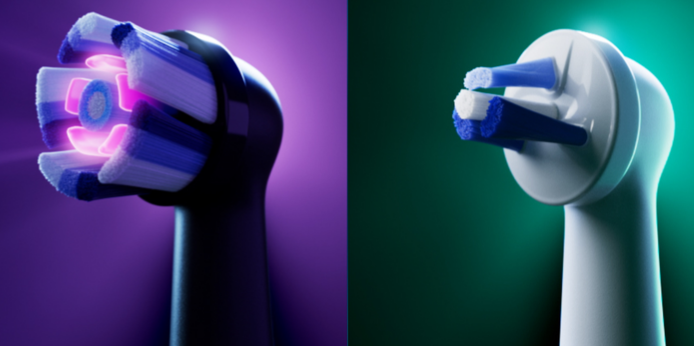
Oscillating-rotating (Oral-B): a small round head that rotates back and forth 8,800 times per minute plus pulsations. Cups each tooth individually. Feels like a mini hygienist scrub.
Sonic (Philips Sonicare): an oval head that vibrates 31,000 strokes per minute. Sweeps a wider surface area. Feels like a gentle high-pitched hum.
Independent research gives oscillating-rotating a small edge on plaque removal — statistically significant, but described by researchers as a "very small clinical relevant beneficial effect." Practically:
| Situation | Recommendation |
|---|---|
| Braces, retainer, crowded teeth | Oral-B — the round head navigates hardware |
| Sensitive teeth or receding gums | Sonicare — gentler force distribution |
| Neither, budget-focused | Oral-B Pro 3 3900 |
| Neither, want smart features | Oral-B iO Series 6 |
| Travel-heavy lifestyle | Sonicare DiamondClean — 21-day battery |
Part 3: The Oral-B lineup, decoded
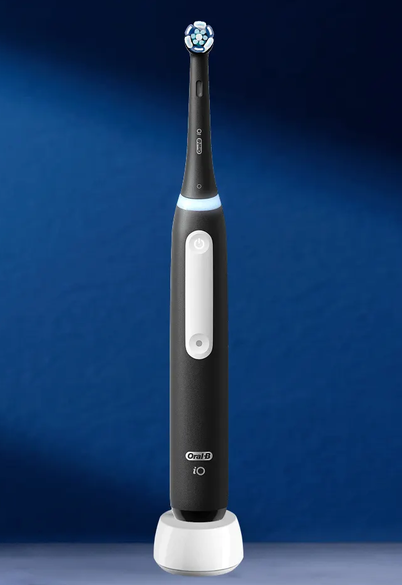
Oral-B sells two families in the Netherlands: the older Pro series (mechanical drive) and the newer iO series (magnetic drive).
Pro series: more affordable, louder mechanical whir, standard replacement heads at €4–5 each. The Pro 3 3900 is the honest pick — timer, pressure sensor, three modes, 14-day battery.
iO series: premium, quieter magnetic drive, iO-specific replacement heads at €7–9 each.
- iO Series 3 (€79–99): entry iO, no display, no app
- iO Series 6 (€129–169): colour display, Bluetooth tracking, travel case
- iO Series 9 (€189–211): 16-zone AI tracking, charging travel case
- iO Series 10 (€249–429): iOsense smart charger with LED zone display
For most NL buyers the honest recommendation is the iO Series 6 at sale price.
★Part 4: How to actually use an electric toothbrush
Angle the bristles 45° to the gumline
This is where plaque hides. Straight-on brushing cleans the enamel face and misses the margin that actually causes gingivitis.
Don't scrub
Guide the brush slowly along each tooth. The oscillation or vibration does the work. Scrubbing is a manual-brush habit and it undermines electric brushing.
20–30 seconds per quadrant
Upper left, upper right, lower left, lower right. Two minutes total. The pacer exists so you don't have to count.
Do not rinse with water afterwards
Rinsing washes the fluoride out of the toothpaste. Spit and stop. Rinse with fluoride mouthwash 30 minutes later if you want. Ask any Dutch tandarts — they will confirm.
One more habit worth building: watch the pressure indicator. Green, or no light, means correct pressure. Red or a change in vibration means back off.
Part 5: What the brush cannot do
An electric toothbrush cannot floss. Interdental brushes (ragers) and floss reach the roughly 40% of tooth surface that any brush misses. In the Netherlands, ragers are cheaper and more effective than string floss for most adults with normal gaps. TePe and Curaprox run €4–7 for a pack of eight.
Brush twice daily plus one round of interdentals, and your annual hygienist visit goes faster.
Part 6: 5-year cost of ownership
Sticker price is only part of the total. Replacement heads add up. A realistic estimate for popular NL picks:
| Brush | Initial | Heads (5yr) | Total 5-year |
|---|---|---|---|
| Oral-B Vitality | €35 | €80 (20 heads × €4) | €115 |
| Oral-B Pro 3 3900 | €77 | €90 (20 × €4.50) | €167 |
| Oral-B iO Series 6 | €149 | €160 (20 × €8) | €309 |
| Oral-B iO Series 9 | €211 | €160 | €371 |
| Philips Sonicare 5100 | €79 | €120 (20 × €6) | €199 |
| Sonicare DiamondClean 9000 | €249 | €140 (20 × €7) | €389 |
Two conclusions. The Pro 3 3900 has the lowest total cost of any brush with a pressure sensor — which is why it keeps winning value comparisons. And the iO Series 6 at €309 over five years works out to 8.5 cents per brush across 3,650 brushings. Cheaper than a coffee at Albert Heijn.
Oral-B in the Netherlands — the Pro and iO ranges
Pro 3 3900 for lowest five-year cost with a pressure sensor, iO Series 6 for the display and tracking, iO Series 9 when it drops into its sale range.
🇳🇱 Prices sampled from Coolblue, Bol.com and MediaMarkt on 16 September 2026 — NL Black Friday falls on 27 November and historically drops flagship models 40–55%. Affiliate link — we may earn a commission at no extra cost to you.
Part 7: Where to buy in the Netherlands
Three retailers dominate.
- Coolblue — best next-day delivery, competitive prices, generous return policy. Sample: Oral-B iO 9n Value Pack at €211.
- Bol.com — widest range including third-party sellers. Watch for grey-market imports without EU warranty.
- MediaMarkt — in-store pickup, physical demo of models, occasional exclusive bundles.
Amazon.nl is available but Coolblue and Bol.com are usually cheaper.
Part 8: When to buy
NL Black Friday falls on 27 November 2026. Historical price behaviour:
- Oral-B iO flagship models drop 40–55%
- Sonicare drops 30–45%
- Replacement head multipacks drop 60–70%
- Pro series drops 30–40%
If you can wait, buy on Black Friday or the following week. The largest discounts of the year land here. Watch out for the "van/voor" trick where retailers raise the "van" price in October to fake a bigger discount — compare against price history sites like Tweakers or Kieskeurig.
Between Black Fridays, spring (April–May) sometimes brings 15–25% off last-year models. Prime Day in July is a distant third choice for toothbrushes.
Part 9: The bigger picture
An electric toothbrush is one tool. Real oral health needs three habits:
- Twice-daily brushing with fluoride toothpaste, two minutes minimum. Electric helps you hit technique and time targets consistently.
- Daily interdental cleaning. Floss or ragers. Evenings are ideal. Skipping this leaves 40% of your teeth uncleaned.
- Regular hygienist visits. Every 6–12 months. Dutch tandartsverzekering plans typically cover 1–2 per year.
Do all three and you'll spend less at the dentist.
Frequently asked questions
Are electric toothbrushes actually better than manual? Yes, with evidence. The 2014 Cochrane review of 56 trials and 5,068 participants found electric brushes reduce plaque 11% more short-term and 21% more long-term compared to manual.
Which brush is best for kids in the Netherlands? Under 12: manual soft brush or Oral-B Junior. Over 12: any adult brush on Sensitive mode. Don't buy adult electric brushes for young children — the intensity is too high.
How do I clean the brush itself? Rinse the head under running water after each use. Once a week, remove the head and rinse the metal shaft. Wipe the handle with a damp cloth. Don't submerge the handle.
My gums bleed when I use my new electric brush. Normal? For the first 1–2 weeks, mild bleeding can happen as your gums adjust to more effective cleaning. If bleeding continues past two weeks or gets worse, see a hygienist.
Do I need whitening mode? No. Whitening modes just brush faster or longer. Real whitening requires peroxide-based products and, ideally, professional supervision.
Best NL retailer for brushes right now? Coolblue for delivery speed and competitive pricing.
Final thoughts
Get one with a pressure sensor and a two-minute timer. Round head for hardware in your mouth, sonic for sensitive gums. Spend €80–170 unless you want premium features specifically. Replace the head every three months. Floss.
Do those five things and no €400 flagship will do meaningfully more for you than an €80 mid-range brush.
Want gear like this on your content calendar?
Join AffluencerHub, get AI-matched to brand programs that fit your audience, and track every click to commission in one place.
Apply as a Creator