
The difference between a cover that lasts five years and one that's flapping in a ditch by autumn is almost never the fabric — it's the fit. A made-to-measure cover from a specialist like Covers & All only works if the measurements you give it are right, and that part is on you. This is a practical guide to measuring, speccing, and ordering a custom outdoor cover so the one that arrives actually does its job. Links below use our affiliate tracking and open Covers & All.
Why fit beats everything
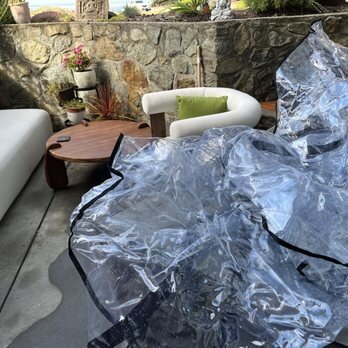
A loose cover is worse than no cover in two ways. Wind gets under the slack and lifts or tears it, and rainwater pools in the sag instead of running off, which is how you get mildew and pooled damp sitting on your furniture. A cover built to your item's real dimensions solves both at once: it sheds water and gives the wind nothing to grab. That's the entire reason to buy custom rather than generic, so the measuring step is not a formality — it's the product.
Measure like the fit depends on it — because it does
Take three core measurements for most items: width (the widest point), depth (front to back), and height (ground to the tallest point). A few rules keep you out of trouble.
Measure the actual item, not the space it sits in, and measure at the genuine extremes — the widest armrest, the highest cushion, the furthest-protruding handle. For an irregular shape like an L-sofa or a stacked set, measure the overall footprint the cover must enclose, not each piece. Write every number down as you go rather than trusting memory, and measure a second time before you enter anything. A build-to-order cover is only as accurate as the figures you hand it.
If you can, measure with a second person and a steel tape rather than a soft one, especially on large or tall items where a fabric tape sags and reads long. For curved or irregular items, break the shape into simple width-depth-height boxes and measure the bounding box the cover must enclose rather than trying to trace the curve. And photograph the item next to your written measurements, because if anything looks off when the cover arrives, that photo plus your figures is what settles whether it was a measuring slip or a production one.
Spec the cover to your weather, not your average day
Fit gets the cover on; fabric decides how long it survives. Match the spec to your worst conditions, not your typical ones.
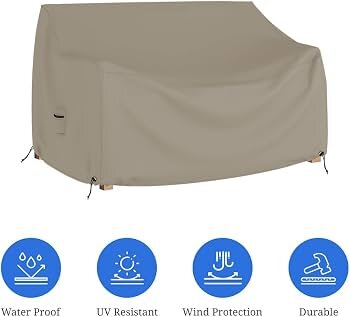
Fabric weight. Heavier, heavier-duty fabric for intense sun, snow load, or coastal exposure; a lighter weight is fine where you mainly need dust and light rain protection. Paying for a heavier fabric you don't need wastes money; underspeccing in a harsh climate wastes the whole cover.
Vents. If warm days and cool nights are your norm, condensation can form under a sealed cover. Vents let it breathe and keep the trapped damp off your furniture.
Tie-downs and zippers. In wind, tie-downs or elastic hems stop the cover becoming a sail. Zippers help on items you cover and uncover often, or on tall things awkward to drape.
Colour. Mostly aesthetic, but a lighter colour reflects more heat in blistering sun. Pick what suits your space.
Access and drainage. A few extras make a cover easier to live with. Handles or grab tabs let you pull a large cover on and off without wrestling it. Air vents double as a slow drainage path so water never sits on top. And for anything tall or dome-topped, such as a stacked patio set or a smoker, a sloped or padded top helps water run off instead of pooling in a dip, which is the single most common way a flat-topped cover fails. These are not upsells for their own sake; each one targets a specific way covers go wrong.
Order without the common mistakes
A short pre-checkout routine saves the returns headache. Re-read the product's own measuring guidance, because some covers ask you to add a little clearance for a snug-not-stretched fit rather than entering the raw dimension. Confirm your three measurements one last time. Decide fabric weight, vents, and tie-downs based on your climate rather than the default. And understand the returns terms for a custom item before you pay — because it's built to your spec, the policy differs from off-the-shelf goods, which is all the more reason to get the numbers right the first time.
One habit extends any cover's life: store it dry. At the end of a season, let the cover dry fully before you fold it away, because packing it damp is how mildew starts. A quick rinse of grit and a proper dry-out means the same cover comes back next year ready to use rather than stained or musty. Treat a quality custom cover like the investment it is and it rewards you with years, not seasons.
A quick reference
| Item type | Measure | Spec priority |
|---|---|---|
| Patio furniture set | Overall footprint W×D×H at extremes | Fabric weight + tie-downs |
| Grill / fire pit | Widest and tallest points | Vents (heat/condensation) |
| Outdoor TV | Screen + mount clearance | Snug fit + weatherproofing |
| Vehicle | Length, width, height at max | Fabric weight + secure hem |
When a generic cover is actually the right call
Custom isn't automatically the answer, and it's worth being honest about when it isn't. If your item is a standard shape and size — a common rectangular table, a typical kettle grill — and you only need to protect it through one mild season, a generic cover from a big-box store can be the rational choice. You save money, and the fit penalty on a truly standard item is small. Custom earns its premium in three situations: an odd or oversized shape generic covers don't fit, a harsh climate that destroys thin fabric, or an expensive item you want to protect for years. If none of those apply, don't overbuy. Match the spend to the stakes, the same way you would with the cover's fabric weight.
FAQ
What measurements do I need? Usually width, depth, and height taken at the item's widest, deepest, and tallest points — plus the overall footprint for irregular shapes.
Should I add extra for a loose fit? Follow the product's guide. Custom covers are designed to fit the dimensions you give, and some ask for a small clearance allowance rather than a loose drape.
How do I choose fabric? By your harshest weather — heavier for sun, snow, or coastal wind; lighter for dust and drizzle. Add vents for condensation and tie-downs for wind.
What if I measure wrong? A custom cover is built to your numbers, so a measuring error is on the order, not a defect. Measure twice and confirm before checkout.
Ready to spec yours? Enter your measurements and fabric choice at Covers & All and build a cover that fits the first time.
Disclosure: This post contains affiliate links. We may earn a commission from purchases made through these links at no extra cost to you. Options and pricing were accurate at the time of writing.
Affiliate link — we may earn a commission at no extra cost to you.
Want gear like this on your content calendar?
Join AffluencerHub, get AI-matched to brand programs that fit your audience, and track every click to commission in one place.
Apply as a Creator