
How bone conduction and live streaming finally made pool laps sound as good as a run — and how to pick the right setup.
TL;DR: If you want music, podcasts, or a coach's voice in your ears while you swim, bone conduction is the technology to look for, and live streaming from your phone beats loading MP3s the night before. The standout system for real-time audio and coach-to-swimmer talk is ZYGO, which streams straight from your phone and lets a coach speak to you mid-lap. This guide explains how it all works and the five things that actually matter when you choose.
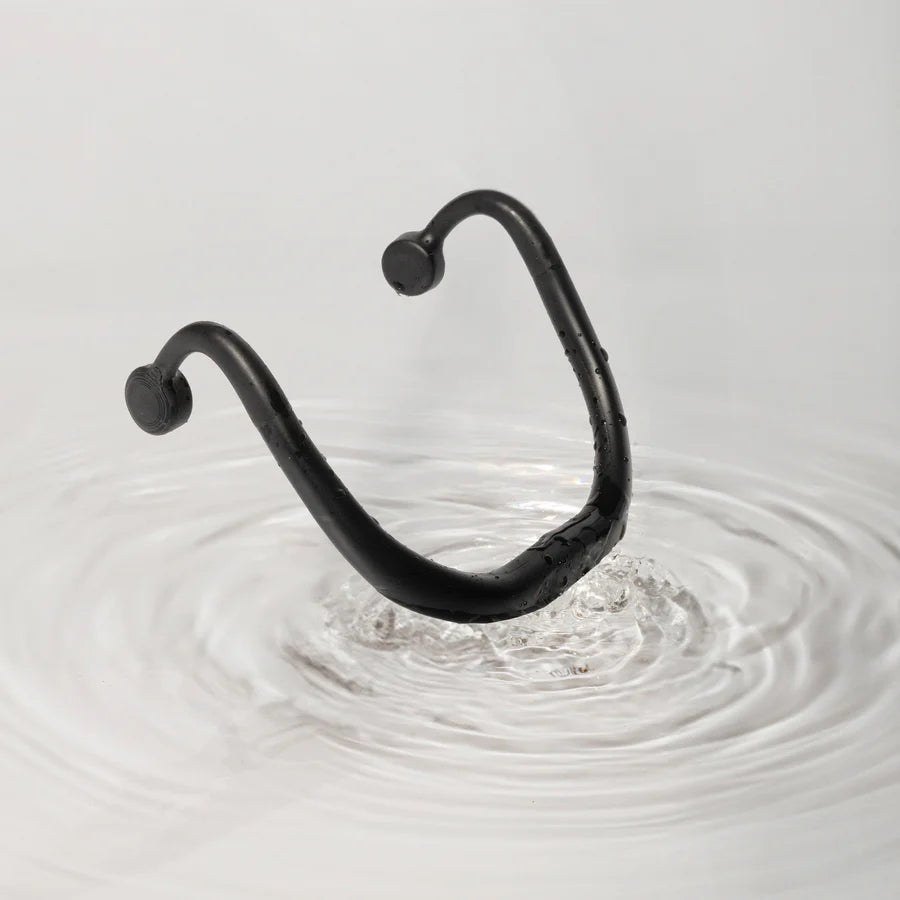
Swimming has always been the quiet sport. You push off the wall and the world goes muffled — no music, no chatter, just the metronome of your own breathing. For years that was simply the deal. Runners and cyclists got podcasts and playlists; swimmers got the black line on the bottom of the pool. That gap is finally closing, and the technology behind it is more interesting than a waterproof case slapped onto ordinary earbuds.
What is bone-conduction swim audio, and how does streaming work?
Regular earbuds fail in water for a simple reason: sound travels poorly through the air trapped in a flooded ear canal, and the seal never lasts. Bone conduction sidesteps the problem entirely. Instead of pushing sound waves into your ear, small transducers rest on the cheekbones just in front of the ears and send gentle vibrations through the skull directly to the inner ear. Your ear canals stay open. That is why you can still hear a whistle, a lane-mate, or the wall approaching — a safety point that matters more in the water than most people expect.
The harder problem is getting audio to the headset in the first place. Bluetooth barely travels through water, so a phone at the pool edge cannot simply pair with a headset ten meters away underwater. Two design philosophies emerged to solve this. The older approach: store the audio on the device itself, so nothing needs to be transmitted while you swim. The newer approach: bridge the signal. ZYGO uses a poolside transmitter that doubles as its charging case; it takes a Bluetooth stream from your phone and rebroadcasts it over FM, which propagates through water far better. According to SwimSwam, that transmitter reaches roughly 50 meters at around two feet of depth in a chlorinated pool, though the figure shifts with depth and with salt versus fresh water.
The payoff is live audio. You are not syncing files the night before; you open Spotify, a podcast, an Audible book, or a coached workout in the app on your phone, and it plays underwater in real time.
Who is this actually for?
Fitness and lap swimmers get the obvious win: a long set stops feeling like sensory deprivation. Triathletes can run structured pool workouts with audio cues instead of counting tiles. Competitive swimmers and their coaches get the feature that no MP3 player can offer — real coach-to-swimmer communication, a one-way live voice channel that lets an on-deck coach talk to an athlete mid-lap without stopping the set. Athletech News has covered how that same channel opens the door to remote and virtual coaching, with a coach cueing technique from anywhere. If you only ever want a playlist, any bone-conduction unit will do. If you want coaching, the field narrows fast.
Five things to look for
1. Streaming vs onboard MP3. This is the single biggest fork in the road. Onboard players (load files, then swim) are simple and cheap, but you are locked to what you remembered to transfer. Live streaming means your whole library, every podcast episode, and any app workout is available on deck with no prep. If you value spontaneity, streaming wins.
2. Range and depth. Transmitter-based systems publish a range, but treat it as a ceiling, not a promise. Deeper water and salt water both cut into it. For a standard 25m or 50m pool at swimming depth, a system rated near 50 meters gives comfortable headroom; open-water performance will differ.
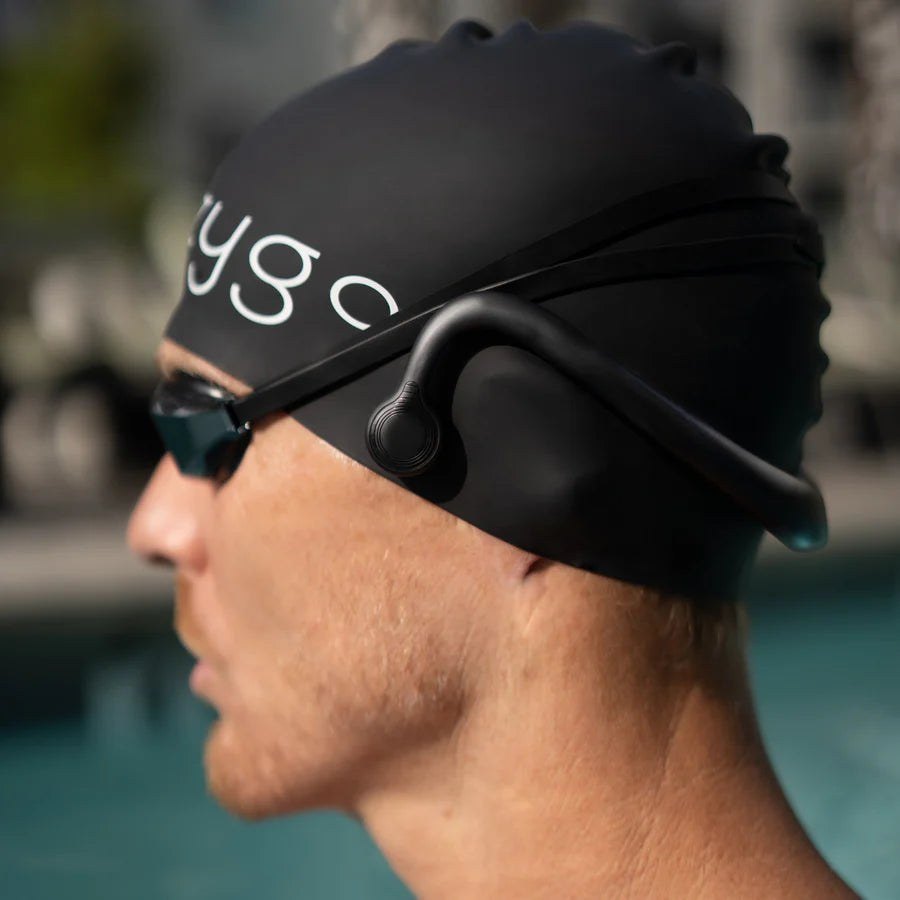
3. Comfort under a cap. A swim headset lives under a silicone cap and beside your goggle straps. If it is bulky or sits where the strap crosses, you will feel it every flip turn. Look for a low-profile band and, ideally, more than one size — ZYGO's current headset ships in two sizes for exactly this reason.
4. Battery, and how it recharges. Bone-conduction swim headsets are small, so expect modest headset runtime — ZYGO quotes roughly two to three hours on the headset itself. The more useful number is whether the case tops it back up between sessions; ZYGO's transmitter case recharges the headset several times over, which matters more than the raw headset figure for anyone swimming most days.
5. Coach communication. If a coach or squad is in the picture, confirm the system supports live speech to the athlete, not just playback. This is the capability that separates a true communication system from a waterproof music player.
Top ZYGO options
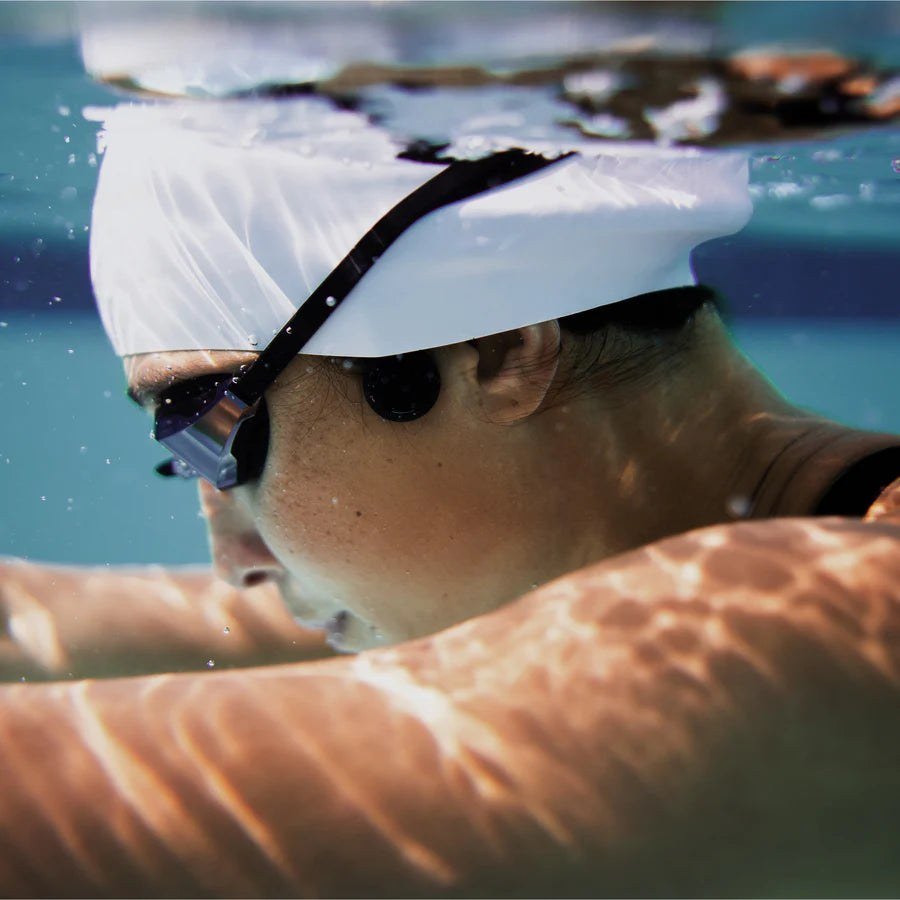
The current flagship is the Zygo Z2, a bone-conduction headset paired with the transmitter that doubles as a charging case, offered in two headset sizes. It is the unit to look at for streaming plus coach comms. The earlier Zygo Solo (2022) was the first-generation product and is now historical — worth knowing if you see it referenced, but not the current pick. For squads, Zygo for Coaches bundles the gear for team and remote-coaching setups.
What about pricing?
Straight talk: bone-conduction swim audio is a premium category, and a live-streaming system with a transmitter sits at the higher end of it — you are paying for the headset plus the bridge that makes underwater streaming possible. For historical context, the first-generation Solo launched around USD 300 back in 2022; current pricing is not something to quote from memory, so check the retailer for today's figures and any team or bundle options before you decide. Think of it in bands: onboard-MP3 units are the budget entry, and streaming-plus-coaching systems are the investment tier.
Common mistakes to avoid
- Buying for depth you'll never swim. Pool swimmers do not need open-water range claims; match the tool to your lane.
- Ignoring cap fit. The best-sounding headset is useless if it shifts on every turn. Get the size right.
- Assuming all bone conduction streams. Most units only play stored files. Streaming and coach comms are the exception, not the norm.
- Overweighting headset battery. The recharge behavior of the case usually matters more than the single-session number.
FAQ
Can I still hear my surroundings? Yes. Bone conduction leaves your ear canals open, so whistles, coaches, and lane-mates come through.
Do I need to download anything to swim? Not with a streaming system. You open your app on your phone at the pool edge and it plays live underwater.
Will it work in open water or the ocean? It can, but range and clarity change with depth and with salt water; performance is condition-dependent and the published figures are pool-based manufacturer claims.
Is it comfortable under a cap? A low-profile band in the right size sits cleanly under a silicone cap alongside goggle straps.
Next steps
If your swimming is just you and a playlist, a simple onboard player is fine. But if you have ever wanted a real podcast on a long aerobic set, a coached workout piped in live, or a coach who can actually talk to you between walls, the streaming-and-communication approach is a genuine step change — and you can see how ZYGO builds it and which model fits your training.
Disclosure: This post contains affiliate links. We may earn a commission from purchases made through these links at no extra cost to you. Prices and availability accurate at time of writing.
Disclosure: affiliate link — we may earn a commission at no extra cost to you.
Want gear like this on your content calendar?
Join AffluencerHub, get AI-matched to brand programs that fit your audience, and track every click to commission in one place.
Apply as a Creator